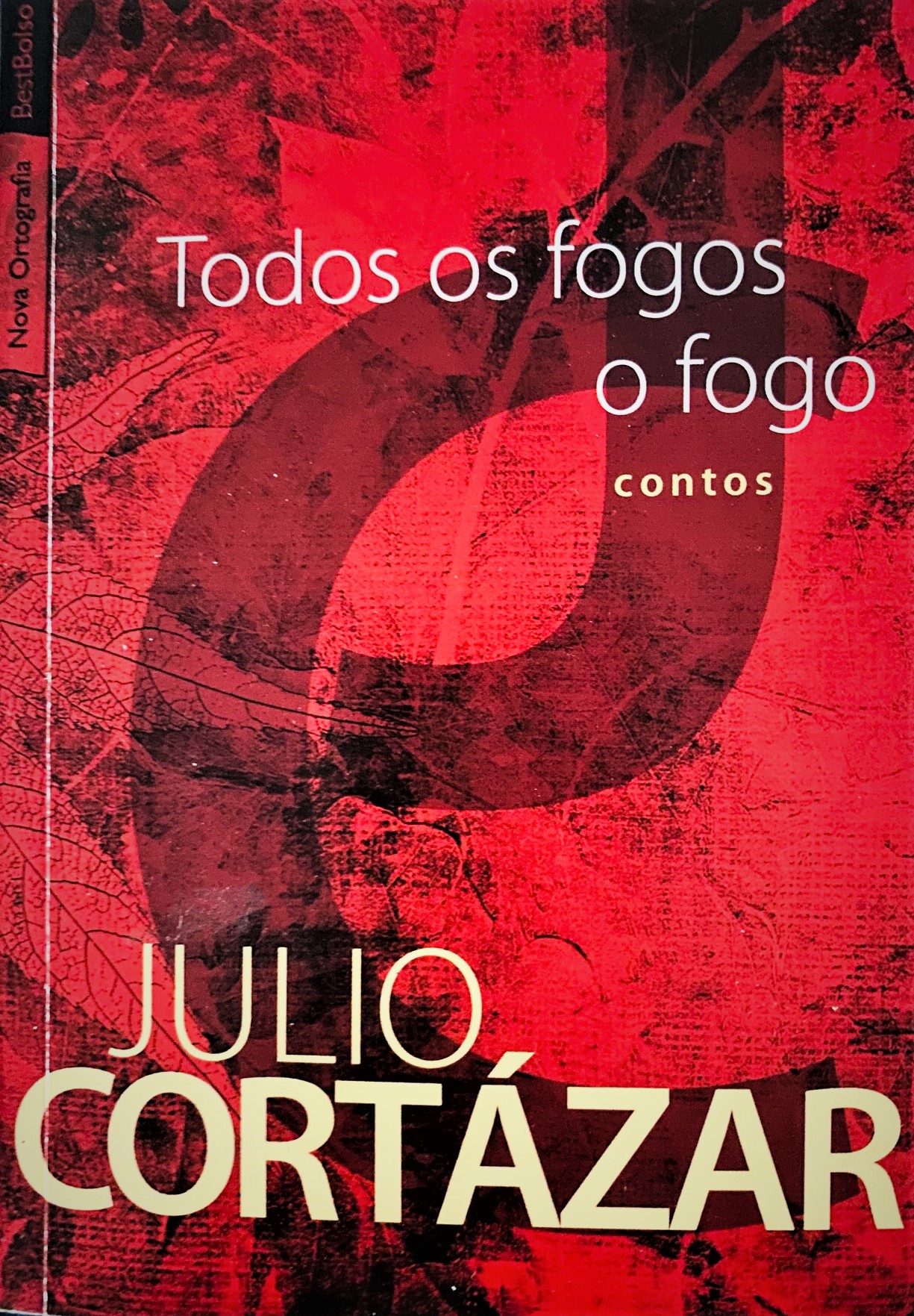
Julio Cortázar (Ixelles, Bélgica, 1914 – Paris, 1984), um dos mais notáveis escritores argentinos do século XX (nasceu na Bélgica por razões circunstanciais), escreveu em forma de poesia, teatro, romance e conto. Foi um dos principais representantes do que se chamou de “boom da literatura latino-americana”. Embora seu mais célebre livro seja um romance, “O Jogo da Amarelinha”, os contos são a marca maior de sua trajetória literária. No conjunto permitem ao leitor vislumbrar a relação do autor com a percepção de seu universo, cronológico e também atemporal. “Todos Os Fogos O Fogo”, publicado em 1966, trouxe inovação formal com feitio próprio (muitos outros também inovavam). Juntamente com isto, o que Cortázar diz importa, não se reduz a pretexto, é sempre cerne. Não há futilidade nas maneiras com que rompe o convencionalismo na escrita, a arquitetura dos textos é carregada de sentido. Cada um dos oito contos que compõem o livro seduz o leitor de um modo diferente. Não há monotonia. Um dos talentos de Cortázar é a capacidade de superar a banalidade sem afetação. É como se ele apontasse para a presença de elementos essenciais e nada óbvios na caracterização daquilo que transforma parte dos seres em humanos, através de ocorrências cotidianas de aparência relativamente comum, mas que são sempre oportunidades únicas de afirmação desta modalidade de existência. O olhar é agudo e, ao dizer o que vê, é elegantemente regrado por um tipo de economia estética. O que tem aparência de absurdo somente reflete certas dimensões da realidade em que, evidenciando o bom exame, dissolvem-se os invólucros que disfarçam a absurdidade. Desconcertam-se os que se fiam em coerência inteligente e padrões naturais passíveis de previsibilidade nas engrenagens que fazem girar o mundo. Certezas são quase sempre armadilhas para aprisionar ingênuos. Nisto reside uma compreensão da vida, em que o trágico submete o dramático. Há implícita a sugestão de que se aprenda a caminhar pela névoa e onde o chão não é firme, controlando temores diante do que é desconhecido (como o é tudo o que está à frente). Certamente o impacto deste livro na época de sua primeira publicação foi determinado inclusive pelo que acontecia em diversos países ocidentais, para além da literatura. Havia algumas ordens político-ideológicas para as quais ele poderia servir como discurso de admoestação e outras que o tomariam como adesão e incentivo. Tudo transformou-se com o tempo. Convulsões estão menos explícitas. Hoje a obra está depurada de seu contexto de aparição, assim como outras de Cortázar. Pode ser degustada pela grande qualidade que tem como criação ficcional e arauto dos rigores daquilo que é verdadeiro.
Título da Obra: TODOS OS FOGOS O FOGO
Autor: JULIO CORTÁZAR
Tradutora: GLÓRIA RODRIGUEZ
Editora: Best Seller
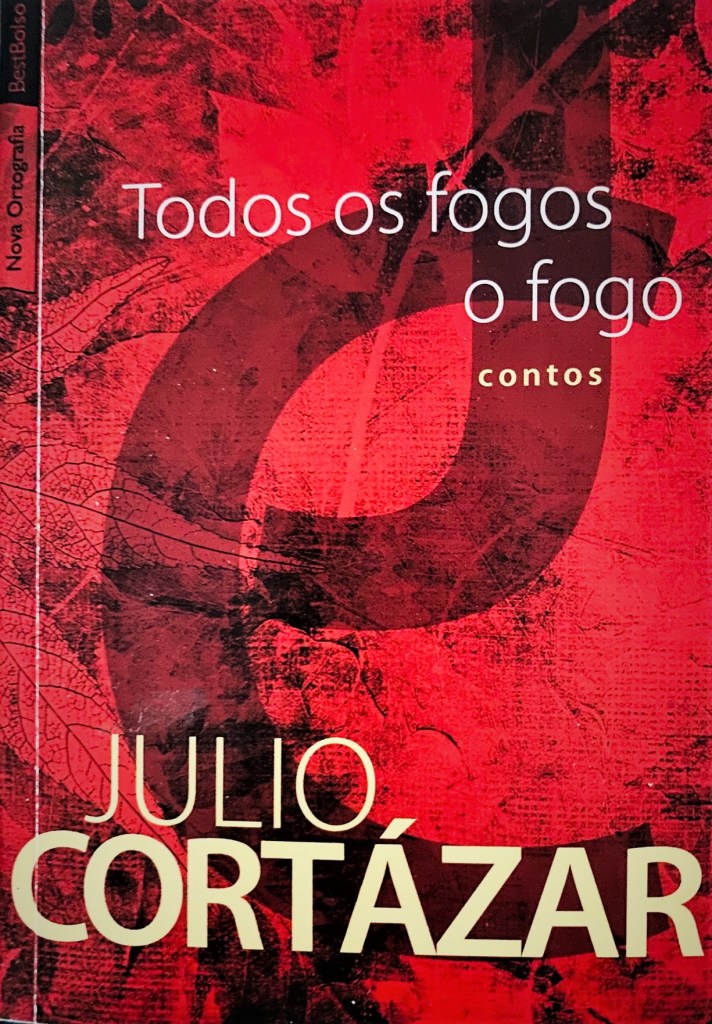
Julio Cortázar (Ixelles, Belgium, 1914 – Paris, 1984), one of the most remarkable Argentine writers of the twentieth century (born in Belgium for circumstantial reasons), wrote in poetry, theater, the novel, and the short story. He was one of the leading figures of what came to be known as the Latin American literary boom. Although his most celebrated book is a novel—Hopscotch—it is the short story that stands as the defining mark of his literary trajectory. Taken together, his stories allow the reader to glimpse the author’s relationship with his perception of the universe, both chronological and timeless.
All Fires the Fire, published in 1966, introduced formal innovation with a distinctive stamp of its own (though many others were innovating as well). Alongside this, what Cortázar has to say matters: it is never reduced to mere pretext; it is always the core. There is no frivolity in the ways he breaks with convention in his writing—the architecture of his texts is laden with meaning. Each of the eight stories that make up the book seduces the reader in a different way. There is no monotony.
One of Cortázar’s great talents lies in his ability to overcome banality without affectation. It is as though he points to the presence of essential and far-from-obvious elements in the characterization of what transforms certain beings into human beings, through everyday occurrences that appear relatively ordinary but are always unique opportunities to affirm this mode of existence. His gaze is sharp and, in articulating what he sees, is elegantly governed by a kind of aesthetic economy. What appears absurd merely reflects certain dimensions of reality in which, under careful scrutiny, the wrappings that disguise absurdity dissolve. Those who rely on intelligent coherence and natural patterns supposedly subject to predictability in the mechanisms that make the world turn are unsettled. Certainties are almost always traps laid to ensnare the naïve.
Here resides an understanding of life in which the tragic subdues the dramatic. Implicit is the suggestion that one learn to walk through the fog, where the ground is not firm, mastering one’s fears in the face of what is unknown (as everything ahead always is). Certainly, the impact of this book at the time of its first publication was shaped in part by what was happening in various Western countries beyond the realm of literature. There were political and ideological orders for which it could serve as a discourse of admonition, and others that would take it as endorsement and encouragement. Everything has changed with time. Convulsions are less explicit. Today the work has been stripped of the context of its appearance, as have other works by Cortázar. It can now be savored for its great quality as a work of fiction and as a herald of the rigor of what is true.
Title: All Fires the Fire
Author: Julio Cortázar
Translator: Glória Rodriguez
Publisher: Best Seller

 Estante do Justo
Grandioso!
CurtirCurtido por 1 pessoa
Obrigado pelo comentário, querida Malu
CurtirCurtir
Oi, Luís, que alegria ler esta excelente resenha de Todos os fogos o fogo. Você me levou ao início da década de 1970 e me fez recordar muita coisa boa. Além, é claro, de me deixar com vontade de reler o livro, mais uma vez. Salve Cortázar. Beijo.
CurtirCurtido por 1 pessoa
Eu também tinha lido na década de 70. Também trouxe-me boas recordações. Muito obrigado pelo comentário, querida Anaelena. Beijo
CurtirCurtir
Bom escrito 💥
CurtirCurtido por 1 pessoa