
Fictional Literature: Truth, Ethics, and Aesthetics
A literatura ficcional cria universos. Talvez constitua uma das mais poderosas ferramentas inventadas pelos seres humanos para espelharem-se e também para tentarem compreensões sobre o que não se converte em suas imagens. Estimula transformações de modos de pensamento e ação. E talvez antes de tudo seja um meio de diversão, de encantamento e de real magia.
Há percursos plurais para aqueles que transitam pelas obras literárias. Todavia, a aquisição do que é mais precioso no que se lê dificilmente se dá mecanicamente. Pode exigir considerável esforço. Às vezes acontece de fragmentos das leituras vibrarem dentro dos leitores possibilitando-lhes um modo de comunhão com um autor, com os íntimos teores de suas ideias. Constroem-se formas de comunicação com feições de diálogos que podem fazer surgir algo não previsto no texto escrito nem no repertório habitual de compreensão de quem o lê. Aparecem verdades novas, mesmo que provisórias. Bons livros são verdadeiros. Contam algo que realmente existe (sem implicar o encolhimento frequente na concretude comezinha de existência) e que cria ou resgata sentidos para os envolvidos no processo. A verdade pode habitar os interstícios da invenção. Estórias conectam-se com histórias. Autores talentosos criam personagens consistentes para serem seus porta-vozes legítimos.
Talvez no mencionado acima estejam alguns dos elementos pregnantes do que podemos chamar de ética da criação literária. Valendo lembrar que o modo de dizer aquilo que é mais autêntico e importante pode assumir diferentes formatos. Alguns são objetivos, eficazes em comunicar racionalmente um pensamento, mas carecem de força para despertar emoções e para promover a experiência do belo. Outros fazem quase o contrário disso.
A beleza não é uma noção fácil de ser definida na obra literária, como não o é em nenhuma modalidade de criação artística. Contudo, é uma dimensão importante de uma obra de arte. Não somente para o deleite de quem se envolve com ela, de quem escreve e de quem lê, mas para além do prazer, carrear ideias que poderiam sofrer erosão, definhariam ou se perderiam por outras vias no caminho entre escritor e leitor, sem causarem nenhum impacto. A beleza é um “dispositivo” que pode contribuir para a eficiência transformadora daquilo que se tem a dizer. Além disso, ela abre caminhos (que estão frequentemente fechados) para entendimentos afetivos do leitor, prepara o espaço para a recepção do diverso, do não mesmo, favorece a alteridade na vivência da leitura. Enriquece, dá relevo, esculpe, amacia. Humaniza. Assim, o aspecto estético do escrever e do ler quase nunca é supérfluo. Irmana-se com o compromisso ético.
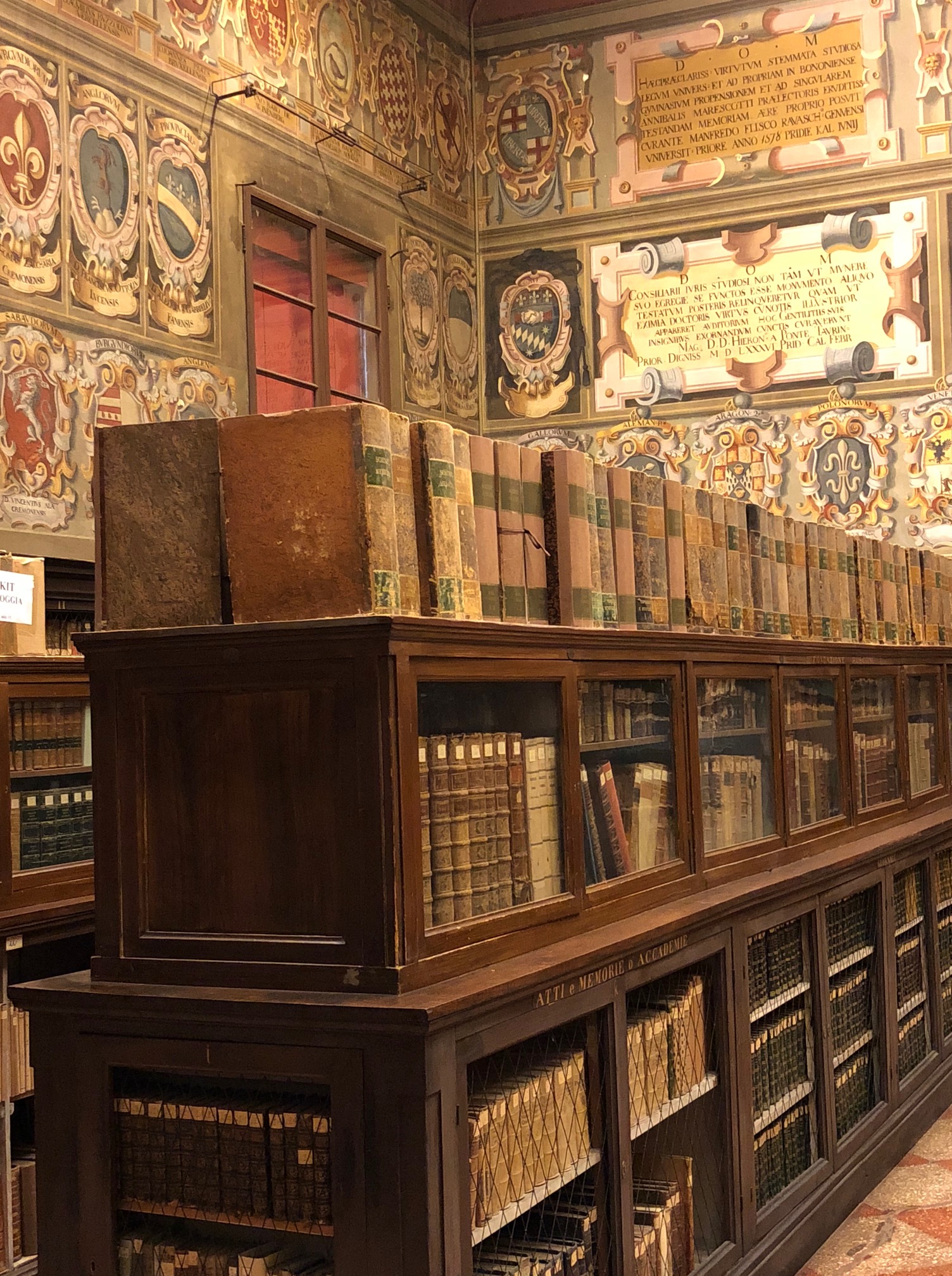
Abaixo foto da Biblioteca da Universidade de Bolonha, Itália
Fictional literature creates universes. It may well be one of the most powerful tools ever devised by human beings to mirror themselves — and also to attempt an understanding of that which cannot be converted into their own image. It stimulates transformations in modes of thought and action. And perhaps, before all else, it is a means of amusement, of enchantment, of genuine magic.
There are many possible paths for those who traverse literary works. Yet the acquisition of what is most precious in what one reads seldom occurs mechanically; it may demand considerable effort. At times, fragments of a reading resonate within the reader, allowing a kind of communion with an author, with the intimate essence of their ideas. Forms of communication are thus built — dialogues in appearance — capable of bringing forth something unforeseen, neither contained in the written text nor within the habitual range of comprehension of the one who reads. New truths arise, even if provisional ones.
Good books are true. They tell of something that genuinely exists (without being confined to the narrow concreteness of mere existence) and that creates or restores meaning for those engaged in the process. Truth may dwell in the interstices of invention. Stories intertwine with History. Gifted authors create consistent characters to serve as their legitimate voices.
Perhaps among these reflections lie some of the essential elements of what we might call an ethics of literary creation. It is worth remembering that the manner of expressing what is most authentic and vital may assume diverse forms. Some are objective, efficient in the rational communication of thought, yet lacking the force to awaken emotion or to promote the experience of beauty. Others achieve almost the opposite.
Beauty is not easily defined within the literary work — nor, indeed, within any form of artistic creation. Yet it remains an essential dimension of art: not only for the delight of those who engage with it, both writer and reader, but also — beyond pleasure — as the vehicle for ideas that might otherwise erode, wither, or be lost along the way between author and reader, leaving no mark. Beauty is a kind of device, one that may contribute to the transformative power of what is being said.
Moreover, it opens paths — often closed — toward the reader’s affective understanding; it prepares the ground for the reception of the other, of what is not the same; it fosters alterity within the lived experience of reading. It enriches, gives contour, sculpts, softens. It humanizes. Thus, the aesthetic dimension of writing and reading is seldom superfluous. It stands as a sister to ethical commitment.
Below: the Library of the University of Bologna, Italy.

 Estante do Justo
Ler pra min é viver por um momento várias vidas. É se permitir viajar num mundo fantástico, cheio de emoções, leitura é minha companheira diária.
Seus comentários me auxiliam muito na escolha de uma obra.
Parabéns pela página.
Obrigado
CurtirCurtido por 1 pessoa
Eu é que te agradeço Rogério
CurtirCurtir