
Literature and Diversity
Boas leituras, ficcionais ou não, podem transportar o leitor para mundos diferentes do seu. Promovem a suspensão dos objetos fixos de sua paisagem mental. Podem fecundar campos anteriormente confinados à monotonia do que já nem se vê, de tão repetido. O bem ler instiga olhares para exteriores insuspeitados e cria chances de inovação nas maneiras de compreender o que já parece conhecido demais. Patrocina o encontro com o diverso. Este, brota da incongruência entre o que surge como novo e as concepções pré-formadas e já abraçadas firmemente. Com alguma sorte o diverso torna-se antídoto das automatizações cognitivas. No entanto, o que é diferente do esperado ou familiar pode ser combatido e excluído cegamente, sendo tomado como ameaça. Tal reatividade parece ser uma tendência inerente ao aparelho instintivo dos humanos, uma força que faz recuar para abrigos escuros. Ler com empenho e liberdade, evitando direcionamentos interpretativos rígidos, enriquece o intelecto e constrói inteligência. Pode abrir portas para o funcionamento ético. A oportunidade de enxergar e de se nutrir com a diversidade é essencial à sobrevivência, mesmo que não o pareça à primeira vista. Sem isso não ocorre evolução adaptativa e também transformadora, negligencia-se a essencial criatividade. É possível valorizar esse tipo de asserção mesmo quando não se toma o pensamento darwiniano como modelo. A literatura de qualidade, o que implica tanto o conteúdo do que se lê quanto a forma de o tratar, pode não ser aprazível num primeiro contato. Frequentemente é um desafio para o intelecto (o que também assusta). O que se percebe como “estranho“ no texto pode ser confundido com hermetismo ou como pretensão fútil. É preciso ter cuidado com isso, pode ser um modo de preconceito. Uma comunicação que demande complexidade de interpretação e ampliação dos saberes pode ser rechaçada muito rapidamente. Ela reduz o conforto promovido pela impressão de que já se sabe o suficiente e acaba minando a ilusão de que é possível a conversão da “verdade” em bem durável, de propriedade individual ou coletiva. Geralmente é nesses campos literários resistentes ao óbvio e às banalidades que são feitas grandes colheitas. O diverso está quase sempre fora do que o indivíduo reconhece sem esforço, assim como a incapturável “verdade”. Ainda que este indivíduo cumpra os deveres necessários para ser verdadeiro no que pensa e em como age. O diverso costuma expandir os recursos do leitor, apetrecha-lo com coragem e congêneres. Depois de um certo aprendizado para navegar nos bons livros e de empreenderem-se viagens para a dessemelhança surgem novas áreas de sensibilidade que propiciam prazer e permitem saborear o que não é imanente ao viajante. É provável que as navegações da vida cotidiana tornem-se também mais frutuosas.
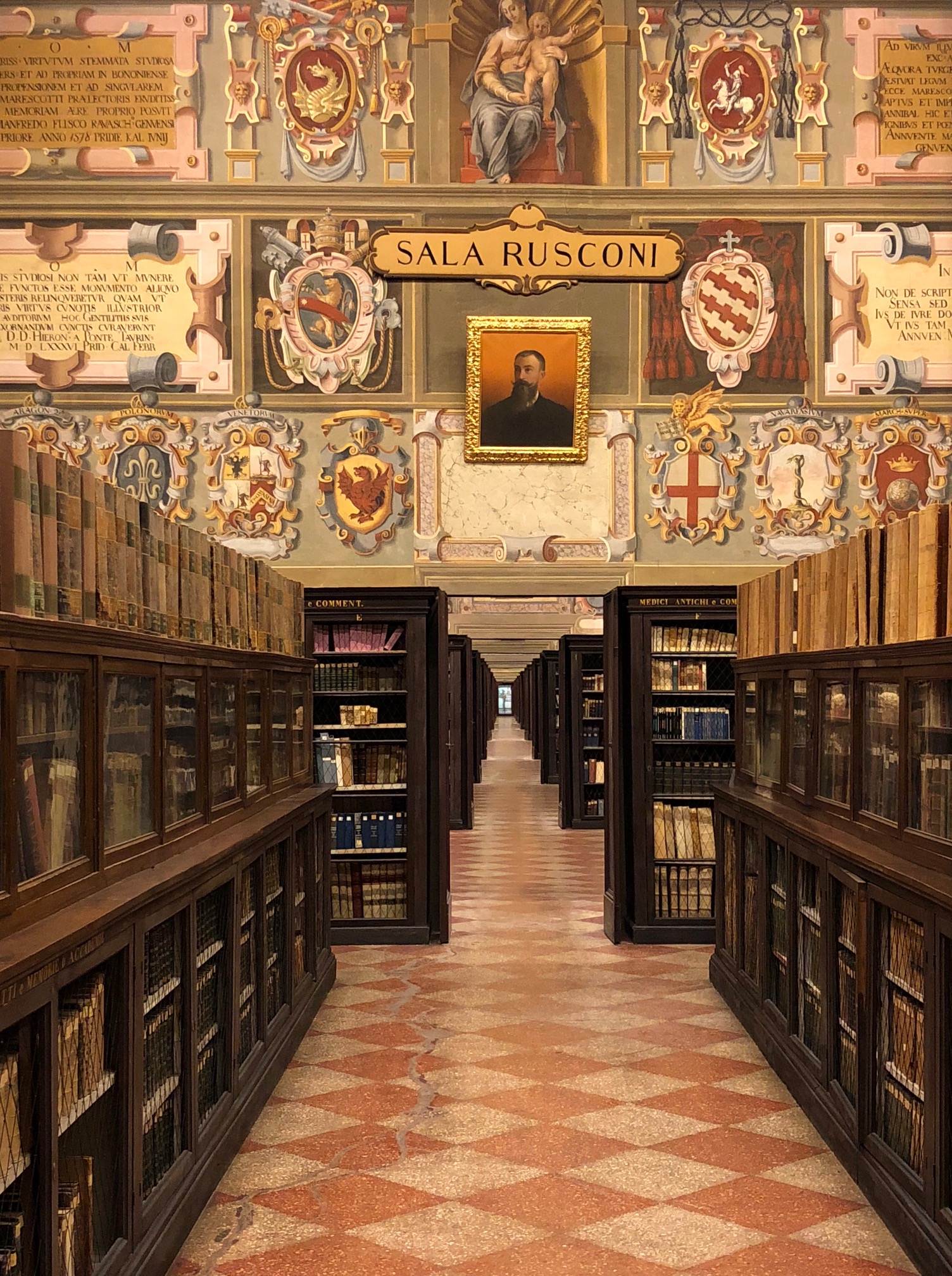
Abaixo foto da biblioteca da Universidade de Bolonha
Good reading — whether fictional or not — can transport the reader into worlds different from their own. It suspends the fixed objects of one’s mental landscape, fertilizing terrains once confined to the monotony of what has long ceased to be truly seen, so familiar it has become. To read well is to be provoked into looking outward, toward unsuspected exteriors, and to open pathways for innovation in the ways we apprehend what once seemed all too known. Reading sponsors encounters with otherness.
Otherness arises from the incongruity between what appears as new and the pre-formed conceptions we have already embraced so firmly. With some fortune, the encounter with the different may become an antidote to cognitive automatism. Yet what is unlike the expected or the familiar can also be met with blind hostility, taken as a threat. Such reactivity seems an inherent tendency of the human instinctive apparatus — a force that drives one back into the dark shelters of habit and fear.
To read with dedication and freedom — avoiding rigid interpretive routes — enriches the intellect and fosters intelligence. It can open doors to ethical awareness. The opportunity to see and to nourish oneself through diversity is vital to survival, even when it does not appear so at first glance. Without it, adaptive and transformative evolution ceases; essential creativity is neglected. One can value this assertion even without taking Darwinian thought as its model.
Literature of quality — meaning both the content of what is read and the form in which it is shaped — is not always immediately pleasing. Frequently, it presents a challenge to the intellect (which, too, can intimidate). What seems strange in a text may be mistaken for obscurity or for vain pretension. One must beware of this; it may itself be a subtle form of prejudice. Communication that demands interpretive complexity and the expansion of knowledge is often rejected too hastily. It diminishes the comfort of believing one already knows enough, and undermines the illusion that “truth” may be turned into a lasting good, whether private or collective.
It is usually within those literary fields resistant to the obvious and to banality that the richest harvests are made. Diversity almost always dwells beyond what the individual recognizes without effort — just as truth itself remains elusive, even when one strives to be true in thought and in deed. The different tends to expand the reader’s resources, to equip them with courage and its kin.
After a certain apprenticeship in navigating good books — after journeys undertaken toward dissimilarity — new regions of sensibility begin to open, enabling pleasure and the savoring of what does not belong innately to the traveler. It is likely that the navigations of everyday life then become more fruitful as well.
Below: the library of the University of Bologna.

 Estante do Justo
Luís, que texto excelente. É um louvor lindo à leitura e a suas implicações, às suas consequências. Muito obrigada e um beijo.
CurtirCurtir
Eu é que agradeço pelo carinhoso comentário, querida Anaelena.
Um beijo
CurtirCurtir
essa estante do Justo é imperdivel.Sao resenhas e comentarios ricamente elaborados com clareza e simplicidade sobre temas variados.
CurtirCurtir
Obrigado pelo comentário, querida Suzana.
CurtirCurtir