
Assim como brasileiro com vastidão, Érico Veríssimo (Cruz Alta, 1905 – Porto Alegre, 1975) sentia-se profundamente gaúcho. E ainda para além, um habitante de múltiplas geografias e tempos. Vale acrescentar que era um visitante sagaz de almas habitantes de diversos mundos. Apaixonado por sua terra, transformou a história do Rio Grande do Sul em estória cosmogônica, que reflete os aspectos universais das sagas humanas. Retratou múltiplas vidas em estórias dentro da História, através dos diferentes planos de “O Tempo e o Vento”.
O extenso romance é dividido em três partes (“O Continente”, “O Retrato” e “O Arquipélago”) e sete volumes. Fala encantadoramente de gente imersa nos acontecimentos de seu tempo. São muitos personagens em situações distintas sucedendo-se num ritmo que seduz e torna cativo o leitor, não há passagens tediosas. Todos são importantes e impressionantemente vivos, saem das páginas para transitar pelo universo do leitor. No interior de suas singularidades, nas famílias ou outros espaços de coletividade existem como seres complexos e autênticos.
Veríssimo usa cores intensas para tratar da brutalidade nas relações entre pessoas e grupos que lutam por poder. Revela os processos de formação de crenças, convertidas em verdades petrificadas que condicionam os modos rígidos de pensar. Além de regras cegas de conduta as crenças e tradições permeiam a compreensão do que acontece. Convicções políticas transformam-se em fanatismo. Nisto, o autor fala também da realidade política e social do Brasil naquele momento (o que talvez valha para muitos outros períodos da vida no Brasil). Conta da intolerância ao diverso, ao que é novo e que exige plasticidade de espírito para um entendimento razoável. Não deixa de estar presente, em oposição a isto, as disposições generosas, capazes de aceitação das diferenças e da inclusão das pessoas que representam isto nos círculos da dignidade de convivência. É grande a riqueza do olhar do autor. Sutilmente ele vai mostrando os processos de ruptura com as normas estabelecidas tanto nos indivíduos como nas coletividades. Renovação que é difícil e necessária sempre.
Veríssimo desenha um painel sobre os mecanismos de constituição de uma sociedade que adquire movimento próprio. As imbricadas narrativas desenrolam-se através de décadas e séculos. Apresentam gente que não se apercebe do que é no que faz e outros que de tão lúcidos são quase clarividentes. Há os que olham para tudo com fatalismo, assumindo os próprios atos como um destino em que há poucas oportunidades de escolha livre. São relevantes os descompassos entre os conformados e os que tentam subverter a ordem do que vivem.
Na evolução do longo (e delicioso) enredo autor sugere que a História não basta para revelar a imensidão do humano. As identidades singulares dos tantos personagens, nunca negligenciadas, fazem contrapontos e ajustes necessários para o que se dá em âmbito histórico. A obra conduz o leitor em uma grande viagem que, uma vez iniciada não permite desistência no meio do caminho. Pelo menos, não impunemente.
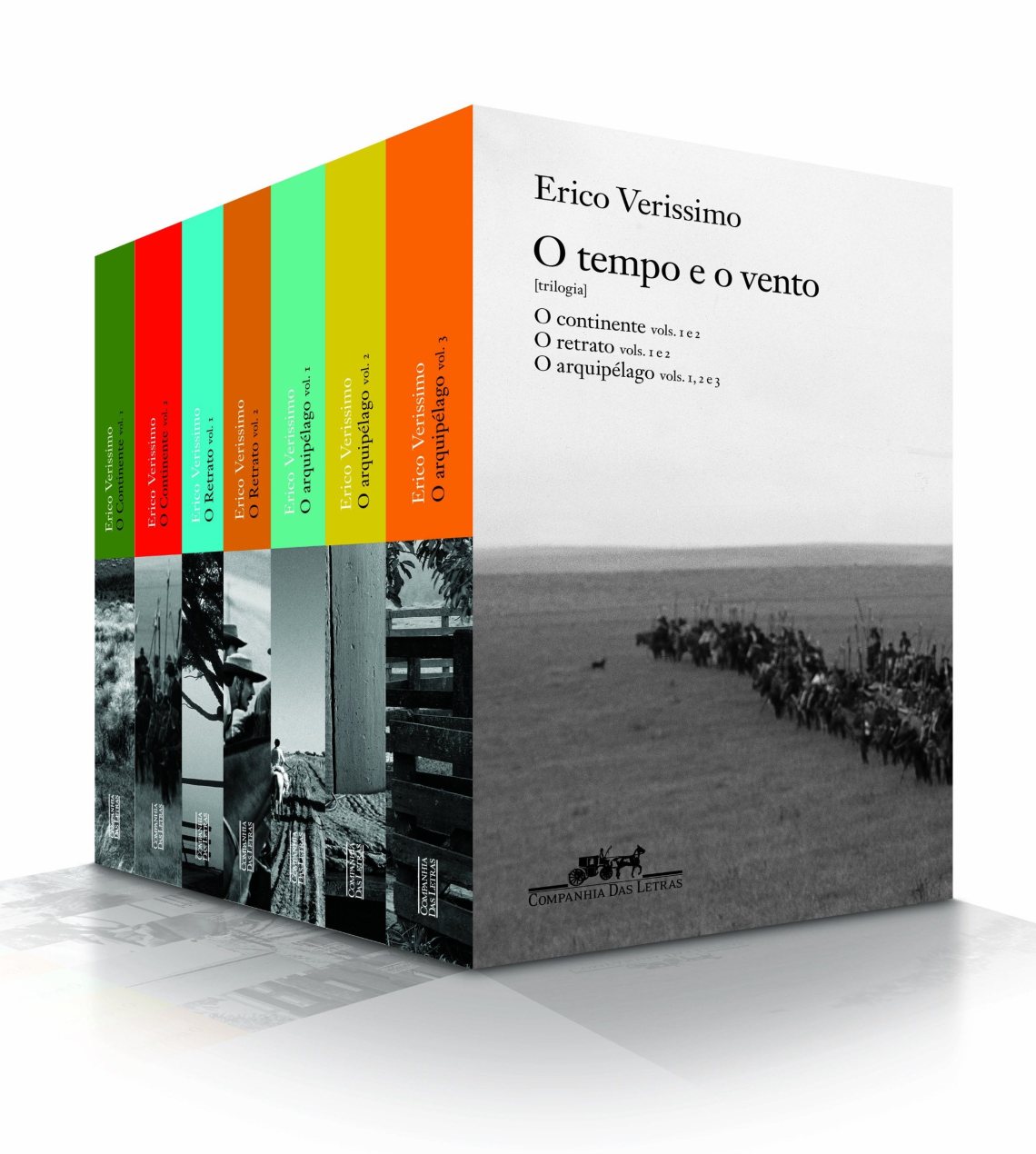
Título da Obra: O TEMPO E O VENTO
Autor: ÉRICO VERÍSSIMO
Editora: COMPANHIA DAS LETRAS
Brazilian in his breadth, Érico Veríssimo (Cruz Alta, 1905 – Porto Alegre, 1975) felt himself profoundly gaúcho. And beyond that, an inhabitant of multiple geographies and times. It is worth adding that he was a keen visitor to souls dwelling in many worlds. Deeply in love with his land, he transformed the history of Rio Grande do Sul into a cosmogonic narrative that reflects the universal aspects of human sagas. He portrayed multiple lives in stories within History itself, through the different planes of The Time and the Wind.
This vast novel is divided into three parts (The Continent, The Portrait, and The Archipelago) and seven volumes. It speaks enchantingly of people immersed in the events of their time. There are many characters in distinct situations, succeeding one another at a rhythm that captivates and holds the reader fast; there are no tedious passages. All are important and strikingly alive, stepping out of the pages to move through the reader’s own universe. Within their singularities—whether in families or other collective spaces—they exist as complex and authentic beings.
Veríssimo uses intense colors to depict the brutality of relations between individuals and groups struggling for power. He reveals the processes by which beliefs are formed and converted into petrified truths that condition rigid ways of thinking. Alongside blind rules of conduct, beliefs and traditions permeate the understanding of events. Political convictions turn into fanaticism. In this, the author also speaks of the political and social reality of Brazil at that time (a reality that may well apply to many other periods of Brazilian life). He tells of intolerance toward what is different, toward what is new and demands a flexibility of spirit for reasonable understanding. Set against this, however, are generous dispositions, capable of accepting differences and including those who embody them within circles of dignified coexistence. The richness of the author’s gaze is remarkable. Subtly, he reveals the processes of rupture with established norms, both in individuals and in collectivities—renewal that is difficult and yet always necessary.
Veríssimo sketches a broad tableau of the mechanisms through which a society acquires a movement of its own. The interwoven narratives unfold across decades and centuries. They present people who are scarcely aware of what they are as they act, and others who, by virtue of their lucidity, are almost clairvoyant. There are those who view everything with fatalism, taking their own actions as a destiny offering little room for free choice. The dissonances between the resigned and those who attempt to subvert the order of their lives are especially significant.
As the long (and delightful) narrative evolves, the author suggests that History alone is not enough to reveal the immensity of the human. The singular identities of the many characters—never neglected—provide counterpoints and necessary adjustments to what unfolds on the historical plane. The work leads the reader on a great journey that, once begun, does not allow abandonment halfway through the road. At least, not without consequence.
Title of the Work: The Time and the Wind
Author: Érico Veríssimo
Publisher: Companhia das Letras

 Estante do Justo
Luís, deu vontade de reler O tempo e o vento. Grande e querido Érico.
CurtirCurtir
Acho que vale mesmo que façamos muitas leituras. Sempre há prazer.
Obrigado pelo comentário, Anaelena.
CurtirCurtir
Luiz Justo que delícia!
Resgatarmos Érico em sua melhor obra , numa construção de identidade Gaúcha, e também a construção daquela sociedade na época .
Os Terra e os Cambará as lutas os amores …
Li em plena adolescência e nunca deixei de me entusiasmar
Grande indicação parabéns!
CurtirCurtir
Obrigado pelo comentário, Marco.
CurtirCurtir
Tenho todos os livros, mas ainda não consegui tempo para ler. Acho que será agora. Obrigada por compartilhar suas impressões sobre essa saga.
CurtirCurtido por 1 pessoa