
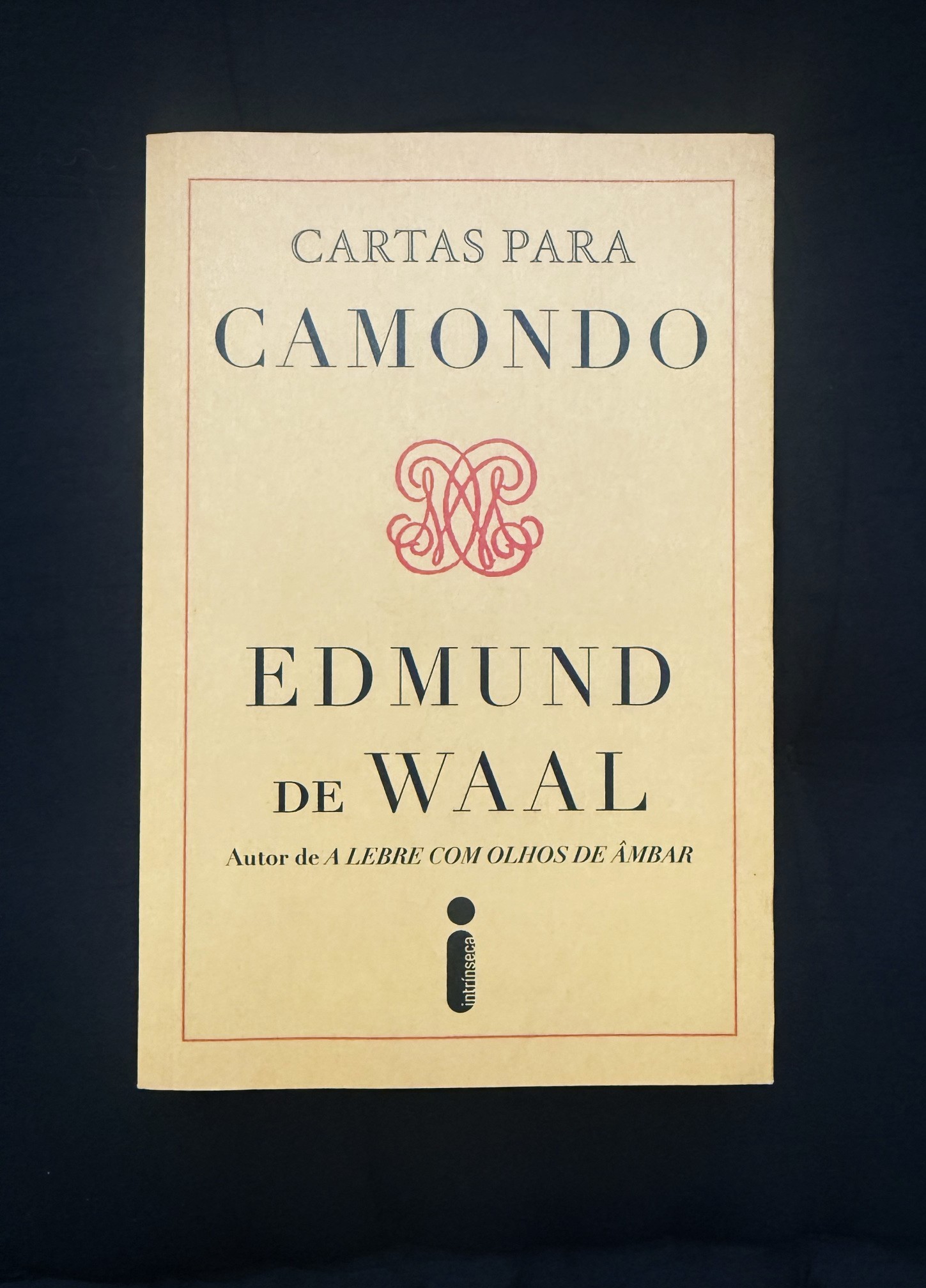
O Museu Nissim de Camondo em Paris abriga uma coleção de obras de arte e belíssimas peças de mobiliário e todo o necessário para o funcionamento de uma requintada casa. Tudo está disposto como na altura da morte de seu fundador, o conde Moïse de Camondo (Constantinopla, 1860 – Paris, 1935). Ele viveu na França desde os nove anos e foi um homem extremamente sofisticado, além de rico. EDMUND DE WAAL (Inglaterra, 1964) publicou um ensaio epistolar (construído através de cartas) em que fala da biografia de Moïse, de sua esplêndida residência doada por ele à França já como museu e das condições que os judeus ocupavam nas sociedades europeias, especialmente na francesa, entre o fim do século XIX e a Segunda Guerra Mundial.
As cartas dirigidas nominalmente a Moïse de Camondo, há muito falecido, são breves, mas densas, com informações que também anunciam afetos do remetente. O real destinatário é o leitor. Nelas há fartura de dados pesquisados por Edmund de Waal e o convite à reflexão.
Muitas injustiças foram cometidas contra judeus em diversos momentos da História. O antissemitismo converteu-se em monstruosidade no período em torno da Segunda Guerra Mundial. Os protagonistas mais lembrados costumam ser alemães nazistas, mas parcelas significativas de diversas sociedades, como a francesa, menos lembradas neste contexto, foram responsáveis por muitas mortes de pessoas, espoliações e outras formas de tratamento brutal para com judeus.
Edmund de Waal descende da família Ephrussi, originária de Odessa na Crimeia. Seus antepassados transferiram-se para Viena e para Paris. Tiveram laços com os Camondo. Assemelhavam a eles no refinamento intelectual, brilhantismo social, no mecenato, na riqueza e nos destinos lúgubres. Quando o autor conta a história de Moïse de Camondo e de sua casa/museu, também está falando de situações que foram vividas por seus familiares e por tantos outros judeus. É História, lembrando o que não deve ser esquecido.
Este livro faz uma espécie de díptico com outro, do mesmo autor, “A Lebre com Olhos de Âmbar”.
Além de cumprir a função de relatar fatos, Edmund de Waal compartilha sua sensibilidade estética, em amplo sentido. Vale mencionar que ele, além de escritor, é um dos mais renomados ceramistas do mundo.
LETTERS TO CAMONDO
The Musée Nissim de Camondo in Paris houses a remarkable collection of works of art, exquisite furniture, and everything required for the functioning of an elegant aristocratic home. Everything remains arranged exactly as it was at the time of the death of its founder, Count Moïse de Camondo (Constantinople, 1860 – Paris, 1935). He had lived in France since the age of nine and was a man of exceptional refinement as well as immense wealth. In this epistolary essay, composed in the form of letters, Edmund de Waal (England, 1964) reflects upon the life of Moïse de Camondo, the magnificent residence he bequeathed to France as a museum, and the place occupied by Jews within European society—particularly French society—from the late nineteenth century through the Second World War.
The letters, addressed by name to Moïse de Camondo long after his death, are brief yet remarkably dense, conveying not only carefully researched information but also the author’s unmistakable affection for their subject. Their true recipient, however, is the reader. Within them lies an abundance of historical detail uncovered by Edmund de Waal, together with a quiet invitation to reflection.
The Jewish people have suffered injustice throughout many periods of history. Antisemitism reached monstrous proportions during the years surrounding the Second World War. The principal perpetrators most readily remembered are the German Nazis, yet significant segments of other societies—not least the French, whose role is less frequently recalled in this context—were responsible for countless murders, acts of dispossession, and other forms of brutal persecution inflicted upon Jewish communities.
Edmund de Waal is descended from the Ephrussi family, whose origins lie in Odessa, in present-day Ukraine. His ancestors later settled in Vienna and Paris, where they forged close ties with the Camondo family. Like them, they were distinguished by intellectual refinement, social brilliance, enlightened patronage of the arts, immense wealth, and, ultimately, tragic destinies. In recounting the story of Moïse de Camondo and his extraordinary house-museum, de Waal is also telling the story of his own family and of countless other Jewish lives. His book is an act of historical remembrance—a meditation on what must never be forgotten.
This volume forms a kind of diptych with another of the author’s books, The Hare with Amber Eyes, the two works illuminating one another through their shared exploration of memory, family, art, and loss.
Beyond its value as a historical account, Letters to Camondo reveals Edmund de Waal’s profound aesthetic sensibility in the broadest sense of the term. It is worth remembering that, in addition to being an accomplished writer, he is also one of the world’s most celebrated ceramic artists.
Título da Obra: CARTAS PARA CAMONDO
Autor: EDMUND DE WAAL
Tradutora: ALESSANDRA ESTECHE
Editora: INTRÍNSECA

