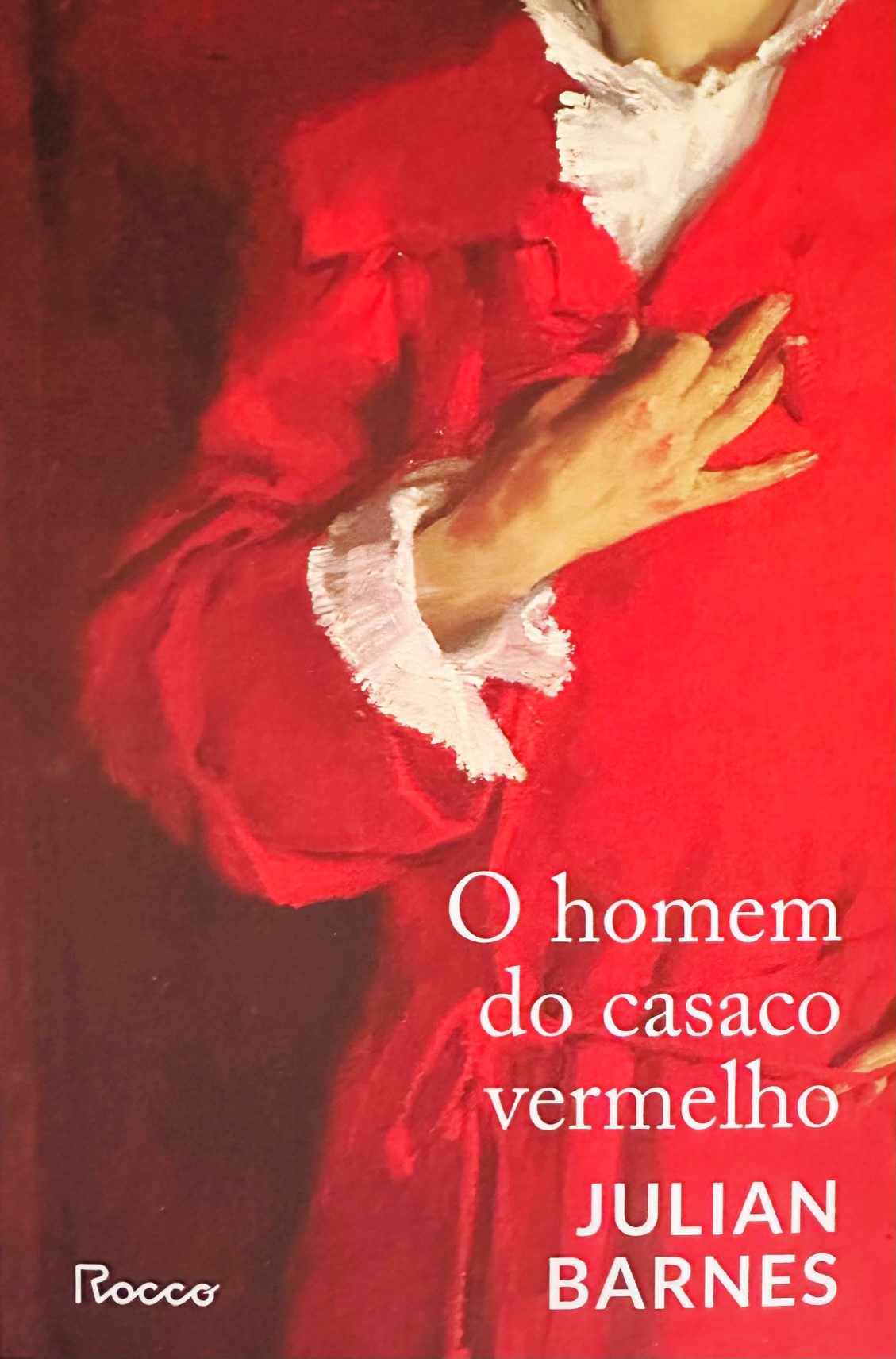
Retratos são sempre imprecisos. Funcionam mais como alusões a alguém ou algo. Mas podem ser encantadores e inspiradores para tecer de saberes sobre pessoas, sociedades, épocas distantes daquelas em que vivemos. Talvez rendam ainda mais do que isso. O que se pensa a partir de algo fixado numa imagem, pictórica, fotográfica ou descritiva, costuma servir para pôr em movimento as engrenagens da imaginação, curiosidade e a mobilização de afetos, mesmo que o processo não se preste suficientemente para a constituição de conhecimento preciso.
Em “O Homem do Casaco Vermelho” o escritor britânico Julian Barnes (Leicester, 1946) criou um belo ensaio histórico sobre a “Belle Époque”. Tomou como ponto de partida um retrato do médico francês Samuel Pozzi (Bergerac, 1846 – Paris, 1918) pintado por John Singer Sargent (Itália, 1856 – Reino Unido, 1925; filho de estado-unidenses). Pintor e modelo foram personagens muito notórios desse período e fizeram jus a biografias próprias. Todavia, Barnes faz muito mais do que descrever a vida do retratado, apesar de ele ser um importante fio condutor do relato desde de o título.
Samuel Pozzi foi um médico extremamente competente, brilhantíssimo e famoso na França e em outros lugares do mundo. Para isso, contou muito seu amplo conhecimento técnico, que nunca parou de se expandir devido a sua busca pragmática pela informação científica. Mostrava noção inteligentemente clara das limitações da medicina daquele momento para solucionar inúmeros problemas. Era dono de grande habilidade como cirurgião e compreendia com rapidez as necessidades de implementos básicos nos cuidados práticos que deveriam ter todos aqueles que se propusessem a tratar de doentes, o que ia muito além do ensinado nas faculdades de Medicina em atividade. Além dos aspectos profissionais, foi um homem muito bonito, culto e sedutor. Como um outro lado da moeda aparece sua dificuldade no relacionamento com a família que constituiu e um modo compulsivo de buscar relacionamentos sexuais e amorosos com uma verdadeira multidão de mulheres com quem conviveu e muitas eram suas pacientes. Foi o primeiro catedrático de ginecologia da França. Escreveu um tratado sobre o assunto que foi referência até meados dos anos 1930.
A vida de Pozzi coincidiu aproximadamente com o que se convencionou chamar de Belle Époque (1871-1914; desde o fim da Guerra Franco-Prussiana até o início da Primeira Guerra Mundial). O nome para essa época foi dado somente nos anos 1940, refletindo noções dos alemães sobre uma suposta frivolidade dos franceses de então. Foi uma fase da História em que se fizeram avanços significativos para o bem-estar dos seres humanos: progressos na área da saúde, incluindo incremento dos hábitos de higiene, os meios de transporte foram revolucionados (automóveis e aviões), aumentou a produção de alimentos através de tecnologias mais adequadas para isso, a eletricidade passou a ser acessível em âmbito doméstico (lâmpada elétrica) e as telecomunicações desenvolveram-se celeremente (telefonia). Foi quando surgiram a psicanálise e algumas correntes filosóficas que marcaram o século XX. Impressionismo e Expressionismo também apareceram entre as transformações estético-culturais que fizeram parte do que passou a ser chamado de Modernismo. Foi um período de efervescência do espaço urbano, com Paris como farol, mas estendendo-se a outras cidades do mundo. Tempo da “Art Nouveau” e da segunda revolução industrial. Também houve muita ilusão quanto ao progresso e seus significados benéficos e uma certa barafunda em torno das noções de humanitarismo e justiça social. Foram gestados os conflitos internacionais, estreitamente vinculados ao colonialismo europeu, que culminariam na Primeira Grande Guerra (1914-1918).
O ensaio abarca farto número de personagens, como Sarah Bernhardt, a atriz icônica desse tempo, Émile Zola, Marcel Proust, Guy de Maupassant, irmãos Goncurt, entre os vários escritores e movimentos literários que brotaram no fértil solo francês e menos prolificamente em outros países de onde viriam Oscar Wilde, Henry James. Circulam artistas plásticos como Auguste Rodin, Paul Gauguin, Henri de Tolouse-Lautrec, Odilon Redon e James McNeill Whistler, entre mais. Há também personagens da “alta sociedade” francesa que contribuíam para compor o cenário. Barnes estampa o espírito da época através das noções estéticas, da produção cultural, tecnológica e científica, assim como dos modos de funcionamento social, fazendo entrever as normas tácitas que regiam as relações entre pessoas.
Uma característica notável do livro é a relativização das informações usadas, especialmente quanto aos detalhes mais íntimos das biografias ou à exatidão de sentido de certos comportamentos dos indivíduos citados, no intuito explícito de não permitir que o leitor os tome como fatos inequivocamente verdadeiros. É como se Barnes desejasse criar um retrato histórico com crítica relativa a idiossincrasias de diversas origens, imprecisões e incertezas, embora interessantemente revelador. O autor põe em relevo a ideia de que qualquer retrato não pode capturar um todo, de que não fornece uma visão abrangente ou profunda de indivíduos e situações, tanto por ser o congelamento de um único momento como por estar carregado de vieses seletivos por parte de quem retrata e de quem observa o produto pronto, trate-se de pintura, fotografia ou descrição através da palavra.
Uma leitura agradável, cheia de sabor e enriquecedora.
Título da Obra: O HOMEM DO CASACO VERMELHO
Autor: JULIAN BARNES
Tradutora: LÉA VIVEIROS DE CASTRO
Editora: ROCCO
Incluída foto do quadro “Dr. Pozzi em Casa” de John Singer Sargent (1881)
In The Man in the Red Coat, the British writer Julian Barnes (Leicester, 1946) created a beautiful historical essay on the Belle Époque. He takes as his point of departure a portrait of the French physician Samuel Pozzi (Bergerac, 1846 – Paris, 1918) painted by John Singer Sargent (Italy, 1856 – United Kingdom, 1925; the son of Americans). Painter and sitter were both highly notable figures of that period and each would merit a biography of his own. Barnes, however, does far more than describe the life of the man portrayed, even though Pozzi is an important guiding thread of the narrative, as the title itself suggests.
Samuel Pozzi was an extraordinarily competent, brilliant, and celebrated physician in France and beyond. Much of this was due to his extensive technical knowledge, which never ceased to expand as a result of his pragmatic pursuit of scientific information. He possessed a lucid and intelligent awareness of the limitations of medicine at the time in addressing innumerable problems. He was a highly skilled surgeon and quickly grasped the need for basic practical measures in patient care—requirements that went far beyond what was taught in the medical schools then in operation. Beyond his professional attributes, he was a very handsome, cultivated, and seductive man. The other side of the coin was his difficulty in family life and a compulsive pursuit of sexual and amorous relationships with a veritable multitude of women, many of whom were his patients. He was the first chair of gynecology in France and authored a treatise on the subject that remained a reference until the mid-1930s.
Pozzi’s life roughly coincided with what came to be known as the Belle Époque (1871–1914, from the end of the Franco-Prussian War to the outbreak of the First World War). The name itself was only coined in the 1940s, reflecting German notions of a supposed French frivolity in that era. It was a period marked by significant advances in human well-being: progress in healthcare, including improved hygiene practices; revolutionary developments in transportation (automobiles and airplanes); increased food production through more suitable technologies; the spread of electricity into domestic life (the electric light); and the rapid development of telecommunications (the telephone). It was also the time when psychoanalysis emerged, along with philosophical currents that would leave a deep imprint on the twentieth century. Impressionism and Expressionism arose among the aesthetic and cultural transformations that would later be grouped under Modernism. Urban life flourished, with Paris as a beacon, though the phenomenon extended to other cities around the world. It was the age of Art Nouveau and the second industrial revolution. Yet it was also marked by illusions regarding progress and its beneficent meanings, as well as a certain confusion surrounding notions of humanitarianism and social justice. International conflicts were incubated—closely tied to European colonialism—that would culminate in the First World War (1914–1918).
The essay encompasses a rich array of figures: Sarah Bernhardt, the iconic actress of the age; Émile Zola, Marcel Proust, Guy de Maupassant, the Goncourt brothers, among the many writers and literary movements that sprang from the fertile soil of France, and, less prolifically, from other countries that would produce Oscar Wilde and Henry James. Visual artists circulate through the pages as well—Auguste Rodin, Paul Gauguin, Henri de Toulouse-Lautrec, Odilon Redon, James McNeill Whistler, among others. Members of French high society also appear, contributing to the composition of the scene. Barnes captures the spirit of the age through its aesthetic sensibilities, cultural, technological, and scientific production, as well as through modes of social functioning, allowing the tacit norms governing relationships to emerge.
One notable feature of the book is the relativization of the information employed, especially regarding intimate biographical details or the exact meaning of certain behaviors attributed to the individuals mentioned. Barnes explicitly avoids allowing the reader to take these as unequivocally true facts. It is as though he sought to create a historical portrait that is itself critical of idiosyncrasies from diverse origins, of imprecision and uncertainty, while remaining intriguingly revealing. The author foregrounds the idea that no portrait can capture a whole—that it cannot provide a comprehensive or profound view of individuals and situations—both because it freezes a single moment and because it is laden with selective biases on the part of the one who portrays and the one who observes the finished product, whether painting, photograph, or verbal description.
A pleasurable, flavorful, and enriching read.
Title: The Man in the Red Coat
Author: Julian Barnes
Translator: Léa Viveiros de Castro


 Estante do Justo
1 comentário