Crianças têm que fantasiar. Este é um dos principais recursos para lidarem com o desconhecido. O que, de outro modo, vale também para adultos. As fantasias infantis são parte do desenvolvimento das capacidades na estruturação da personalidade, incluindo o instrumental para relacionamento com o mundo. Quanto mais uma criança puder criar a partir de elementos que lhe são oferecidos maior tenderá a ser seu patrimônio para transitar num mundo que sempre apresentará mistérios, desafios, demandas e que também a frustrará. Diferentes mídias passaram a ser utilizadas com as cada vez mais sofisticadas tecnologias, destaquem-se as eletrônicas. Algumas ofertam opções atraentes e de fácil apreensão, como joguinhos e suas variantes. Os filmes e programas televisivos também podem ser sedutores, mas costumam trazer informações já muito elaboradas e em contextos nos quais há pouco espaço para a interferência da imaginação singular da criança, embora não devam ser descartados e sim tomados como fomentos adicionais. Bons livros infantis, especialmente os cuidadosamente ilustrados e com linguagens acessíveis (mas que estimulem o enriquecimento das possibilidades semânticas) tendem a contribuir mais para a ampliação da inteligência, ou de certas dimensões dela, convidando a pequena pessoa a contribuir para o preenchimento criativo dos espaços vazios de conhecimento, de crenças e experiências. A criança estabelece modos diferentes de relação com os livros, comparados a outras mídias. Sua “presença” tem maior relevância na formação de sentidos. Novas formas de conhecimento e outras configurações de fantasia, que não as suas, criam, renovam e engrandecem seu universo. Isto conta para a liberdade do pensar e para os mecanismos de busca da verdade (que será infinita em seu período de vida). Livros infantis contém magias não encontráveis em outros lugares. Não devem ser tomados como formato desatualizado ou ultrapassado de entretenimento, educação e formação. Provavelmente serão eternos.
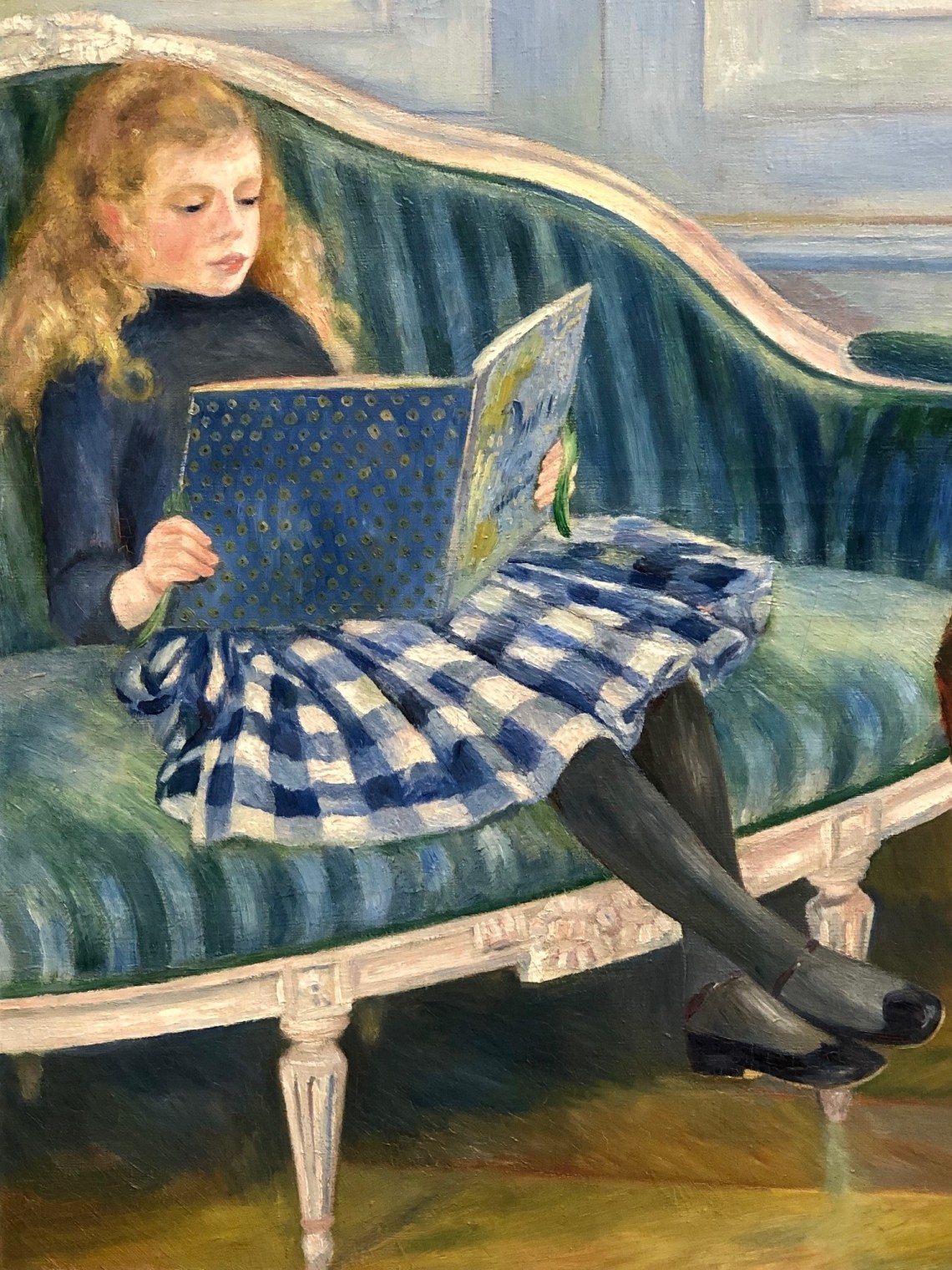
Abaixo, detalhe de pintura de Pierre-Auguste Renoir (França, 1841-1919), “Tarde das Crianças em Wargemont”; Antiga Galeria Nacional de Berlim
Children need to fantasize. This is one of their primary resources for dealing with the unknown—something that, in another way, also applies to adults. Childhood fantasies are part of the development of the capacities involved in shaping personality, including the tools needed to relate to the world. The more a child is able to create from the elements offered to them, the richer their inner resources will tend to be for navigating a world that will always present mysteries, challenges, demands, and frustrations.
Different media have increasingly been employed as technologies become more sophisticated, especially electronic ones. Some offer attractive options that are easily absorbed, such as games and their many variants. Films and television programs can also be seductive, but they usually present information already highly elaborated and within contexts that leave little room for the child’s singular imagination to intervene. They should not be dismissed, however, but rather regarded as supplementary stimuli.
Good children’s books—especially those carefully illustrated and written in accessible language (yet capable of encouraging the enrichment of semantic possibilities)—tend to contribute more decisively to the expansion of intelligence, or at least of certain dimensions of it. They invite the young reader to participate creatively in filling the empty spaces of knowledge, belief, and experience. Children establish modes of relationship with books that differ from those they develop with other media. Their “presence” plays a more significant role in the formation of meaning.
New forms of knowledge and configurations of fantasy other than one’s own create, renew, and enlarge a child’s inner universe. This matters for freedom of thought and for the mechanisms involved in the search for truth—a search that will remain infinite throughout one’s lifetime. Children’s books contain kinds of magic that cannot be found elsewhere. They should not be regarded as outdated or obsolete forms of entertainment, education, or formation. They are likely eternal.
Below: detail of a painting by Pierre-Auguste Renoir (France, 1841–1919), Children’s Afternoon at Wargemont; Alte Nationalgalerie, Berlin.


 Estante do Justo