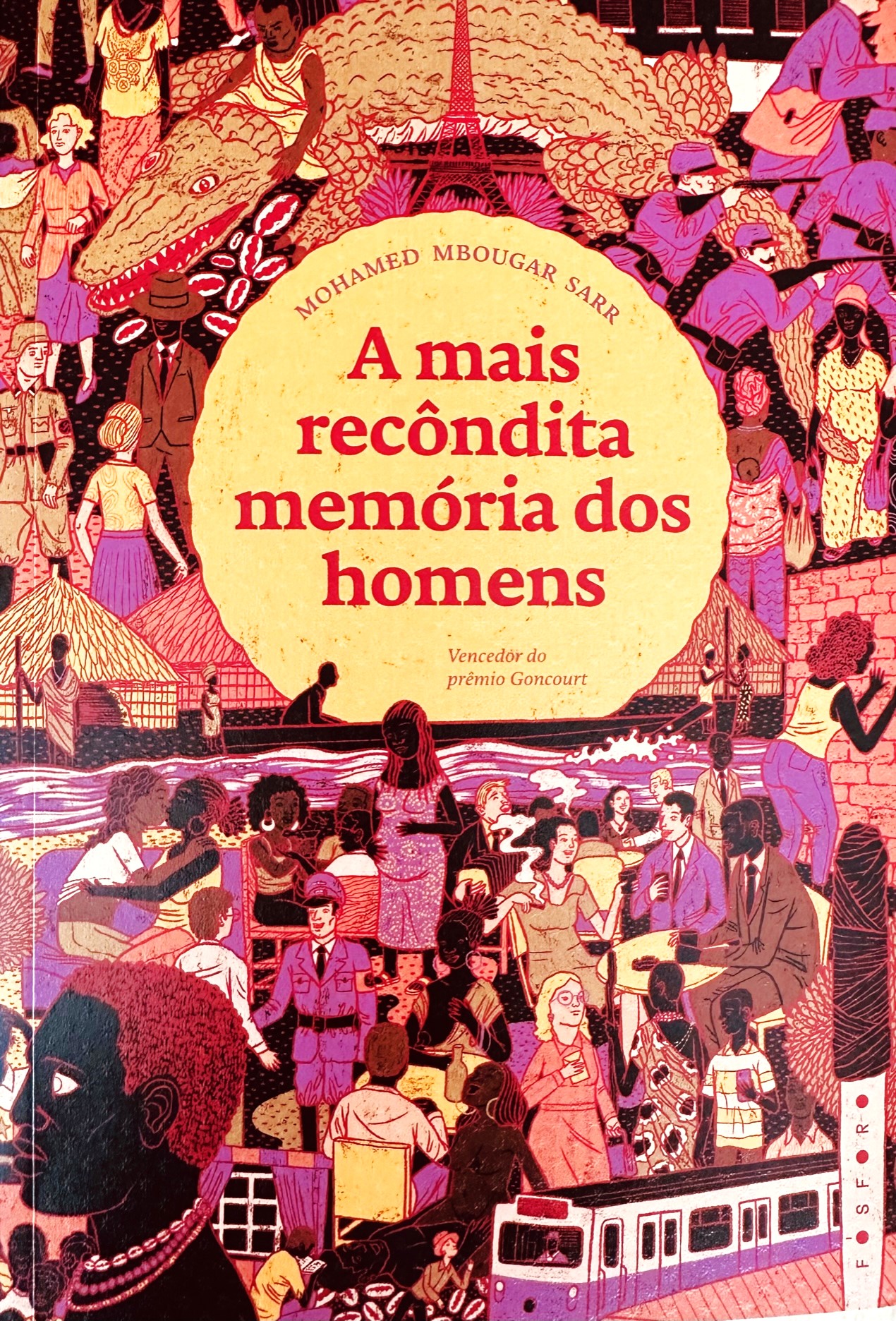
O Senegal, na costa oeste da África, tem a cidade de Dakar como capital. Foi colônia da França até 1960. Como muitos outros países africanos, vem lidando com problemas econômicos e sociais importantes, que geram instabilidades periódicas em diversas esferas da vida no País. Faz parte de um continente dotado de grandes riquezas, mas onde as populações pouco sabem sobre elas e não as usufruem em prol do desenvolvimento que mereciam alcançar. Em Dakar nasceu Mohamed Mbougar Sarr (1990) vencedor do prêmio Goncourt (francês) em 2021 por seu romance “A Mais Recôndita Memória dos Homens”.
Acho que este é um dos melhores livros publicado nos últimos anos. Fala do interesse quase obsessivo de um jovem escritor senegalês por um livro, “O Labirinto do Inumano” e por seu autor, o compatriota T. C. Elimane. O personagem-escritor ocultou-se do mundo pouco após uma contundente polêmica promovida por críticos franceses na altura da publicação. A acusação de plágio selou a derrocada do livro, seu “cancelamento” e retirada das livrarias. São fictícios o autor (Elimane) e a obra (O Labirinto do Inumano). Funcionam como fio condutor do enredo, que se desdobra em muitas vertentes. Pouco é objetivamente dito ao leitor sobre Elimane e menos ainda sobre o conteúdo de “O Labirinto do Inumano”. Riquíssimo é o romance real, o que podemos ler. Diz muito e com beleza. A linguagem é clara. O ainda jovem escritor real Mohamed Mbougar Sarr transborda sofisticação. Ele é profundo e original no tratamento de temas complexos, além de envolver o leitor com a vivacidade de seu olhar para o mundo, tornando a leitura apaixonante. É um livro para ser degustado e não devorado.
“A Mais Recôndita Memória dos Homens” abre espaço para muitas interpretações e para reflexão.
No intervalo entre o início e o fim da vida de cada indivíduo existe um labirinto a ser obrigatoriamente percorrido. Pode ser concebido de muitas maneiras. Numa delas representaria um tipo de “arquitetura” que modela as direções por onde se vai enquanto se vive. Incertos e contorcidos caminhos que não admitem retrocesso. Insondáveis pouco adiante do lugar onde se está. Cada um segue o seu, ainda que isto não implique incomunicabilidade com os labirintos de outros. Eles não têm semelhança com o mitológico labirinto cretense em que estava aprisionado o Minotauro, devorador de jovens atenienses, do qual Teseu conseguiu retornar, depois de matar o monstro e guiando-se pelo fio que lhe deu Ariadne. Todavia, o mito grego serve aqui como contraponto, para dar relevo às diferenças de significados dos labirintos que habitam a imaginação e os discursos. Itinerários destinados a conduzir o indivíduo ao derradeiro ponto em que todo o vivido e pensado se dissolvem em silêncio. Talvez mais bem definido como o nada.
É possível também usar a ideia de labirinto é para invocar peregrinações através da construção da História. A História é o passado. Um discurso sobreo o passado, mesmo que também seja outras coisas. O passado, como qualquer discurso, é nebuloso, fomentador de alegorias, fábulas e lendas. Exige interpretação, mais do que decifração ou descoberta. É fácil perder o rumo do verdadeiro. Trafega-se por registros de intenções e atos discrepantes, por suposições ingênuas e por mentiras deliberadas tomadas como verdadeiras, além de muitas outras confusões. Encontram-se elementos opostos como amor e ódio, crença e descrença, beleza e feiura, felicidade e infelicidade, razão e caos e, talvez os mais radicais contrários, o anseio por construir e preservar e o ímpeto de destruir (que está acima e abaixo de qualquer propósito). As palavras traem-se umas às outras (ideia expressada por Sarr), atropelam-se, perdem-se, encontram-se. Mas não são impotentes. Somente são menos precisas do que o esperado e por isso revelam menos e mais do que era pretendido. Insistem em dizer algo que se desfará em algum estágio do percurso e serão definitivamente caladas no ponto final dos labirintos por onde vão. O nada individual não tarda, o nada coletivo carece de tempo, de tanto tempo que se torna inacreditável. O fim, para aqueles que nele creem, é o nada. E o nada é inumano.
Sarr faz, por múltiplos vértices, uma profecia que ultrapassa a História depois de atravessá-la. Aborda questões que existem antes do fim, enquanto ainda é possível agir e criar narrativas. Nisto desfilam os conflitos intermináveis entre indivíduos, grupos e sociedades sempre propensos a agressões para as quais muito contam as sucessivas heterogeneidades, inevitáveis em quaisquer coletivos de humanos. Neste bojo, as diversidades aparecem pintadas com negritude e branquitude, que servem para denunciar a intolerância às identidades plurais, assentadas nas cores de peles e no que está dentro delas. Anuncia a força brutal dos absurdos usados para justificar a quebra do que é mais primordialmente justo nas relações entre pessoas.
Elimane, mesmo na obscuridade, tem muitos papeis e um deles é ser porta-voz das tragédias na diáspora dos povos africanos, que abdicam de suas riquezas, suas tradições, sua cultura, tentando a assimilação em outros universos (com frequência os dos colonizadores) pela esperança de melhor sorte. Não se trata propriamente de uma integração de elementos estrangeiros que poderiam contribuir para o desenvolvimento das sociedades dialogantes, mas de uma eliminação radical de identidades, substituindo-as pelos artifícios que transformam a vida em plágio. Humano, inumano.
Neste romance, que também é uma ode à literatura, mostrando como ela pode ser grande mesmo que potencialmente perecível, transbordam frases lindas e ideias impactantes. Algumas ideias são afirmadas, como a de que a realidade não tem contrário, pois tudo é realidade; outras são sugeridas, como a da profusão de seres que habitam um único autor ou a dos holográficos determinantes de uma história pessoal em seu trajeto até o centro do labirinto.
E há muito, muito mais neste livro.
Belíssimos, o romance e seu título.
Título da obra: A MAIS RECÔNDITA MEMÓRIA DOS HOMENS
Autor: MOHAMED MBOUGAR SARR
Tradutor: DIOGO CARDOSO
Editora: FÓSFORO
Senegal, on the west coast of Africa, has Dakar as its capital. It was a French colony until 1960. Like many other African countries, it has been grappling with significant economic and social problems that generate periodic instability in various spheres of national life. It is part of a continent endowed with immense wealth, yet one in which populations often know little about these riches and do not benefit from them in ways that would foster the development they deserve. Mohamed Mbougar Sarr (born 1990), winner of the French Goncourt Prize in 2021, was born in Dakar. He received the award for his novel The Most Secret Memory of Men.
I believe this is one of the finest books published in recent years. It tells of the almost obsessive interest of a young Senegalese writer in a book, The Labyrinth of the Inhuman, and in its author, his compatriot T. C. Elimane. The writer-character withdrew from the world shortly after a fierce controversy sparked by French critics at the time of the book’s publication. An accusation of plagiarism sealed the novel’s downfall—its “cancellation” and removal from bookstores. Both the author (Elimane) and the work (The Labyrinth of the Inhuman) are fictional. They function as the guiding thread of the plot, which unfolds along many paths. Very little is said objectively to the reader about Elimane, and even less about the content of The Labyrinth of the Inhuman. What is truly rich is the real novel—the one we read. It says much, and beautifully. The language is clear. The still-young writer Mohamed Mbougar Sarr displays remarkable sophistication. He is deep and original in his treatment of complex themes, and he captivates the reader with the vitality of his gaze upon the world, making the reading experience engrossing. This is a book to be savored, not devoured.
The Most Secret Memory of Men opens itself to multiple interpretations and invites reflection.
Between the beginning and the end of each individual life lies a labyrinth that must inevitably be traversed. It can be conceived in many ways. One of them is as a kind of “architecture” that shapes the directions one follows while living—uncertain, winding paths that do not allow retreat, unfathomable just beyond one’s current position. Each person follows their own, even though this does not imply a lack of communication with the labyrinths of others. These labyrinths bear little resemblance to the mythological Cretan labyrinth that imprisoned the Minotaur, devourer of Athenian youths, from which Theseus managed to return after killing the monster and guiding himself by the thread given to him by Ariadne. Yet the Greek myth serves here as a counterpoint, highlighting the differences in meaning among the labyrinths that inhabit imagination and discourse. These are itineraries destined to lead the individual to the final point where all that has been lived and thought dissolves into silence—perhaps best defined as nothingness.
The idea of the labyrinth can also be used to evoke pilgrimages through the construction of History. History is the past—or rather, a discourse about the past, even if it is other things as well. The past, like any discourse, is nebulous, fertile ground for allegories, fables, and legends. It demands interpretation more than deciphering or discovery. It is easy to lose one’s bearings as to what is true. One moves through records of conflicting intentions and actions, through naïve suppositions and deliberate lies taken as truth, along with many other confusions. One encounters opposing elements such as love and hate, belief and disbelief, beauty and ugliness, happiness and unhappiness, reason and chaos—and perhaps the most radical opposites of all: the desire to build and preserve, and the impulse to destroy (which exists above and beneath any purpose). Words betray one another (as Sarr suggests), collide, are lost, are found. Yet they are not powerless. They are simply less precise than expected and therefore reveal less—and more—than was intended. They insist on saying something that will unravel at some stage of the journey and will be definitively silenced at the final point of the labyrinths they traverse. Individual nothingness does not take long; collective nothingness requires time—so much time that it becomes almost unbelievable. The end, for those who believe in it, is nothingness. And nothingness is inhuman.
Through multiple angles, Sarr offers a prophecy that goes beyond History after passing through it. He addresses questions that exist before the end, while action and narrative creation are still possible. In this unfolding appear the endless conflicts among individuals, groups, and societies, always prone to aggression, fueled in large part by successive heterogeneities—inevitable in any human collective. Within this framework, diversity is painted in blackness and whiteness, serving to denounce intolerance toward plural identities rooted in skin color and in what lies beneath it. He exposes the brutal force of absurdities used to justify the violation of what is most fundamentally just in human relationships.
Elimane, even in obscurity, fulfills many roles, one of which is to act as a spokesperson for the tragedies of the African diaspora—peoples who relinquish their riches, traditions, and culture in an attempt to assimilate into other worlds (often those of the colonizers), hoping for better fortune. This is not truly an integration of foreign elements that might contribute to the development of dialoguing societies, but rather a radical erasure of identities, replacing them with artifices that turn life into plagiarism. Human, inhuman.
In this novel—which is also an ode to literature, showing how great it can be even while remaining potentially perishable—beautiful sentences and striking ideas abound. Some ideas are asserted, such as the notion that reality has no opposite, since everything is reality; others are suggested, such as the profusion of beings inhabiting a single author, or the holographic determinants of a personal history along its path toward the center of the labyrinth.
And there is much, much more in this book.
Both the novel and its title are beautiful.
Title: The Most Secret Memory of Men
Author: Mohamed Mbougar Sarr
Translator: Diogo Cardoso
Publisher: Fósforo

 Estante do Justo
Amei! Vai pra minha lista.
CurtirCurtido por 1 pessoa
Gostei muito. Obrigado por comentar, querida Malu
CurtirCurtir
Seu comentário claro e detalhado nos convida a entrar nesse universo distante de nossa realidade e que vem se aproximando devagarinho. Obrigada
CurtirCurtido por 1 pessoa
Muito obrigado por seu comentário, Cassia
CurtirCurtir