
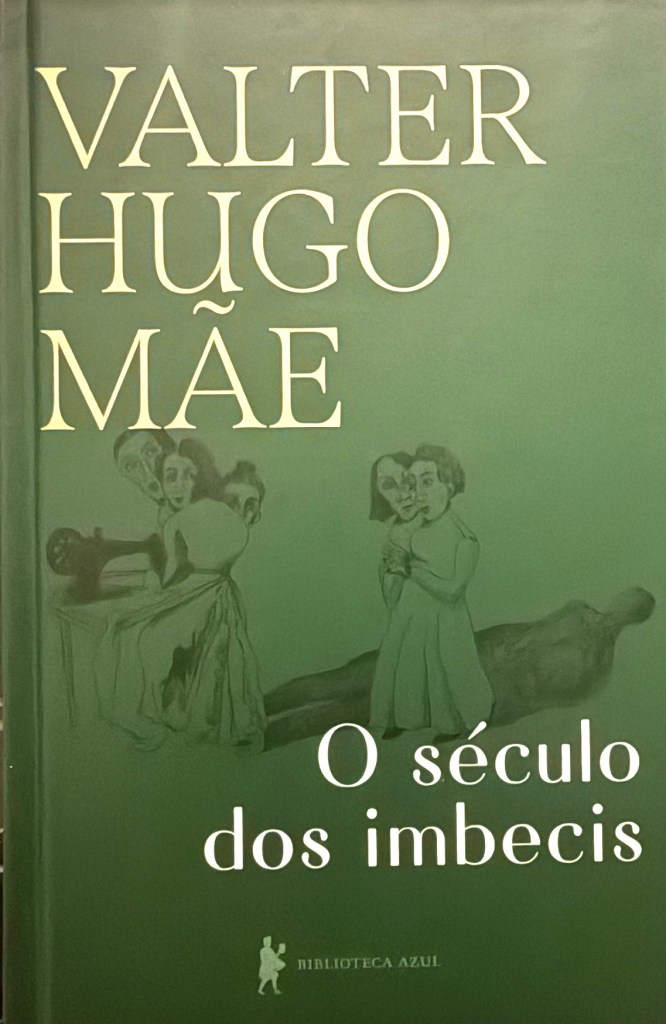
As definições de inteligência não são homogêneas, assim como não são consensuais os quesitos utilizados em sua composição. O termo pode implicar conotações técnicas, todavia também é possível que tenha sentidos menos formais. Nesta segunda acepção, a inteligência costuma estar referida a modos de pensar e agir dos seres humanos quanto ao que são capazes de fazer de si mesmos e dos coletivos em que estão inseridos. Certas condições contribuem para desenvolver tal inteligência e outras para atrofiá-la. Em “O SÉCULO DOS IMBECIS” de VALTER HUGO MÃE (Angola, 1971) alude à pequenez humana decorrente da inabilidade ou da pouca disposição para o desenvolvimento do intelecto e, presumivelmente, da afetividade. Uma espécie de parábola para lembrar problemas bastante atuais.
A estória é ambientada num povoado fictício de Portugal, onde habitam homens com nomes e mulheres designadas pelo que fazem ou por alguma característica que tenham. Agilulfo, marquês da Malandrinha, funciona como pivô do enredo. Sua inteligência aumenta quando ele vai para lugares altos e diminui ao visitar as baixadas. Em seu palacete é um ser amorfo preso num corpo malparecido. Ele casa-se com uma forasteira antipática. Na Malandrinha, junto com outros empregados, há a Criada, mulher virgem, forte e curiosa, que se distingue dos demais personagens por agir com engenhosidade, coragem e aprender, apesar das desvantajosas circunstâncias. Numa tarde, Omobom e Omobestia, dois amigos buscando diversão, sem intenção de cometer crime, acabam por levar Agilulfo tão abaixo de sua quinta, que ele morre de causas obscuras, possivelmente de burrice. Os dois homens são considerados assassinos, julgados e condenados a três milênios de prisão. Com a morte do marquês, a viúva cai em privações materiais, ressecando ainda mais sua vida. Há outras figuras interessantes, como a Coveira, a Pessivista e a Pasteleira.
As menções explícitas à inteligência aparecem mais especificamente com Agilulfo. Os outros personagens estão em perspectivas diferentes e representam formas diversas de precariedade na compreensão e fruição da vida. Ocupam-se do que é irrelevante. Há pouco espaço para reflexão crítica sobre o que lhes sucede e aos seus conterrâneos. Na maioria, são passivos e fúteis quanto ao gerenciamento de seu mundo. Ilustra isto o fato de ninguém questionar a culpabilidade (antes e depois do julgamento) dos dois personagens que convidaram Agilulfo para passear quando de sua morte. Mesquinhez agrilhoa o povo local. A bem-querença é escassa nas relações entre os próximos.
As sugestões quanto aos malefícios de atitudes frívolas e desprovidas de esforços pela amplidão do pensamento e de generosidade são relevantes. Não há precisão quanto ao século a que se refere o autor, possivelmente XX e XXI. Todavia, o que interessa são as características humanas. O mais notável no livro é a linguagem que o autor emprega, cheia de lirismo, de regionalismos e do senso de humor próprios do falar do povo português. Tudo bonito, e, em si, uma comunicação ao leitor sobre a importância de prescindir da observação superficial ou enviesada do que se passa no entorno, de lutar contra o comodismo e de não aderir às crenças simplistas, que alheiam da realidade as pessoas. Conta a riqueza de expressão, para a necessária consonância com a complexidade do que se vive. Algumas frases merecem ser destacadas:
“Um burro é sempre incapaz do decoro de não se denunciar.”
“Tudo o que é de Deus é sem nome.”
“A vida é de Deus, mas o tempo é do diabo.”
“Aquilo que mandavam Deus e os santos era muitas vezes sem juízo.”
Definitions of intelligence are far from homogeneous, just as there is no consensus regarding the criteria used to constitute it. The term may carry technical connotations, yet it may also be employed in less formal senses. In this latter understanding, intelligence is often associated with the ways human beings think and act in relation to what they are capable of making of themselves and of the collectives in which they are embedded. Certain conditions contribute to the development of such intelligence, while others serve to wither it. THE CENTURY OF IMBECILES, by VALTER HUGO MÃE (Angola, 1971), alludes to the human smallness that arises from an inability—or a lack of willingness—to cultivate the intellect and, presumably, the capacity for feeling. It is a kind of parable meant to recall problems that remain strikingly current.
The story is set in a fictional Portuguese village, inhabited by men who bear names and women who are identified by what they do or by some characteristic they possess. Agilulfo, Marquis of Malandrinha, serves as the pivot of the plot. His intelligence increases when he goes to high places and diminishes whenever he descends into the lowlands. In his manor house, he is an amorphous creature trapped in an ill-favored body. He marries an unpleasant outsider. In Malandrinha, alongside the other servants, there is the Maid, a strong, curious virgin who distinguishes herself from the other characters by acting with ingenuity and courage and by learning despite the unfavorable circumstances in which she finds herself.
One afternoon, Omobom and Omobestia, two friends in search of amusement and with no intention of committing a crime, take Agilulfo so far below his estate that he dies of obscure causes, possibly of stupidity. The two men are regarded as murderers, tried, and sentenced to three thousand years in prison. With the marquis’s death, his widow falls into material deprivation, her life becoming even more arid. There are other intriguing figures as well, such as the Gravedigger, the Pessimist, and the Pastry Maker.
Explicit references to intelligence appear most clearly in Agilulfo. The other characters occupy different positions and embody different forms of precariousness in their understanding and enjoyment of life. They concern themselves with what is irrelevant. There is little room for critical reflection on what happens to them or to their fellow villagers. For the most part, they are passive and frivolous in the management of their world. This is illustrated by the fact that no one questions the guilt—either before or after the trial—of the two characters who invited Agilulfo out on the occasion of his death. Petty-mindedness shackles the local population. Goodwill is scarce among those who live alongside one another.
The suggestions concerning the harm caused by frivolous attitudes, devoid of any effort toward breadth of thought or generosity, are significant. The author does not specify precisely which century he has in mind, perhaps the twentieth or the twenty-first. Yet what matters are the human characteristics on display. What is most remarkable about the book is the language the author employs, rich in lyricism, regionalisms, and the particular humor of Portuguese popular speech. Everything is beautiful—and, in itself, a communication to the reader about the importance of abandoning superficial or biased ways of observing what happens around us, of struggling against complacency, and of refusing to embrace simplistic beliefs that estrange people from reality.
The richness of expression matters because it is necessary to achieve harmony with the complexity of what is lived. Some sentences deserve to be highlighted:
“A stupid is always incapable of the decorum required not to betray itself.”
“Everything that belongs to God is without a name.”
“Life belongs to God, but time belongs to the devil.”
“What God and the saints commanded was often devoid of reason.”
Título da Obra: O SÉCULO DOS IMBECIS
Autor: VALTER HUGO MÃE
Editora: BIBLIOTECA AZUL
Deixe uma resposta