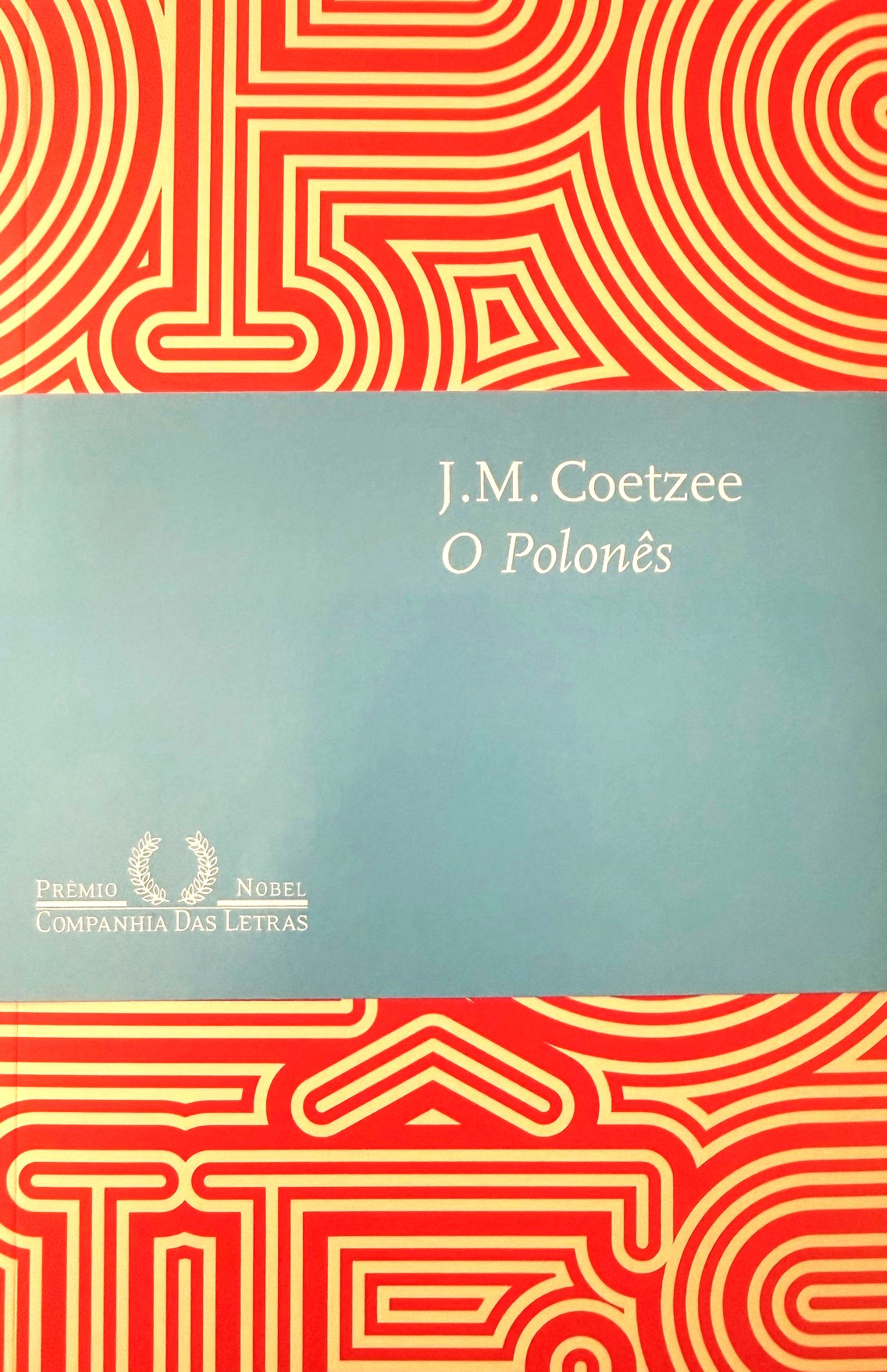
Falar de amor é uma tarefa cheia de desafios. Especialmente o amor que implica sensualidade/sexo/acasalamento pode ser desdobrado em múltiplas vertentes, incorporar numerosos sentidos e ter maior plasticidade. O que se dá entre duas pessoas atraídas uma pela outra? Isto é algo que não cabe em definições simples e nem estáveis. O romance “O POLONÊS”, publicado em 2025, de J.M. COETZEE (África-do-Sul, 1940) trata disto com sugestiva e elegante concisão.
“O POLONÊS” trata da curiosa relação entre um pianista idoso e a mulher que o recepciona quando ele vai dar um concerto em Barcelona. Ela, aparentemente segura e firme na condução de sua vida, está próxima dos cinquenta anos, casada, mãe de dois filhos adultos e bem inserida num nicho mais culto da sociedade barcelonense. Dele o leitor recebe menos informações, mas é descrito como alguém reservado (talvez solitário), residente na Polônia, divorciado e pai de uma mulher. Ele, Witold, não é um homem atraente para Beatriz. Todavia, enredam-se numa ligação inesperada e complexa. Quando ele morre, deixa 84 poemas como herança para ela. Todos endereçados a Beatrice. Através do envolvimento entre ambos, Coetzee transita por aspectos intricados de uma aventura amorosa. São referências significativas a música de Chopin e o amor platônico de Dante na “Divina Comédia, Beatrice.
Ambos souberam muito pouco a respeito um do outro. A interação presencial aconteceu por curto período e foi marcada por restrições e barreiras à intimidade. Os reais afetos pareciam estar distantes do que aconteceu durante convívio, quase segredos guardados por cada um. Não houve algo que pudesse ser chamado de comunhão. Ele a idealizou como a mulher que lhe proporcionaria a paz. Desejou-a, talvez por sua aparência física, talvez por seu comportamento pouco caloroso, que exigia conquista e impunha a distância possivelmente necessária para que acalentadas ilusões sobrevivessem ou para que ele pudesse formalizar o desejo que talvez o atormentasse. É difícil ter uma noção clara sobre aquilo que determinava a atração que ele sentia por ela. Todavia, é possível pensar que certas características de Beatriz se coadunassem à conformação afetiva dele e ao que ele buscava para ter como objeto de amor. O movimento dela em direção a Witold poderia ter sido provocado por recônditas carências e por uma falsa solidez em sua concepção de mundo. Cabe supor que ambos experimentavam apresentações da solidão, pouco óbvia para eles mesmos. Fica a impressão de uma certa aridez neles, só tolerável na vigência da promessa de sentido para a vida, que não cessa de descartar sentidos.
Coetzee aborda refinadamente um jogo amoroso nada excepcional nem excêntrico. Fala de um modo de funcionamento dos seres humanos, possivelmente de condições ontológicas, aquelas que definem em maior profundidade o que as pessoas são. Tais condições, próprias à existência de cada indivíduo, dificilmente se desnudam. Lança-se mão de roupagens que as tornem assimiláveis, aceitáveis. Neste contexto importa muito a mencionada solidão, inerente a cada um, gradualmente revelada ambiguamente como ponto de partida e destino, difícil de evitar ou superar. Solidão que se pronuncia na ausência ou na presença de outros. Solidão que perturba, dissolvendo a tranquilidade, tornando mito a paz. Nela pesam as dificuldades de formar vínculos consistentes com os outros. Vínculos que não desabem em decorrência das frustrações.
Construir fantasias e dar-lhes feições de realidade não é um intento tão difícil quanto amar o outro enxergando-o, ainda que imperfeitamente, como outro, acolhendo-o em sua diversidade, querendo-o e unindo-se a ele para além do apaixonamento e dos planejamentos preconcebidos.
Pessoas se relacionando como Witold e Beatriz estão em todo o lugar, em qualquer tempo e em variadas circunstâncias. Veiculam peculiaridades do que é ser humano.
Título da Obra: O POLONÊS
Autor: J. M. COETZEE
Tradutor: JOSÉ RUBENS SIQUEIRA
Editora: COMPANHIA DAS LETRAS
THE POLE
To speak of love is a task fraught with challenges. Love that involves sensuality, sex, and pairing can unfold into multiple strands, take on numerous meanings, and display remarkable plasticity. What truly transpires between two people drawn to one another? It is not something that lends itself to simple or stable definitions. The novel The Pole, published in 2025 by J. M. Coetzee (South Africa, 1940), approaches this question with suggestive and elegant concision.
The Pole portrays the curious relationship between an elderly pianist and the woman who hosts him when he travels to Barcelona to give a concert. She—apparently self-assured and firm in the conduct of her life—is nearing fifty, married, the mother of two grown children, and well established within a cultivated milieu of Barcelonan society. Of him, the reader receives fewer details: he is described as reserved (perhaps solitary), a resident of Poland, divorced, and the father of a daughter. He, Witold, is not an attractive man to Beatriz. And yet they become entangled in an unexpected and complex bond. When he dies, he leaves behind eighty-four poems addressed to her—Beatrice—as his legacy. Through their involvement, Coetzee moves across intricate aspects of a love affair. There are meaningful references to the music of Frédéric Chopin and to Dante Alighieri’s platonic love for Beatrice in Divine Comedy.
They know very little about one another. Their time together is brief, marked by restraint and barriers to intimacy. Their true feelings seem distant from what occurs in their shared presence—almost like secrets each keeps to themselves. There is nothing that could properly be called communion. He idealizes her as the woman who might grant him peace. He desires her—perhaps because of her physical appearance, perhaps because of her emotional reserve, which demands conquest and imposes a distance that may be necessary for cherished illusions to survive, or for him to give form to a desire that may trouble him. It is difficult to form a clear notion of what determines his attraction to her. Yet one may suppose that certain traits in Beatriz align with his emotional configuration and with what he seeks in an object of love. Her movement toward Witold may stem from hidden lacks and from a false solidity in her conception of the world. It is plausible that both experience forms of loneliness not entirely evident even to themselves. One is left with the impression of a certain aridity in them—tolerable only so long as there remains a promise of meaning for life, even as life continually discards its meanings.
Coetzee treats, with refinement, a love dynamic that is neither exceptional nor eccentric. He speaks of a mode of human functioning—perhaps of ontological conditions, those that define more deeply what a person is. Such conditions, inherent to each individual’s existence, rarely reveal themselves plainly. One resorts to coverings that render them more assimilable, more acceptable. In this context, loneliness is of great importance: inherent to each of us, gradually revealed in an ambiguous way as both point of departure and destination, difficult to avoid or overcome. A loneliness that asserts itself both in absence and in presence of others. A loneliness that unsettles, dissolving tranquility and turning peace into myth. It is burdened by the difficulty of forming enduring bonds with others—bonds that do not collapse under the weight of frustration.
To construct fantasies and give them the appearance of reality is not nearly as difficult as loving another while truly seeing them—however imperfectly—as other, welcoming their difference, desiring them, and joining with them beyond infatuation and preconceived designs.
People relating as Witold and Beatriz do exist everywhere, at all times, under varied circumstances. They embody particular facets of what it means to be human.
Title: The Pole
Author: J. M. Coetzee
Translator: José Rubens Siqueira
Publisher: Companhia das Letras


 Estante do Justo