Sempre foi importante tratar de temas como a frequente insuficiência de racionalidade diante da rigidez de crenças que embasam a cultura de povos e nelas as noções de justiça e civilidade. As consequências das atitudes irrefletidas, automatizadas, pusilânimes ou desonestas podem ser devastadoras para indivíduos e sociedades. São entraves à boa convivência social, ao esforço pela harmonia e cooperação entre pessoas, ao desenvolvimento humano. “O MERCADOR DE VENEZA”, uma das peças mais conhecidas de William Shakespeare (Inglaterra, 1564-1616), aborda estes assuntos e tem sido objeto de diferentes interpretações desde que foi escrita e passou a ser encenada.
O enredo é urdido entre dois eixos principais interligados. O mercador Antônio toma um empréstimo de dinheiro a um judeu de Veneza, Shylock, para auxiliar seu amigo Bassânio. As bases da transação e seus desdobramentos servem de mote para um dos planos da estória. Caso Antônio não pague a quantia acertada, deverá dar uma libra da própria carne a ser escolhida e extraída por Shylock, podendo implicar sua morte. Bassânio precisa financiar sua ida a Belmonte, onde reside Pórcia, que deseja ter como esposa. Ela só poderá se casar com aquele que escolher entre três arcas aquela que contém seu retrato. Uma arca é de ouro, outra de prata e a terceira de chumbo. Alguns pretendentes tentam a sorte e erram, mas Bassânio acerta. Pórcia, que também o quer para marido, oferece a ele um anel com o trato de que nunca poderá tirá-lo do dedo. Nerissa, aia de Pórcia, faz o mesmo ao se casar com Graziano, amigo de Antônio e Bassânio. Não podendo pagar a dívida na data prevista, Antônio está prestes a oferecer seu corpo a Shylock para que ele tome a libra de carne que desejar. Pórcia e Nerissa, disfarçadas de advogado e secretário intervêm para resolver a questão, sem que nenhum dos outros envolvidos as reconheçam. Ao ser resolvido o problema do pagamento a Shylock, Pórcia (ainda disfarçada de advogado) pede o anel que Bassânio está usando, como recompensa pelo que conseguiu fazer. Nerissa faz o mesmo com Graziano. Eles lhes entregam as duas joias. Paralelamente, Jessica, filha de Shylock, furta riquezas do pai e foge com um cristão. No final, Pórcia, Nerissa, seus maridos e amigos se reúnem em Belmonte e discutem as promessas não cumpridas.
Shylock é o personagem que costuma despertar sentimentos mais vivos no leitor/espectador, tornou-se célebre. Num primeiro olhar ele é visto como homem cruel, incapaz de ter piedade, para quem só valores materiais importam e acaba por causar fácil indignação. Todavia, Shakespeare, como habitualmente em suas obras, aponta para motivações complexas, menos óbvias em seus personagens, faz pensar sobre o funcionamento dos humanos. Como é dito por Shylock, ele foi muitas vezes humilhado por Antônio (assim como por outros) pelo fato de ser judeu. Sofreu agressões verbais repetidamente, tendo chegado o mercador a cuspir-lhe no rosto devido a sua fé. Foi prejudicado em seus negócios, marginalizado. Certamente pesavam também o fato dele emprestar dinheiro a juros (a usura, condenada pela Igreja Católica) e de ser rico, despertando inveja. Na época em que a peça foi escrita o antissemitismo estava muito presente na corte inglesa (especialmente após um médico português e judeu, que cuidava da rainha Elizabeth I, ter sido acusado falsamente de conspirar contra a soberana e, em seguida, enforcado). Shakespeare foi possivelmente instigado a escrever um texto criticando os judeus, como havia feito seu contemporâneo Cristopher Marlowe em “O Judeu de Malta”, que alcançou grande sucesso. Todavia, Shakespeare enxergava o que se passava com os judeus numa sociedade majoritariamente cristã e altamente preconceituosa. Assim, não deixou de apontar para aquilo que possivelmente estava enraizado no comportamento de Shylock, afastando as interpretações mais simplistas.
“O MERCADOR DE VENEZA” abrange outras questões. O papel de Pórcia é muito importante. Sua inteligência e ousadia alude ao protagonismo que podia ter a mulher numa sociedade dominada por homens. Através dela é possível pensar na diversidade das promessas descumpridas e no tratamento disto. Jéssica também rompe com o que lhe fora destinado, tanto por ordem paterna quanto pela religião. Os enganos e ardis a que estão sujeitas as pessoas é algo que não pode ser esquecido. Isto aparece a segurança pretensiosa, ainda que também haja generosidade, de Antônio, na escolha de uma arca, no discurso habilidoso de um advogado. A força das circunstâncias no comportamento humano atravessa toda a trama. O autor faz pensar na fragilidade de cada um, determinada por crenças, previsões errôneas e intenções inalcançáveis, frente à realidade. E mais há para colher na experiência da leitura ou de assistir a uma encenação e refletir.
Vale mencionar a qualidade da tradução e dos ensaios introdutórios de Barbara Heliodora na edição do “Teatro Completo de William Shakespeare” da editora Nova Aguilar.
Título da Obra: O MERCADOR DE VENEZA
Autor: WILLIAM SHAKESPEARE
Tradução: BARBARA HELIODORA
Editora: NOVA AGUILAR
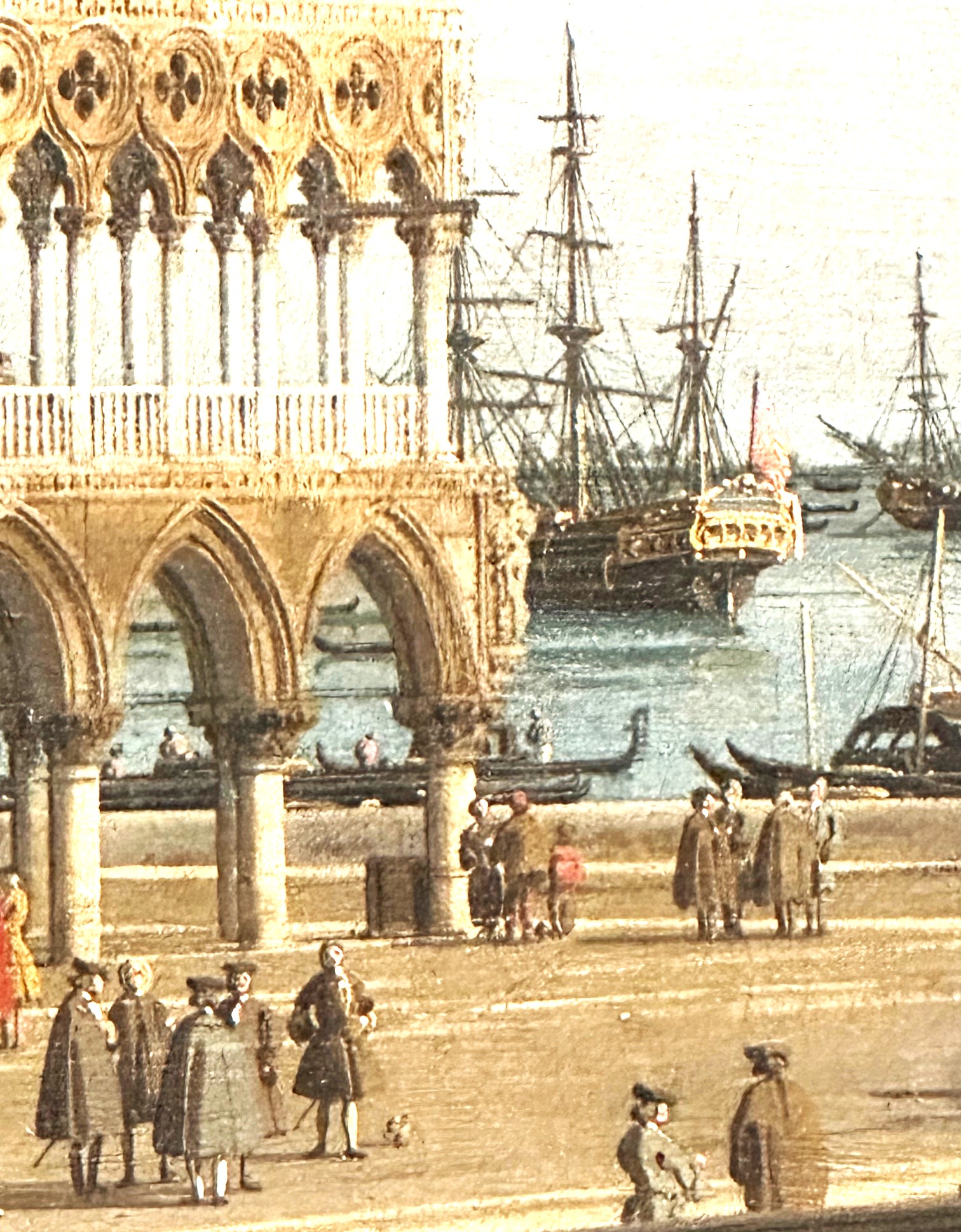
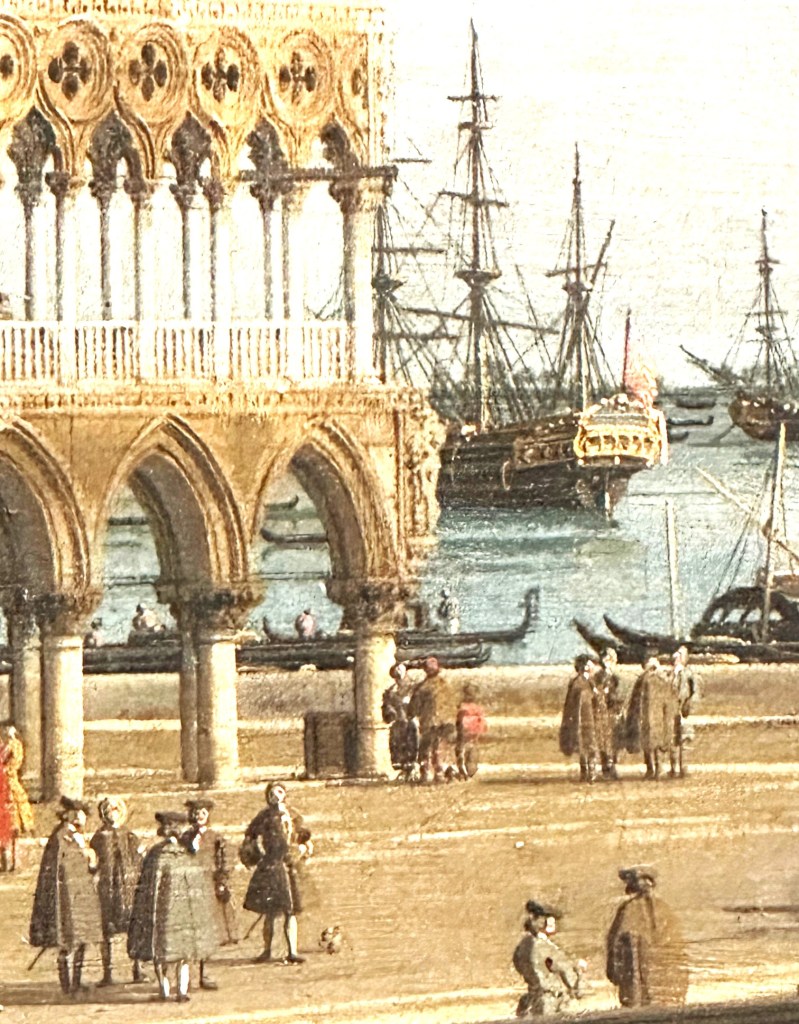
Na ilustração: detalhe de tela de Canaletto (Giovanni Antonio Canal, Veneza, 1897-1768); quadro exposto na National Gallery of Art – Washington
THE MERCHANT OF VENICE
It has always been important to address themes such as the frequent insufficiency of rationality in the face of rigid beliefs that underpin the culture of peoples, and within them, notions of justice and civility. The consequences of unreflective, automatic, pusillanimous, or dishonest actions can be devastating for individuals and societies. They hinder social coexistence, the pursuit of harmony and cooperation, and human development. The Merchant of Venice, one of the best-known plays by William Shakespeare (England, 1564–1616), engages precisely with these issues and has been subject to many interpretations since it was written and first performed.
The plot is woven around two main, interconnected axes. The merchant Antonio borrows money from a Jew of Venice, Shylock, to help his friend Bassanio. The terms of the transaction and its unfolding serve as the core of one narrative thread: if Antonio fails to repay the agreed sum, he must give a pound of his own flesh, to be chosen and cut by Shylock, which may imply his death. Bassanio needs to finance his journey to Belmont, where Portia lives, whom he wishes to marry. She may wed only the suitor who correctly chooses, among three caskets, the one containing her portrait. One is made of gold, another of silver, and the third of lead. Several suitors fail, but Bassanio succeeds. Portia, who also desires him, gives him a ring on the condition that he must never remove it. Nerissa, Portia’s lady-in-waiting, does the same when she marries Gratiano, a friend of Antonio and Bassanio. Unable to repay the debt on time, Antonio is on the verge of offering his body to Shylock so that he may take the pound of flesh. Portia and Nerissa, disguised as a lawyer and clerk, intervene to resolve the matter, unrecognized by the others. Once the issue is settled, Portia—still in disguise—asks for Bassanio’s ring as a reward. Nerissa does likewise with Gratiano. They both surrender the jewels. Meanwhile, Jessica, Shylock’s daughter, steals her father’s wealth and flees with a Christian. In the end, Portia, Nerissa, their husbands, and their friends gather in Belmont and confront the matter of broken promises.
Shylock is the character who most often provokes the strongest reactions in readers and audiences; he has become iconic. At first glance, he may be seen as cruel, incapable of mercy, concerned only with material values, and thus easily condemned. Yet Shakespeare, as is typical of his work, reveals more complex and less obvious motivations in his characters, prompting reflection on human behavior. As Shylock himself declares, he has been repeatedly humiliated by Antonio (as well as by others) for being Jewish. He has endured verbal abuse, even being spat upon by the merchant because of his faith. He has been harmed in his business dealings and marginalized. It is also likely that his practice of lending money at interest—usury, condemned by the Catholic Church—and his wealth aroused envy. At the time the play was written, antisemitism was widespread in the English court, particularly after a Portuguese Jewish physician who attended Queen Elizabeth I was falsely accused of conspiracy and executed. Shakespeare may have been encouraged to write a work critical of Jews, as his contemporary Christopher Marlowe had done in The Jew of Malta, which enjoyed great success. However, Shakespeare perceived what Jews endured in a predominantly Christian and prejudiced society, and thus he also illuminates the roots of Shylock’s behavior, moving beyond simplistic interpretations.
The Merchant of Venice also encompasses other important themes. The role of Portia is central: her intelligence and boldness suggest the potential agency of women in a male-dominated society. Through her, one may reflect on the nature of broken promises and their consequences. Jessica, too, breaks away from what had been destined for her, both by paternal authority and by religion. The deceptions and stratagems to which people are subject should not be overlooked. They appear in Antonio’s presumptuous confidence, in the choice of the casket, and in the persuasive rhetoric of the disguised lawyer. The force of circumstance in shaping human behavior runs throughout the play. Shakespeare invites us to consider the fragility of each individual—conditioned by beliefs, mistaken expectations, and unattainable intentions—when confronted with reality. Much more may be drawn from the experience of reading the play or watching it performed and reflecting upon it.
It is also worth noting the quality of the translation and introductory essays by Barbara Heliodora in the edition of The Complete Works of William Shakespeare published by Nova Aguilar.
Title: The Merchant of Venice
Author: William Shakespeare
Translator: Barbara Heliodora
Publisher: Nova Aguilar
Illustration: detail of a painting by Canaletto (Venice, 1697–1768); work housed at the National Gallery of Art, Washington.

 Estante do Justo