A CEIA
Histórias de amor entre casais costumam passar por transformações significativas. Muitos de seus elementos têm tempo de validade, às vezes a história inteira, especialmente os sentimentos que a estruturaram. Quando se define um fim, o que resta, se algo resta, pode ser bom ou ruim. As características do “espólio” dependem dos envolvidos e das circunstâncias. O momento de ruptura é um ponto sensível e frequentemente dá o tom do que virá depois. “A CEIA”, conto de LYGIA FAGUNDES TELLES (São Paulo, 1923-2022) fala disto.
Em “A CEIA”, Eduardo e Alice encontram-se em hora tardia num restaurante ao ar livre. Ela quer falar com ele, algum tempo após o rompimento da relação de casal que tinham. Há referência a um encontro anterior em que ela se embriagou e criou constrangimentos para ambos. Eduardo vai se casar com outra mulher e Alice pede que eles continuem se encontrando mesmo nas novas condições, pois diz amá-lo e não tolerar a ideia de afastamento definitivo. Ele responde que não o poderão fazer. É gentil e demonstra respeitar a dor que ela manifesta. Fumam, pedem um vinho e esperam por bifes que a cozinha não manda nunca. Ao acender os cigarros ele usa um isqueiro que ela não conhecia. Eduardo fala sobre a procedência do objeto como algo casual. Alice não gosta de isqueiros. Não se ofendem, embora ela faça comentários um tanto jocosos sobre o novo amor dele. Parece não ter havido propriamente uma traição, mas um término de relação. Quando se despedem ele esquece o isqueiro. Ela recusa a oferta dele para levá-la para casa, dizendo que prefere ficar e ir a pé depois.
Usando poucos elementos explícitos, Lygia Fagundes Telles consegue criar com vivacidade o clima que envolve os personagens. Atravessando as frestas da pequena narrativa transitam questões abrangentes sobre o amor, embora o foco esteja naquilo que predomina no contexto de um relacionamento findado. Amor é uma palavra que comporta múltiplos sentimentos e modos de interação, há grande complexidade em sua evolução, pois é um afeto vivo, não uma condição estática. O que faz com que os personagens ainda se vejam após terem rompido o relacionamento com clareza? Tentativa de resgatar o que tinham, por parte dela? Desejo, por parte de Alice, de fazer com que Eduardo seja ferido pela percepção do abandono que ela sente? Há culpa nele ou somente consideração pela dificuldade que ela experimenta? O que se pode dizer que resta entre eles? Qual a natureza do amor que pode persistir em cada um? Que futuro seria razoável esperar, que tipo de vínculo poderia surgir ou permanecer? É marcante o fato dele deixar esquecido na mesa, com ela, o produtor da chama, o isqueiro.
“A CEIA” faz parte do volume “ANTES DO BAILE VERDE” e nele a autora mostra como o formato literário do conto pode ser intenso e instigante.
Título da Obra: A CEIA (componente de “ANTES DO BAILE VERDE”)
Autora: LYGIA FAGUNDES TELLES
Editora: COMPANHIA DAS LETRAS
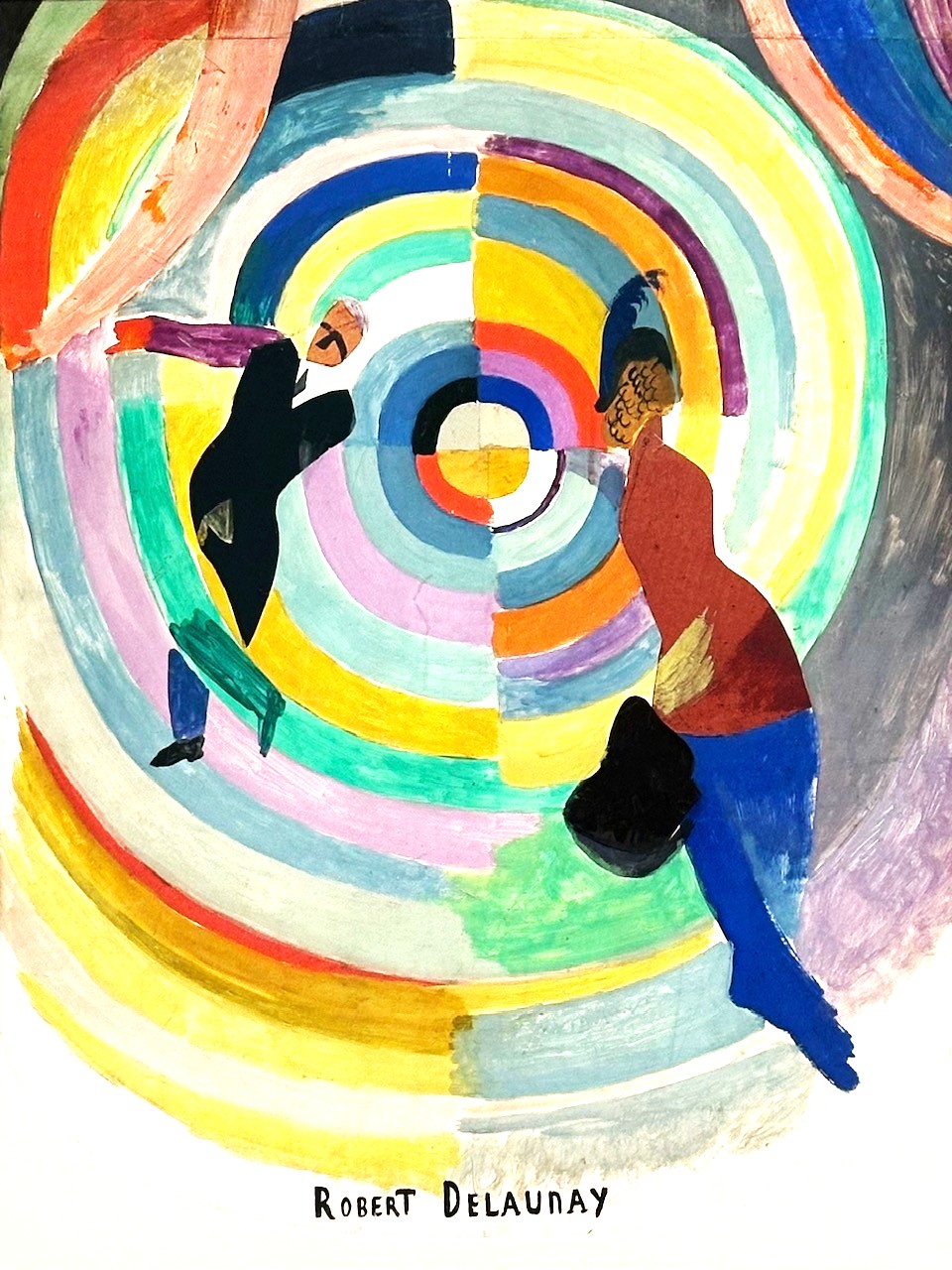
Na ilustração, foto de tela de Robert Delaunay (França, 1885 – 1941); National Gallery of Art, Washington
THE SUPPER
Love stories between couples often undergo significant transformations. Many of their elements have a limited duration—sometimes the entire story does, especially the feelings that once sustained it. When an ending is defined, what remains—if anything remains—may be good or bad. The character of the “legacy” depends on those involved and on the circumstances. The moment of rupture is a sensitive point and often sets the tone for what follows. “The Supper,” a short story by Lygia Fagundes Telles (São Paulo, 1923–2022), speaks of this.
In The Supper, Eduardo and Alice meet late at night in an open-air restaurant. She wishes to speak with him some time after the breakup of their relationship. There is reference to an earlier meeting in which she became drunk and created embarrassment for them both. Eduardo is about to marry another woman, and Alice asks that they continue to see one another even under these new circumstances, for she says she loves him and cannot bear the thought of a definitive separation. He replies that this will not be possible. He is gentle and shows respect for the pain she expresses. They smoke, order wine, and wait for steaks that the kitchen never seems to send. When lighting their cigarettes, he uses a lighter she does not recognize. Eduardo speaks of the object’s origin as something casual. Alice does not like lighters. They do not offend each other, although she makes somewhat playful remarks about his new love. There does not appear to have been an actual betrayal, but rather the ending of a relationship. When they part, he forgets the lighter. She refuses his offer to take her home, saying she prefers to remain there a while longer and walk later.
Using very few explicit elements, Lygia Fagundes Telles vividly creates the atmosphere surrounding the characters. Through the narrow openings of this brief narrative pass broader questions about love, though the focus remains on what predominates in the context of a relationship that has ended. Love is a word that encompasses multiple feelings and modes of interaction; its evolution is highly complex, for it is a living affection, not a static condition. What leads the characters to meet even after clearly ending their relationship? Is it an attempt, on her part, to recover what they once had? A desire, on Alice’s part, to wound Eduardo by making him feel the abandonment she experiences? Is there guilt in him, or only consideration for the difficulty she endures? What can be said to remain between them? What is the nature of the love that might persist in each of them? What future would it be reasonable to expect—what kind of bond might arise or endure? It is striking that he leaves on the table, with her, the maker of flame—the lighter.
The Supper is part of the collection Before the Green Ball, in which the author demonstrates how the literary form of the short story can be both intense and provocative.
Title: The Supper (included in Before the Green Ball)
Author: Lygia Fagundes Telles
Publisher: Companhia das Letras
Illustration: image detail of a painting by Robert Delaunay (France, 1885–1941); National Gallery of Art, Washington.

 Estante do Justo