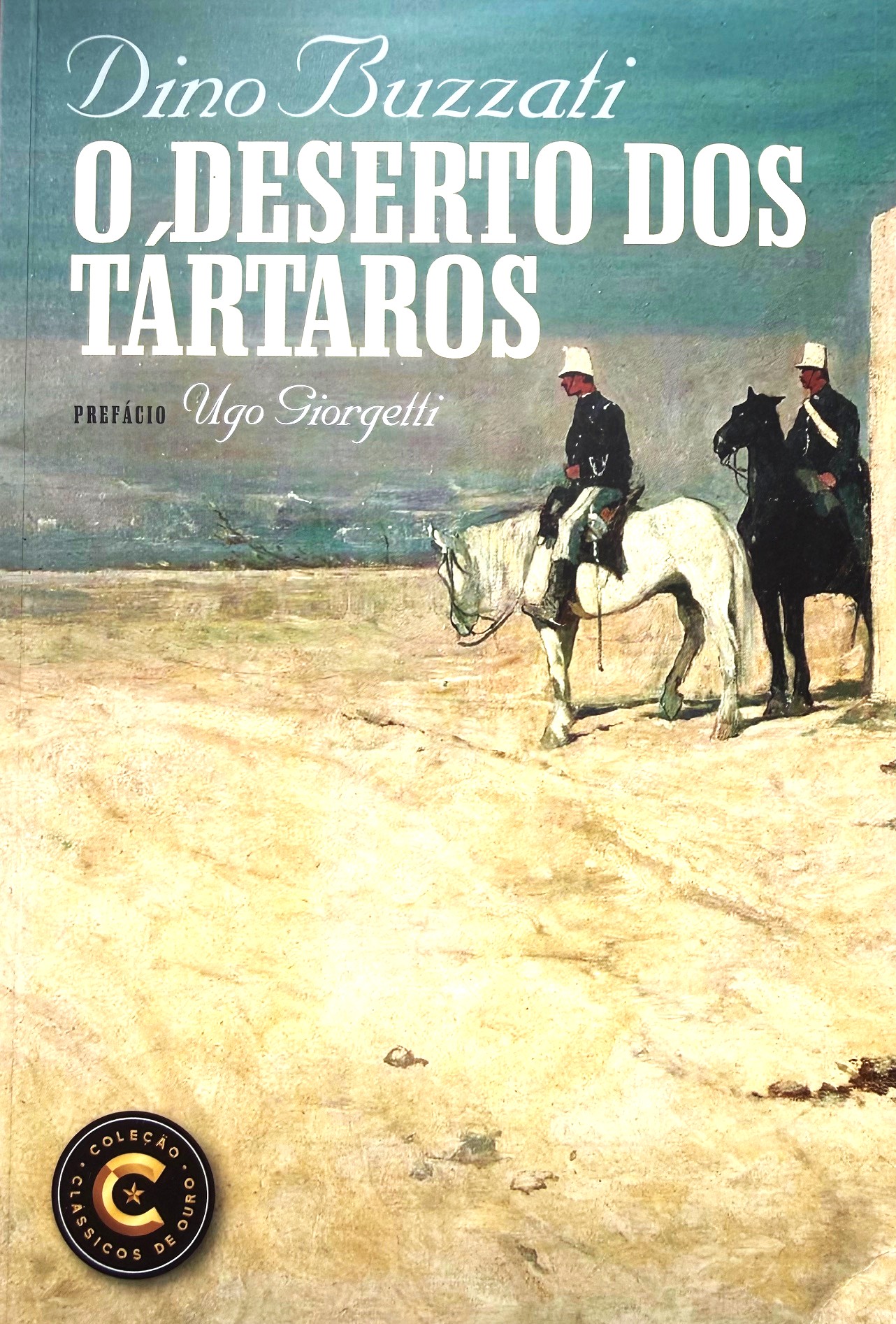
Há observações sobre a existência humana que se ajustam melhor às alegorias do que a outras formas literárias. Os temas costumam ser tratados com vasta amplidão e fomentam-se interpretações plurais, algo tão necessário ao aprofundamento da reflexão, que conduz para além das superfícies e fecunda as mentes. É o caso do romance “O DESERTO DOS TÁRTAROS” do italiano DINO BUZZATI (Belluno, 1906 – Milão, 1972).
“O DESERTO DOS TÁRTAROS” tem como personagem principal um homem chamado Giovanni Drogo. Na juventude ele recebe a patente de tenente e é enviado a um forte de fronteira para cumprir o que supõe ser uma etapa importante de sua carreira. Drogo antevê grandeza na missão à frente devido ao pressuposto de que a instalação militar defende seu país e preserva sua soberania. Em eterna vigilância, aguardando inimigos que virão do Norte, os tártaros, ali os militares cumprem rígida liturgia. Creem que um dia participarão de uma guerra e serão tocados pela glória. O protagonista decepciona-se ao chegar e planeja ficar pouco tempo. Espera transferência para outro local. Experimenta um período de incômodo e irritação com a situação na qual se vê mergulhado. Não consegue a mudança pretendida e, assim como seus companheiros, cede a uma espécie de rotina e ao paradoxal conforto que ela traz. Sua vitalidade vai se apagando. Os poucos lampejos de energia que poderiam auxiliá-lo na busca de outro tipo de vida mostram-se fátuos. As circunstâncias exteriores a sua vontade, que funcionavam como as principais barreiras para transformações através de desejos e intenções pessoais, vão deixando de ser a razão maior de seu imobilismo. O tempo impõe-se, como um brutal comandante que está dentro e fora dele, e que o vai fossilizando, tecendo o destino, erigido como inescapável (seria isto verdade?). Giovanni Drogo, como seus companheiros torna-se minúsculo demais e o curso da vida um deserto, que não é o de tártaro nenhum.
DINO BUZZATI aponta para questões extremamente complexas, que atravessam os homens como se fossem flexas percorrendo-os desde o surgimento da consciência de que estão no mundo até sua extinção. De muito se poderia falar ao explorar as intenções do autor com este livro. Algo que tem especial relevância é o olhar para o desafio de dar sentido ao viver, de encarar isto como uma construção da qual ninguém consegue realmente se desobrigar. Para os que se iludem com a possibilidade isenção o preço a ser pago é alto. Fundamentalmente, cada indivíduo adulto e sem empecilhos que sejam intransponíveis deve encarregar-se de si mesmo, com vigor. Ainda que se saiba e aceitem-se devidamente a força do acaso e as imposições provenientes do mundo ou as variadas limitações que as pessoas têm, é imperativo o engajamento no engendramento ativo do que se vive e o respeito à realidade. Isto é difícil enquanto projeto e mais ainda na sua concretização. Sustentar desejos legítimos, checar, renovar e afirmar valores, recusar a multiforme corrupção, são partes da missão de cada um. Neste sentido, os que se furtam arriscam-se à dissolução do que são e abortam o que poderiam ser. Trata-se de uma face da ética. Para que ela seja exercida é imperativo que se assuma responsabilidades, tanto nos cuidados consigo mesmo como na participação na coletividade em que se está inserido. Não basta acatar diretrizes ditadas por outros, obedecer sem refletir e sem contestar, nem a repetição cega de princípios que não passam pelo crivo da avaliação crítica ou seguir indefinidamente com as mesmas crenças e comportamentos. Não chegam as boas intenções.
Vale também dizer que o pensar e agir eticamente, no sentido acima, deve ser algo constante. Nãos se admitem postergações para os indefinidos futuros, e a ideia de eternidade torna-se fútil. Importa cada momento presente.
Os desertos mais áridos não são os territórios dos tártaros, míticos inimigos. São aqueles desertos que resultam da indolência quanto à necessidade de pensar criticamente no que se crê e nos motes engolidos e depois proclamados. São os desertos insalubres produzidos pelas omissões relativas às implicações de cada posição assumida e cada ato praticado.
Título da Obra: O DESERTO DOS TÁRTAROS
Autor: DINO BUZZATI
Tradutores: AURORA FORNONI BERNARDINI e HOMERO FREITAS DE ANDRADE
Editora: NOVA FRONTEIRA
THE TARTAR STEPPE
There are observations about human existence that lend themselves more fittingly to allegory than to other literary forms. Such themes are usually treated with broad scope and invite plural interpretations—something essential to the deepening of reflection, which carries thought beyond surfaces and renders minds fertile. This is the case with the novel The Tartar Steppe, by the Italian writer Dino Buzzati (Belluno, 1906 – Milan, 1972).
The Tartar Steppe has as its main character a man named Giovanni Drogo. In his youth he is commissioned as a lieutenant and sent to a frontier fortress to fulfill what he believes will be an important stage in his career. Drogo foresees greatness in the mission before him, based on the assumption that the military installation defends his country and preserves its sovereignty. In eternal vigilance, awaiting enemies who are to come from the North—the Tartars—the soldiers stationed there observe a rigid liturgy. They believe that one day they will take part in a war and be touched by glory. Upon arrival, the protagonist is disappointed and plans to remain only briefly. He expects to be transferred elsewhere. He goes through a period of discomfort and irritation at the situation in which he finds himself immersed. The desired transfer does not come, and, like his companions, he yields to a kind of routine and to the paradoxical comfort it brings. His vitality gradually fades. The few flashes of energy that might have helped him seek another kind of life prove futile. The circumstances external to his will—which at first functioned as the main barriers to transformation through personal desires and intentions—cease to be the principal reason for his immobility. Time imposes itself like a brutal commander, both within and outside him, slowly fossilizing him, weaving a destiny erected as inescapable (is it truly so?). Giovanni Drogo, like his companions, becomes too small, and the course of life turns into a desert—one that belongs to no Tartars.
Dino Buzzati points to extremely complex questions, which pierce human beings like arrows, traversing them from the moment they become conscious of being in the world until their extinction. Much could be said in exploring the author’s intentions with this book. Of particular relevance is his gaze upon the challenge of giving meaning to life, of facing this task as a construction from which no one can truly exempt themselves. For those who indulge in the illusion of exemption, the price to be paid is high. Fundamentally, every adult individual without insurmountable impediments must take responsibility for themselves with vigor. Even when one recognizes and duly accepts the force of chance, the impositions of the world, and the various limitations inherent to human beings, active engagement in the shaping of one’s life and respect for reality are imperative. This is difficult as a project and even more so in its realization. Sustaining legitimate desires, examining, renewing, and affirming values, refusing corruption in its many forms—these are all parts of each person’s mission. In this sense, those who evade it risk the dissolution of what they are and abort what they might have become. This is one face of ethics. For ethics to be practiced, it is imperative to assume responsibility, both in caring for oneself and in participating in the community to which one belongs. It is not enough to comply with guidelines dictated by others, to obey without reflection or contestation, to blindly repeat principles that have not passed through the sieve of critical evaluation, or to persist indefinitely in the same beliefs and behaviors. Good intentions alone do not suffice.
It is also worth saying that ethical thinking and acting, in the sense outlined above, must be continuous. No postponements toward indefinite futures are admissible, and the idea of eternity becomes futile. What matters is each present moment.
The most arid deserts are not the territories of the Tartars, those mythical enemies. They are the deserts that result from indolence in the face of the need to think critically about what one believes and about the motives that are swallowed and later proclaimed. They are the unhealthy deserts produced by omissions regarding the implications of every position assumed and every act performed.
Title: The Tartar Steppe
Author: Dino Buzzati
Translators: Aurora Fornoni Bernardini and Homero Freitas de Andrade
Publisher: Nova Fronteira

 Estante do Justo