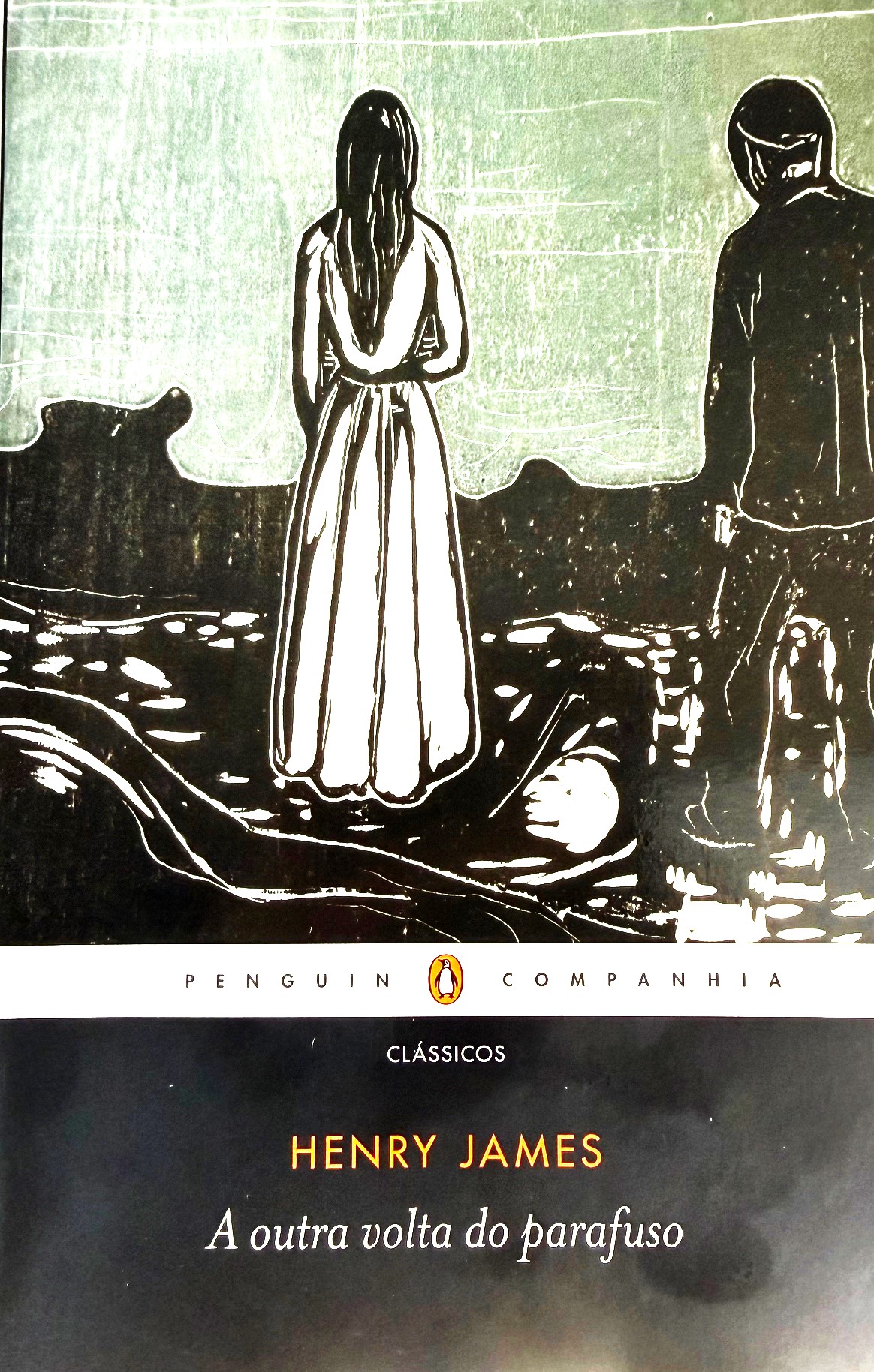
A literatura gótica, com grande variação quanto à qualidade das obras, surgiu aparentemente no século XVIII e foi mais proeminente no século XIX. Perdeu um pouco da força depois disto, mas nunca desapareceu. Autores como Mary Shelley (“Frankenstein”), Bram Stoker (“Drácula”) e Emily Brontë “O Morro dos Ventos Uivantes”) são nomes célebres deste gênero literário. As estórias frequentemente usam o sobrenatural em seus enredos, criando tensão, mistério e apelando para os temores mais recônditos dos leitores. HENRY JAMES (EUA, 1843 – Inglaterra, 1916), a despeito de quase todos os seus romances e contos estarem bem distantes do goticismo, escreveu “A OUTRA VOLTA DO PARAFUSO”, perfeitamente enquadrável nesta categorização e que se tornou um de seus livros mais conhecidos.
“A OUTRA VOLTA DO PARAFUSO” tem poucos personagens, adultos e crianças, e inclui dois fantasmas. Os desafios que os movem são importantes, aludem a questões que transcendem a ficção. Tudo se passa num casarão antigo e meio isolado, iluminado pela luz de velas quando a noite vem. A trama seduz e prende o leitor, enreda-o em enigmas que, conforme o modo de ler, podem ultrapassar a superfície do enredo. O sobrenatural acaba por entremear-se com o que poderíamos designar de “subnatural” e ainda com a representação do natural nos humanos. É possível transitar por múltiplas dimensões interpretativas, reflexos de aspectos da mente.
Os saberes que parecem incontestáveis ou ao menos muito prováveis constituem uma pequena ilha no oceano daquilo que se ignora. Muita gente não tolera esta ideia. Isto abre caminho para formulações fantásticas que facilmente ganham espaço nas concepções dos indivíduos. Estes, ao depararem-se com estórias sobre o que não pertence ao mundo da razão, das evidências científicas ou da objetividade, sentem-se talvez legitimados no crédito que dão ao que está acima (ou abaixo) da comum realidade. A compreensão do universo do qual cada um faz parte é sempre insuficiente e o uso dos recursos extraordinários torna-se um tipo de solução para muitos que se desconfortam com a limitação do conhecimento ou com as inevitáveis frustrações. Há também um tipo de encantamento na “assombração”, talvez uma promessa de continuar existindo após a morte, uma mitigação da finitude quando ela equivale a ameaça.
Vale dizer que saborear uma estória bem contada, mesmo que não se acredite naquilo que ela conta, é um prazer e a boa literatura pode abordar quase qualquer tema.
HENRY JAMES foi um escritor muito sofisticado, tanto na forma quando no conteúdo do que produziu. Este pequeno romance não é exceção. Seu olhar para os comportamentos explícitos das pessoas e para a enormidade de sentidos que podem ser subjacentes a eles é um de seus talentos. O modo de falar disto também.
Título da Obra: A OUTRA VOLTA DO PARAFUSO
Autor: HENRY JAMES
Tradutor para o Português: PAULO HENRIQUES BRITTO
Editora: PENGUIN/COMPANHIA
Gothic literature, with wide variation in the quality of its works, apparently emerged in the eighteenth century and became most prominent in the nineteenth. It lost some of its force thereafter, but it never disappeared. Authors such as Mary Shelley (Frankenstein), Bram Stoker (Dracula), and Emily Brontë (Wuthering Heights) are celebrated names within this literary genre. The stories frequently employ the supernatural in their plots, creating tension and mystery and appealing to the readers’ most deeply hidden fears. Henry James (USA, 1843 – England, 1916), despite the fact that almost all of his novels and short stories are far removed from Gothicism, wrote The Turn of the Screw, which fits perfectly within this category and has become one of his most famous books.
The Turn of the Screw has few characters, both adults and children, and includes two ghosts. The challenges that move them are significant and allude to questions that transcend fiction. Everything takes place in an old, somewhat isolated mansion, illuminated by candlelight when night falls. The plot seduces and holds the reader, entangling them in enigmas that, depending on one’s mode of reading, may go far beyond the surface of the narrative. The supernatural ends up intertwining with what might be called the “subnatural,” as well as with representations of what is natural in human beings. One may move through multiple interpretive dimensions, reflections of aspects of the mind.
Forms of knowledge that seem unquestionable, or at least highly probable, constitute only a small island in the ocean of what remains unknown. Many people do not tolerate this idea. It opens the way for fantastic formulations that easily gain ground in individual conceptions. When confronted with stories about what does not belong to the realm of reason, scientific evidence, or objectivity, individuals may feel legitimized in the credit they give to what lies above (or below) ordinary reality. Understanding the universe of which each person is a part is always insufficient, and the use of extraordinary resources becomes a kind of solution for many who are uneasy with the limits of knowledge or with inevitable frustrations. There is also a certain enchantment in “haunting,” perhaps a promise of continued existence after death, a mitigation of finitude when it presents itself as a threat.
It is worth saying that savoring a well-told story, even if one does not believe in what it recounts, is a pleasure, and that good literature can address almost any theme.
Henry James was a highly sophisticated writer, both in form and in content. This short novel is no exception. His gaze upon people’s explicit behaviors and upon the vastness of meanings that may lie beneath them is one of his great talents—and so is his way of articulating it.
Title of the Work: The Turn of the Screw
Author: Henry James
Portuguese Translator: Paulo Henriques Britto
Publisher: Penguin/Companhia

 Estante do Justo