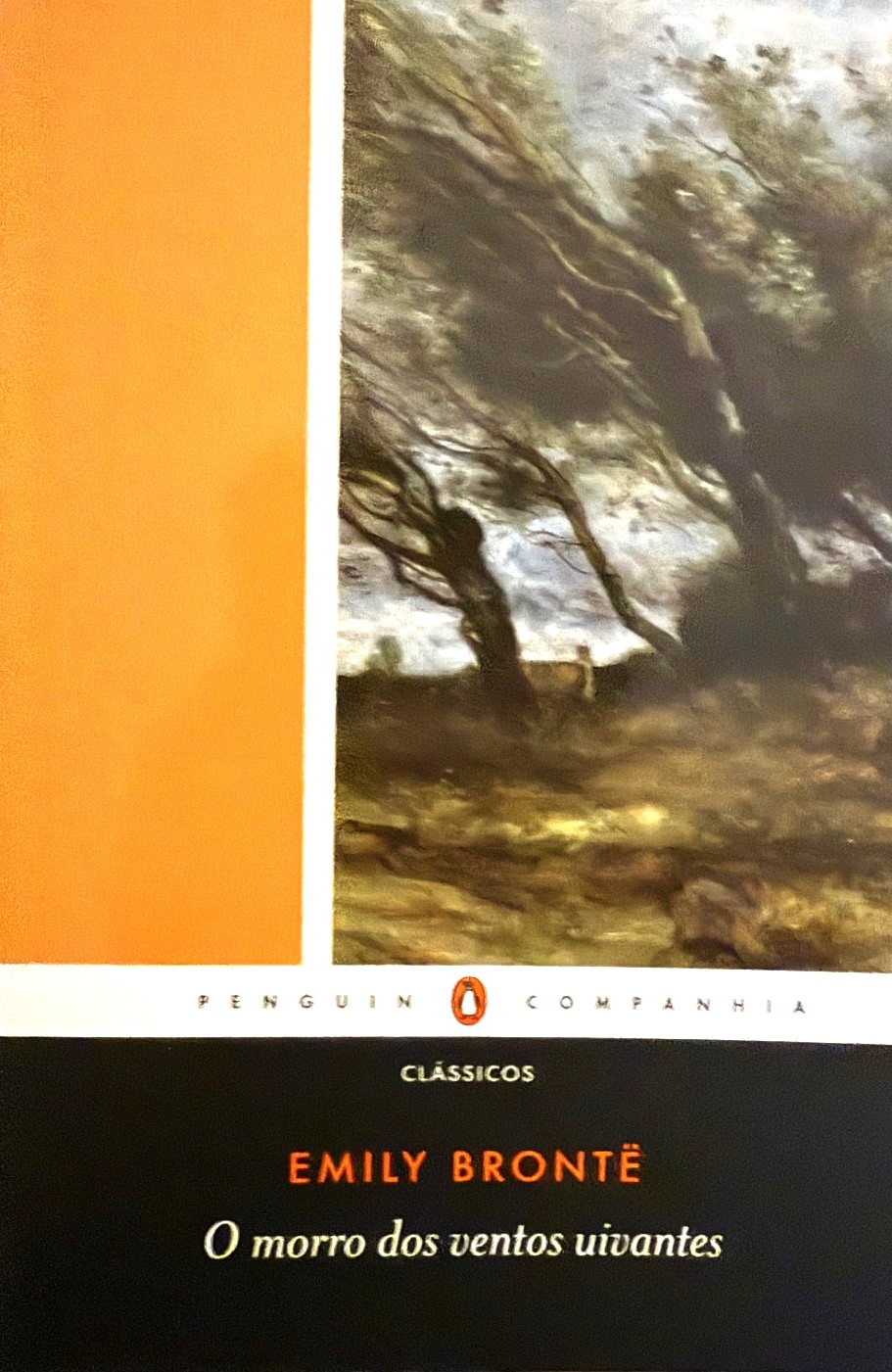
Falar de paixões e das ideias construídas em torno da morte são desafios. Construir um romance em que isto seja pregnante do início ao fim e interessar o leitor em todos os momentos atesta a qualidade de um escritor. O romance “O MORRO DOS VENTOS UIVANTES” de EMILY BRONTË (Inglaterra, 1818-1848) pode ser visto por esta lente.
Paixões são afetos intensos, muitas vezes violentos e indutores de comportamentos extremos, que jogam a razão para a periferia do funcionamento humano. Em alguns momentos da vida, da História e em determinados contextos culturais amores e paixões se superpõem e são diferentes das motivações socialmente determinadas para o enlaçamento entre pessoas. Não era incomum no século XIX, e talvez em muitos outros momentos, a associação das paixões e dos amores trágicos à morte. Esta pode ser vista, em parte, como consequência de impossibilidades radicais ou, de modo contrário, como circunstância de cristalização de um vínculo que resiste às vicissitudes da realidade objetiva. Pensemos na Rainha Vitória e o Príncipe Albert, exemplo em que a viuvez dela determinou extensamente seu modo de viver, com uma imensidão de proibições e a observação de pétrea severidade afetiva. Embora a rainha tenha vivido bem mais do que a escritora, elas nasceram na mesma época, com diferença de um ano. Cresceram em condições bastante distintas, mas marcadas por certos traços culturais que podem ter permeado os universos de ambas. No romance de Emily Brontë a estória se passa num espaço confinado a duas casas dentro de uma mesma propriedade rural. Há poucos personagens e raríssimos eventos festivos ou mesmo de rituais familiares, o que certamente não aconteceu com a rainha Vitória. Todavia, o que importava mais e dignificava indivíduos talvez estivesse incrustado em aspectos muito próprios da moral da época. Certos valores imperavam e ofuscavam outros, definiam destinos. Parte deles tinha relação com o conhecimento da origem das pessoas e de seu lugar no tecido social, assim como o que era aceitável sentir, dizer e fazer valer nas ações. Afinidades e ódios brotavam nestes campos.
Em “O Morro dos Ventos Uivantes” o enredo evolui dentro de um grupo fechado de pessoas que parecem ter horizontes pouco amplos. Suas vidas são norteadas por prerrogativas estreitas. Uma criança estranha chamada Heathcliff é trazida de uma viagem feita pelo patriarca e cresce junto a seus filhos (um casal), sofrendo discriminação por ser muito diferente das outras crianças do entorno, da aparência ao comportamento defensivo/agressivo. Ainda assim, ele se torna o preferido do chefe da casa e conquista a amizade da irmã adotiva, Catherine. Desenvolvem um tipo de identificação mútua e, posteriormente, uma paixão que consumiria a quase totalidade de suas vidas. O restante da trama deriva disto e chega ao leitor principalmente através do que narra Ellen Dean, governanta que transita por todos os núcleos formados na família e de idade próxima às de Catherine e Heathcliff, junto aos quais cresceu. Ela faz um relato ao sr. Lockwood, locatário de uma das casas dos domínios onde tudo se passa.
Em meio às turbulências passionais e modelos estratificados de relações interpessoais, é manifestada a crueldade dos personagens. Heathcliff é seu maior estandarte, mas em variadas intensidades a crueldade está presente em múltiplas situações. Gêmea ativa da maldade que mora em cada ser, ela se mostra através das atitudes que podem confundir o que é voluntário com o involuntário, faz ventar e uivar o mundo em que todos convivem.
Maldade e crueldade são produtos humanos. Contudo, desde que o homem se civilizou tem havido real empenho em controlá-las ou circunscrevê-las a contextos em que possam ser permitidas. Dificilmente são encaradas como componentes naturais do comportamento. Não havendo o que as limite ou encarcere elas ceifam as boas possibilidades da aventura humana. Na literatura podem dar contornos góticos às narrativas. Aproximam a morte daquilo que se vive, criam-lhe faces fantasmagóricas e através deste recurso condicionam os desfechos, realizados ou interpretados. Talvez verdadeiramente mais assombroso seja o potencial destrutivo dos atos humanos, algo que sobrepuja as intenções (nem sempre tão boas quanto são anunciadas) e que tem algum parentesco com aquilo que deve permanecer enterrado, calado ou desprezado nas almas. Mas as almas precisam de alguma liberdade para serem mais justas e dóceis. Como na natureza, as plantas que crescem em urzais.
A autora põe em evidência aspectos do comportamento que normalmente são camuflados ou subdimensionados quando muito se espera na lavra dos bons sentimentos e da cordialidade. Desperta o pensamento de que seria desejável que o amor fosse mais fiel a si mesmo, mais forte do que a passionalidade e implicasse melhores relações entre pessoas. Todavia Emily Brontë aponta para a inevitabilidade do contrário, ainda que abra terrenos para o amor que une e aquece, em modalidades tímidas, miniaturizadas.
Uma obra densa. O único romance escrito pela autora e que se tornou um clássico da literatura inglesa.
Título da Obra O MORRO DOS VENTOS UIVANTES
Autora: EMILY BRONTË
Tradutora: JULIA ROMEU
Editora: PENGUIN/COMPANHIA DAS LETRAS
WUTHERING HEIGHTS
Addressing passions and the conceptual frameworks constructed around death constitutes a considerable challenge. To compose a novel in which these elements are pervasive from beginning to end, while simultaneously sustaining the reader’s engagement, attests to the literary mastery of its author. WUTHERING HEIGHTS, by EMILY BRONTË (England, 1818–1848), may be interpreted through precisely this perspective.
Passions are intense affections—often violent—capable of inducing extreme behaviors that marginalize reason within human conduct. At specific moments in life, in history, and within particular cultural contexts, love and passion overlap and diverge from socially determined motivations for interpersonal union. In the nineteenth century, and indeed in other epochs, it was not uncommon to associate passion and tragic love with death. Death could be construed, on the one hand, as the outcome of radical impossibilities or, on the other, as the crystallization of a bond resistant to the vicissitudes of objective reality. Queen Victoria and Prince Albert exemplify this: the queen’s widowhood decisively shaped her existence, marked by prohibitions and a rigid affective austerity. Although she lived far longer than Brontë, both women were born within a year of each other. Their upbringings differed significantly, yet both were influenced by cultural features that may have permeated their respective worlds.
In Brontë’s novel, the narrative unfolds within the confined setting of two houses situated on the same rural estate. The cast of characters is limited, with scarcely any festive occasions or familial rituals—circumstances far removed from Victoria’s own reality. What mattered most, and what conferred dignity upon individuals, was embedded in the moral code of the time. Dominant values overshadowed others and determined destinies. Some were linked to knowledge of one’s origins and one’s place in the social fabric, as well as to what could be legitimately felt, expressed, and enacted. Within this framework, affinities and hostilities alike took root.
The plot of Wuthering Heights develops within a closed circle of individuals whose horizons appear markedly restricted. Their lives are governed by narrow prerogatives. Into this setting enters Heathcliff, a foundling brought home by the patriarch from a journey. He grows up alongside the patriarch’s children (a son and a daughter) and endures persistent discrimination for his difference in appearance and for his defensive, often aggressive demeanor. Nevertheless, he becomes the master’s favored child and forms a close bond with his adoptive sister, Catherine. Their mutual identification eventually transforms into a passion that consumes the greater part of their lives. The subsequent narrative derives from this relationship and reaches the reader principally through the testimony of Ellen Dean, the housekeeper, who circulates among the various family groups and who, being of similar age to Catherine and Heathcliff, matured in their company. She recounts the story to Mr. Lockwood, tenant of one of the estate’s houses.
Amid the turbulence of passion and the rigidly stratified models of interpersonal relations, cruelty emerges as a defining trait of the characters. Heathcliff becomes its most conspicuous embodiment, yet cruelty, in varying degrees, permeates numerous situations. As the active twin of the evil inherent in human nature, it manifests through actions that blur the boundaries between the voluntary and the involuntary, unsettling and haunting the world the characters inhabit.
Evil and cruelty are human products. Since the advent of civilization, however, there has been sustained effort to regulate them or restrict them to contexts in which they might be tolerated. Rarely are they acknowledged as natural elements of behavior. Unrestrained, they extinguish the more fruitful possibilities of human endeavor. In literature, they may confer a Gothic dimension upon narratives, bringing death into close proximity with lived experience, endowing it with ghostly forms, and shaping outcomes—whether literal or interpretative—through this device. Perhaps more terrifying still is the destructive potential of human action itself, which often surpasses intention (not invariably as virtuous as it is proclaimed to be) and is akin to what must remain buried, silenced, or despised within the soul. Yet souls require some measure of freedom in order to become more just and gentle—like the heather plants that grow resiliently in the moors.
Brontë foregrounds aspects of human behavior that are ordinarily concealed or minimized when too much reliance is placed upon good sentiments and cordiality. She compels the reader to consider that love ought to be more faithful to its own essence, stronger than passion, and conducive to healthier human relations. Nevertheless, she underscores the inevitability of the opposite, though she also gestures toward forms of love that unite and console, albeit in muted and diminished expressions.
A dense and singular work: the only novel authored by Emily Brontë, and one which has become a classic of English literature.
Title of the Work: WUTHERING HEIGHTS
Author: EMILY BRONTË
Translator: JULIA ROMEU
Publisher: PENGUIN/COMPANHIA DAS LETRAS

 Estante do Justo