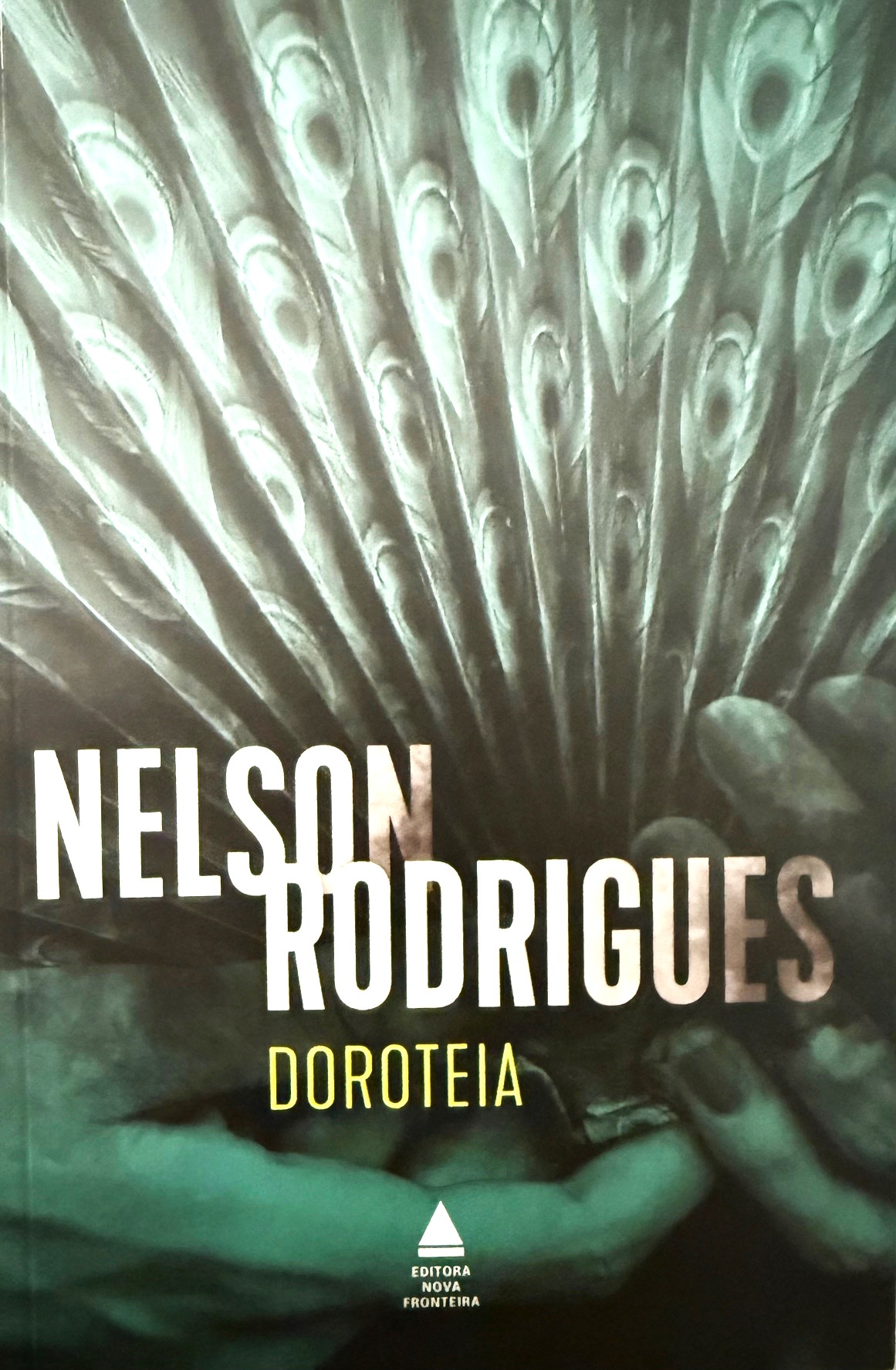
Nelson Rodrigues (Recife, 1912 – Rio de Janeiro, 1980) foi um dramaturgo revolucionário, ainda mais do que como romancista e cronista. Usou diferentes linguagens para construir suas peças. Qualificou DOROTEIA como uma farsa. Todavia, é uma obra híbrida, combina elementos de diferentes movimentos estéticos como surrealismo, expressionismo e algo do “teatro do absurdo”. Parece inspirada na mitologia grega, com personagens que lembram as Moiras (que teciam os destinos dos humanos), assim como guarda parentesco com Macbeth de Shakespeare e suas bruxas (empenhadas em desfechos geralmente ruinosos para outros personagens). Foi encenada pela primeira vez em 1950 e teve Eleonor Bruno no papel de Doroteia.
Nesta peça Nelson Rodrigues põe em cena somente mulheres, reservando aos homens o lugar de ausências fortes. Numa casa vivem três primas, d. Flávia, Maura e Carmelita, junto com filha de uma delas, Maria das Dores. A última está às vésperas de ser casada. Elas recebem a inesperada visita da personagem título, Doroteia, que faz contraponto ao que são as moradoras do que lembra um mausoléu. As três mais velhas são viúvas em luto eterno, servas da morte, residindo num lar que não tem quartos, somente salas. Das Dores, filha de d. Flávia, nasceu morta no quinto mês de gestação e, sem que isto significasse um fim, continuou crescendo para cumprir o destino das mulheres da família (sofrer a náusea da noite de núpcias ao invés de prazer, o que equivale a um passaporte para morrer dignamente). O clã é chefiado por d. Flávia, dotada de poderes mágicos, suas primas são coadjuvantes na árida missão de preservar a castidade. Elas não dormem para não sonhar e com isto arriscar a perda de controle sobre sua missão. Seus passados dissolvem-se quase completamente no único propósito que têm. Usam máscaras e leques para cobrir as faces e prevenir a exibição de qualquer elemento humano que expresse desejo, talvez que revele resquícios de ânsia por sexo cru. Tais disfarces atendem à necessidade de ocultação de sua real feiura, mais insuportável do que as deformidades das máscaras e mesmo as anatômicas. Doroteia não usa nenhuma máscara, é linda, tem um passado vigoroso de volúpia e gozo de seu belo corpo, que uniu em celebração do prazer carnal aos corpos de muitos homens. Usa roupa vermelha, cor associada às prostitutas na primeira metade do século XX. As donas da casa por ou para serem castas não enxergam homens. Doroteia sempre viu todos e quis muitos. Todavia, não escapando à sina dos seus, decidiu pedir abrigo às primas e tornar-se alguém como elas, depois da morte de seu filho. Em razão da dor de sua perda e da culpa que sente, deseja livrar-se de tudo o que a sexualiza. Para isto é exigido que se transforme numa mulher também desprovida de qualquer sinal de beleza e atratividade libidinosa (no que contaria com o auxílio misterioso de um vizinho, Nepomuceno). Quando a virgem Das Dores recebe o noivo, Eusébio, ele vem na forma de um par de botas desabotoadas, trazidas pela sogra, d. Assunta da Abadia. O par de calçados vem carregado de energia erótica, que abala a todas, exceto Doroteia. A presença desta parenta e as reações indesejáveis de Das Dores ao etéreo noivo abalam o microcosmo das viúvas, que vai perdendo a ordem de sustentação. A forasteira divide o mesmo nome com outra mulher da família, que teria se afogado para eliminar o pecado. Possivelmente a dupla de Doroteias, transgressoras que se sacrificam para saneamento dos estigmas malignos, representem promessas de uma redenção mais radical.
O sexo é rejeitado, mas também o amor, dele derivado ou não. Ao ler ou assistir à peça é difícil afirmar com propriedade algo sobre a real origem daquele tipo de recusa ao corpo e ao mundo. Fala-se numa praga que assolou a família depois do casamento indesejado de uma ancestral. O que parece remeter a uma justificativa lendária, um disfarce para a autêntica aversão. É possível cogitar, ultrapassando a obscuridade das causas, que tamanha precariedade de capacidades no campo amoroso/sensual/sexual deforme as vidas das personagens, a ponto de convertê-las em bruxas horrendas receptivas somente à miséria do viver. Um terror que traduzem através de sua concepção de corpo e de seus apetites e exclui todo o restante, que obriga a uma espécie de cegueira, especialmente para os homens.
Muitos podem ser os recortes de entendimento. Talvez o mais saliente seja o pavor diante da força e inevitabilidade do desejo sexual, da submissão a ele. Também importa o ônus acarretado por regras de pertencimento a um grupo familiar (valeria também para outros coletivos). Para se incorporar a um rebanho pode ser necessária a mutilação de parte significativa das singularidades habitadas pelo desejo em sua vertente amorosa. A beleza física e a feminilidade são tomadas como ameaças à retidão moral e ao mesmo tempo fonte da insalubre inveja. Seriam atributos perigosos a arrastar os indivíduos para a fruição da sensualidade que a vida insiste em ofertar. O “nonsense” dá o tom à peça e serve de instrumento para iluminar os temores e as soluções encontradas por cada personagem. Para Nelson Rodrigues, considerando-se o conjunto de sua obra, o absurdo nas relações humanas e nas batalhas intrapessoais é mais regra do que exceção, desvelá-lo é uma forma de realismo.
Título da Obra: DOROTEIA
Autor: NELSON RODRIGUES
Editora: NOVA FRONTEIRA
DOROTEIA
Nelson Rodrigues (Recife, 1912 – Rio de Janeiro, 1980) was a revolutionary playwright, even more so than as a novelist and chronicler. He used different languages to construct his plays. He classified Dorotéia as a farce. However, it is a hybrid work, combining elements of different aesthetic movements such as surrealism, expressionism, and something of the “theater of the absurd.” It seems inspired by Greek mythology, with characters reminiscent of the Moirai (who wove the destinies of humans), as well as showing kinship with Shakespeare’s Macbeth and its witches (engaged in outcomes usually ruinous for other characters). It was first staged in 1950, with Eleonor Bruno in the role of Dorotéia.
In this play, Nelson Rodrigues places only women on stage, reserving for men the role of powerful absences. Three cousins live in one house—D. Flávia, Maura, and Carmelita—along with the daughter of one of them, Maria das Dores, who is about to be married. They receive the unexpected visit of the title character, Dorotéia, who stands in contrast to the residents of what resembles a mausoleum. The three older women are widows in perpetual mourning, servants of death, living in a home with no bedrooms, only parlors. Das Dores, daughter of D. Flávia, was stillborn in the fifth month of gestation, and yet, without that being the end, continued to grow in order to fulfill the destiny of the women of the family (to suffer the nausea of the wedding night instead of pleasure, which amounts to a passport to die with dignity).
The clan is led by D. Flávia, endowed with magical powers; her cousins are mere assistants in the barren mission of preserving chastity. They do not sleep, lest they dream and thereby risk losing control over their mission. Their pasts dissolve almost completely into their single purpose. They wear masks and fans to cover their faces and prevent the exhibition of any human element that might express desire, perhaps revealing remnants of craving for raw sex. Such disguises serve the need to conceal their real ugliness, more unbearable than the deformities of masks or even anatomical flaws.
Dorotéia wears no mask. She is beautiful, with a vigorous past of voluptuousness and enjoyment of her body, which she celebrated in carnal pleasure with many men. She dresses in red, a color associated with prostitutes in the first half of the 20th century. The mistresses of the house, because they are—or pretend to be—chaste, do not see men. Dorotéia, on the other hand, always saw them all and desired many. However, unable to escape the fate of her kin, she decides to seek shelter with her cousins and become like them, after the death of her son. Because of the pain of her loss and the guilt she feels, she wishes to rid herself of everything that sexualizes her. To do this, she is required to become a woman also stripped of any sign of beauty or libidinal attractiveness (with the mysterious help of a neighbor, Nepomuceno).
When the virgin Das Dores receives her fiancé, Eusébio, he appears in the form of a pair of unbuttoned boots, brought by his mother, D. Assunta da Abadia. This pair of shoes comes charged with erotic energy, shaking everyone—except Dorotéia. The presence of this relative and the undesirable reactions of Das Dores to the ethereal groom disrupt the widows’ microcosm, undermining its sustaining order. The outsider shares her name with another woman of the family, who is said to have drowned herself to eliminate sin. Possibly, the two Dorotéias, transgressors who sacrifice themselves for the cleansing of malignant stigmas, represent promises of a more radical redemption.
Sex is rejected, but so too is love, whether derived from it or not. Reading or watching the play, it is difficult to affirm with certainty the true origin of that kind of refusal of the body and the world. There is mention of a curse that befell the family after the unwanted marriage of an ancestor. This seems to point to a legendary justification, a disguise for the authentic aversion. It is possible to imagine, beyond the obscurity of the causes, that such precarious capacities in the amorous/sensual/sexual field deform the characters’ lives, to the point of turning them into horrid witches receptive only to the misery of existence. A terror that they translate through their conception of the body and its appetites, excluding everything else, obliging them to a kind of blindness, especially toward men.
Many interpretations are possible. Perhaps the most striking is the fear of the force and inevitability of sexual desire, of submission to it. Also important is the burden carried by rules of belonging to a family group (which could also apply to other collectives). To join a flock, it may be necessary to mutilate a significant part of the singularities inhabited by desire in its amorous aspect. Physical beauty and femininity are taken as threats to moral rectitude and, at the same time, as sources of unhealthy envy. They would be dangerous attributes, dragging individuals into the enjoyment of sensuality that life insists on offering. The “nonsense” sets the tone of the play and serves as an instrument to illuminate the fears and the solutions found by each character. For Nelson Rodrigues, considering the whole of his work, the absurd in human relationships and intrapersonal battles is more the rule than the exception; unveiling it is a form of realism.
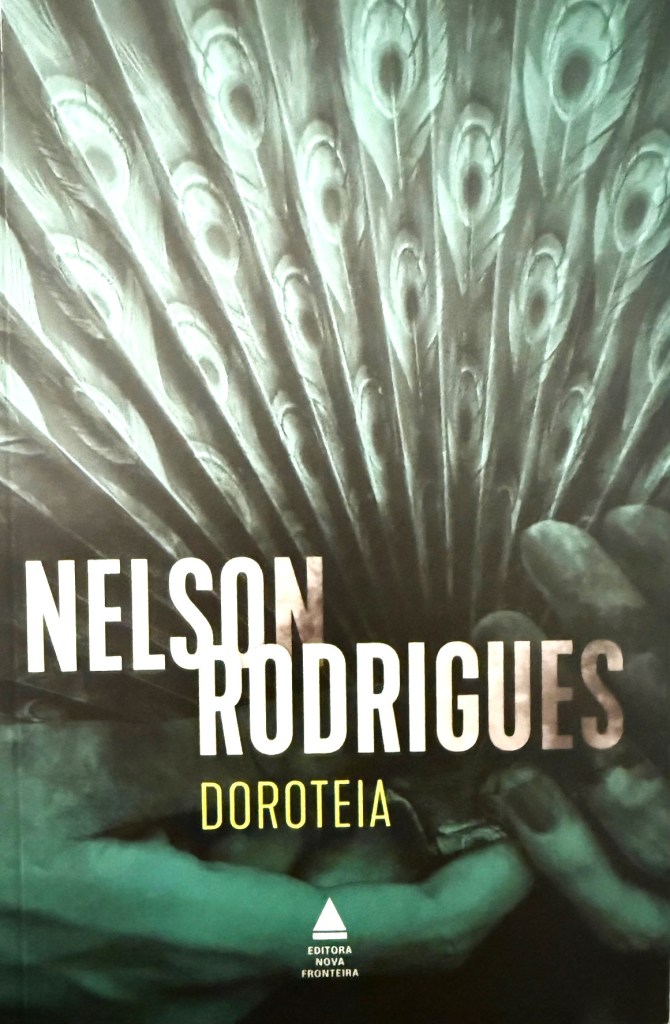
Title of the Work: Doroteia
Author: Nelson Rodrigues
Publisher: Nova Fronteira

 Estante do Justo