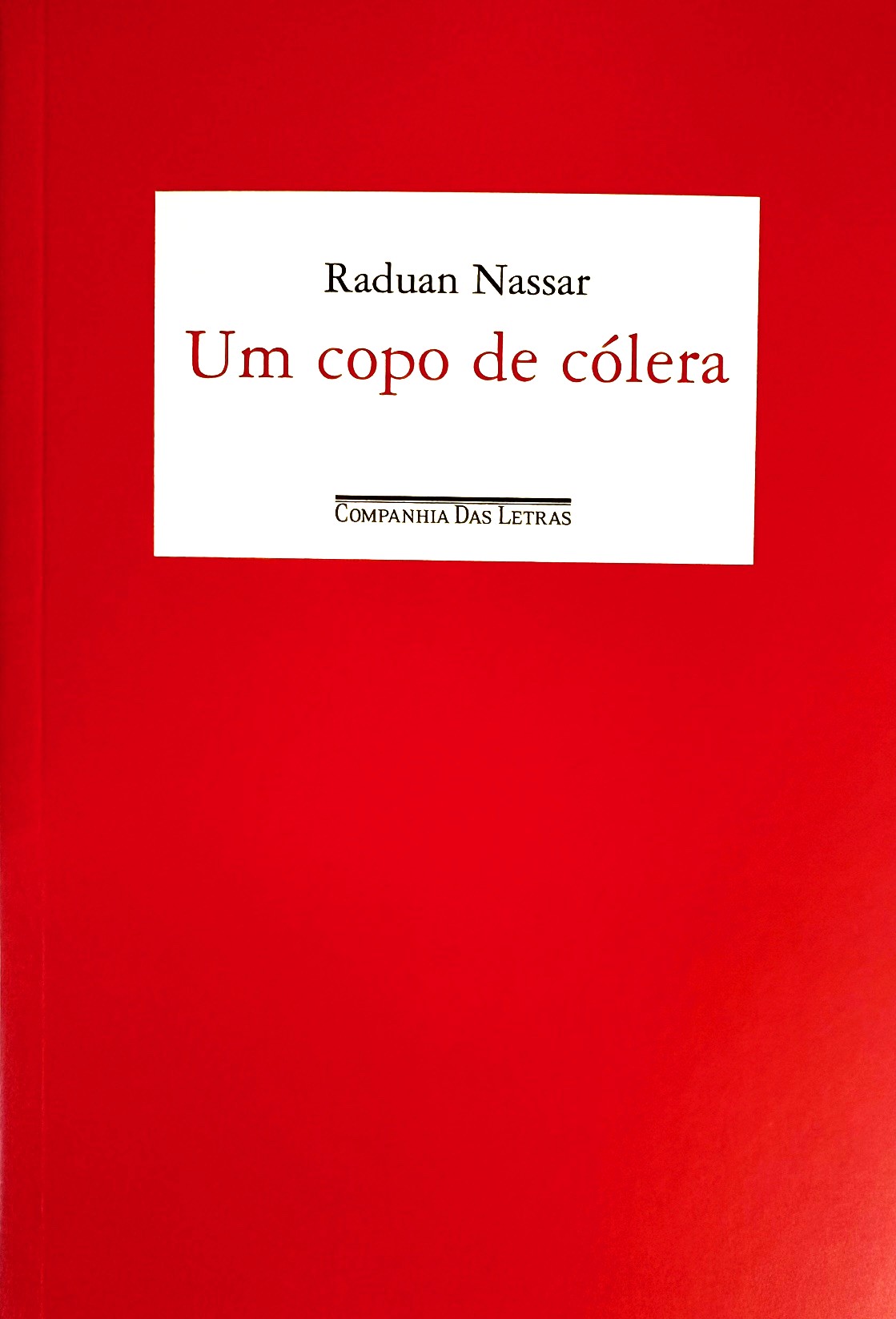
RADUAN NASSAR (Pindorama, SP, 1935) publicou poucos livros, mas disse muito no que escreveu. “UM COPO DE CÓLERA” é uma novela sofisticada formalmente e mais ainda por veicular ideias eletrizantes, pouco palatáveis para parte dos intelectuais. Um testemunho da coragem do autor. Publicada pela primeira vez em 1978, continua atual. Nasceu para obra-prima.
O enredo condensa-se para dar espaço ao que Raduan Nassar deseja e parece precisar dizer. Tudo se aninha e explode no âmbito da relação de um casal. Ela é uma jornalista aparentemente habituada a se alimentar de estereótipos prescritos em cartilhas obrigatórias entre os que se lançam como defensores da justiça e da correção moral. Ele, entre humilhação e revolta, denuncia sua amante e através dela, uma parcela importante da sociedade. A mulher faz-se arauto de discursos antifascistas, contorce-se num progressismo do qual ele duvida. Ele, que tudo narra (exceto no último capítulo), vê estampadas no avesso das posições de sua parceira expressões de corrupção, desveláveis apesar da camuflagem. O disfarce que ela usa serviria para esconder a natureza oposta do que está embutido no que declara quanto a quem é e na falta de legitimidade do que faz. O jogo sexual entre eles é tenso e dissolve trocas de afetos positivos e compartilhamentos intelectuais que os pudesse unir como um casal. A cólera nele transborda. Dá os primeiros sinais quando o homem vê uma cerca viva rompida por formigas. Ele se enfurece num ritmo crescente que surpreende o leitor. Logo fica claro que sua raiva não se restringe às falácias sustentadas pela mulher e com as quais, de soslaio, afronta-o. Desdobra-se no modo dele entender o funcionamento do mundo em que vive e por ter que transitar pelas falas vazias e perversas que preenchem os espaços além de suas cercas. Perversas devido à falsidade e ao alimentarem o mal quando prometem combatê-lo.
Distancia-se a possibilidade dele amar aquela com quem até pode gozar. Refugia-se em si mesmo com a cólera enterrada no peito. Todavia, não há o que o impeça de extravasá-la em alguns momentos. A indignação torna-se tóxica e o turbilhona. Em contraposição a isto tudo, ele tem boas lembranças da simplicidade de sua família de origem, que do trabalho extraía o sustento para o corpo e no compromisso com a honestidade despretensiosa a preservação da integridade do espírito.
O protagonista não está à vontade na vida. Enxerga-se com imprecisão, mas não se confunde sobre o que despreza. Sente-se uma espécie de anarquista, produto da desilusão quanto às boas intenções dos que lideram governos e dos que são instrumentos de propaganda do que é nefasto. Repugna-lhe o oportunismo e a incapacidade de produzir mudança, assim como a alienação das pessoas que se deixam transformar em massa de manobra. Sua cólera, que enche muitos copos, defende-o de ser arrastado para esta condição. E ele não pretende se desculpar por ela. Recusa a mentira que a tudo mascara.
A brutalidade, a insensatez e a malignidade de parte das ações humanas não podem verdadeiramente ser mitigadas pelas boas palavras. Neste contexto as palavras perdem seu bom peso, evaporam-se ou restam como entulho. Mergulhado na ira o personagem tenta resgatá-las, fazendo com que revivam com poder de significação responsável, fiéis à busca da verdade.
Desqualifica a mulher com quem faz sexo chamando-a de pilantra e dá vazão a seu protesto contra os que considera calhordas do mundo. Nisto, pressente e depois experimenta o ataque a ele, que vem acondicionado no xingamento “fascistão”. Mas ele vê as manifestações fascistas nos que alegam estar engajados em lutas contra o fascismo. Diz frases provocativas como “o povo nunca chegará ao poder”, “o povo é só e será sempre a massa dos governados”, “vá em frente pilantra – com o povo na boca”.
Um texto fortíssimo, um libelo contra a permissividade moral e negligência ética.
Título da Obra: UM COPO DE CÓLERA
Autor: RADUAN NASSAR
Editora: COMPANHIA DAS LETRAS
UM COPO DE CÓLERA
Raduan Nassar (Pindorama, SP, 1935) published few books, but said much in what he wrote. Um Copo de Cólera is a novella sophisticated in form and even more so for conveying electrifying ideas, unpalatable to some intellectuals. A testimony to the author’s courage. First published in 1978, it remains current. It was born a masterpiece.
The plot is condensed in order to make room for what Raduan Nassar wishes—and seems to need—to say. Everything nests and then explodes within the scope of a couple’s relationship. She is a journalist, apparently accustomed to feeding on stereotypes prescribed in the mandatory manuals of those who present themselves as defenders of justice and moral correctness. He, between humiliation and revolt, denounces his lover and, through her, an important segment of society.
The woman makes herself a herald of anti-fascist discourses, twisting in a progressivism of which he is doubtful. He, who narrates everything (except in the last chapter), sees on the reverse side of his partner’s positions expressions of corruption, unveiled despite the camouflage. The disguise she uses would serve to conceal the opposite nature of what is embedded in her declarations—regarding who she is and the illegitimacy of what she does.
The sexual game between them is tense and dissolves positive affections and intellectual exchanges that might otherwise unite them as a couple. His anger overflows. The first signs appear when the man sees a hedge destroyed by ants. He becomes enraged, with a mounting intensity that surprises the reader. It soon becomes clear that his fury is not restricted to the fallacies upheld by the woman, which, indirectly, affront him. It unfolds in his understanding of the world’s workings and in his need to navigate through the empty, perverse words that fill the spaces beyond his fences—perverse because of their falsity and their role in feeding evil while pretending to combat it.
The possibility of him loving the one with whom he may even find pleasure becomes ever more distant. He retreats into himself, with his anger buried in his chest. Yet nothing prevents him from letting it spill over at times. His indignation becomes toxic and swirls inside him. In contrast to all this, he cherishes fond memories of the simplicity of his family of origin, who drew sustenance from work for the body and, from their unpretentious honesty, preserved the integrity of the spirit.
The protagonist is not at ease in life. He sees himself with imprecision, but has no doubt about what he despises. He feels like a kind of anarchist, a product of disillusionment with the good intentions of those who lead governments and those who serve as instruments of propaganda for what is harmful. Opportunism and the incapacity to produce change repulse him, as does the alienation of people who allow themselves to be transformed into a manipulated mass. His anger, which fills many cups, protects him from being dragged into this condition. And he has no intention of apologizing for it. He rejects the lie that masks everything.
The brutality, senselessness, and malice of part of human actions cannot truly be mitigated by fine words. In this context, words lose their good weight, evaporate, or remain as debris. Immersed in wrath, the character tries to rescue them, making them live again with the power of responsible meaning, faithful to the search for truth.
He disqualifies the woman with whom he has sex by calling her a phony and gives vent to his protest against those he considers the crooks and bastards of the world. In doing so, he foresees and then experiences the attack against him, packaged in the insult “fascistão.” But he sees fascist manifestations in those who claim to be engaged in struggles against fascism. He utters provocative phrases such as: “the people will never come to power,” “the people are only and will always be the mass of the governed,” “go on, phony—with the people on your lips.”
A powerful text, a manifesto against moral permissiveness and ethical negligence.
Title of the Work: Um Copo de Cólera
Author: Raduan Nassar
Publisher: Companhia das Letras

 Estante do Justo