“A Casa de Pensão” é um conto de James Joyce (Dublin, Irlanda, 1882 – Zurique, Suíça, 1941) que faz parte do volume “Dublinenses”. É mais uma cena da vida em Dublin, durante o tempo em que o escritor lá viveu. Toca em aspectos da mulher quanto a expressões de caráter e condições de vida na sociedade, especialmente nas classes menos endinheiradas.
A senhora Mooney tornou-se dona de uma pensão depois de separar-se do marido. Tinham se casado quando ele trabalhava para o pai dela, que era açougueiro. O casal também fora proprietário de um açougue, mas o homem tornou-se alcoolista e, além de prejudicar o negócio, usou de violência com a esposa. A união foi rompida. Ela estabeleceu-se comercialmente e seguiu em frente. Contrastando com o ex-marido, ela era uma mulher forte, determinada e bastante previdente. Criou os filhos.
Polly, a filha, envolveu-se sexualmente com um dos moradores da pensão. Sua mãe percebeu o que se passava. A senhora Mooney não interferiu para afastá-los. Viu no caso uma oportunidade para casar a jovem com um homem que lhe parecia suficientemente confiável. Mostrou habilidade para bem conduzir a situação. Como lhe era característico, foi capaz de reverter a adversidade em vantagem. Tinha se livrado de um marido inconveniente, refazendo a vida de modo independente e bem-sucedido, com o mesmo espírito engendrou o casamento de Polly.
A protagonista não era dada à vitimização. Agia em conformidade com sua percepção quanto às melhores soluções para problemas que a vida lhe impunha. Assumiu as rédeas de seu destino até onde lhe foi possível. Sem passividade ou inoperância. Talvez esta personagem tenha servido para Joyce representar mulheres que conheceu, assim como as que idealizou.
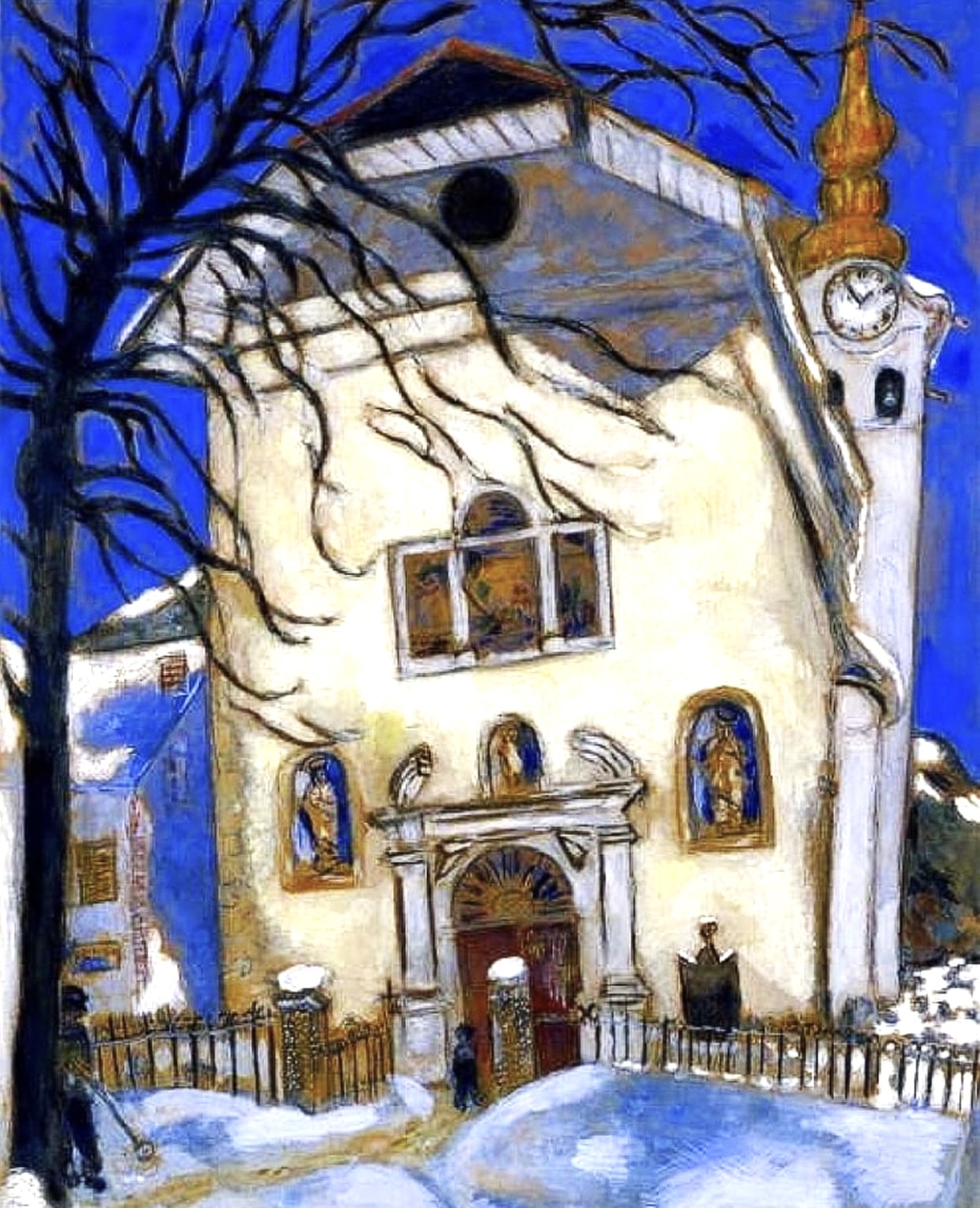
Na ilustração: foto de pintura de Marc Chagall (Bielorrússia, 1887 – França, 1985)
Título da Obra: A CASA DE PENSÃO
Autor: JAMES JOYCE
Tradutor: CAETANO W. GALINDO
Editora: PENGUIN/COMPANHIA DAS LETRAS
The Boarding House
“The Boarding House” is a short story by James Joyce (Dublin, Ireland, 1882 – Zurich, Switzerland, 1941), included in the collection Dubliners. It presents yet another vivid scene of life in Dublin during the time Joyce lived there, focusing on women’s moral character, resilience, and the social conditions that shaped their lives—particularly among the less affluent classes.
Mrs. Mooney becomes the proprietor of a boarding house after separating from her husband. They had married when he was employed by her father, a butcher. The couple later owned their own butcher’s shop, but her husband succumbed to alcoholism and, besides ruining the business, turned violent toward his wife. The marriage ended. Mrs. Mooney then established herself as a businesswoman and moved on. In contrast to her former husband, she proved to be strong-willed, practical, and shrewd. She raised her children on her own.
Polly, her daughter, became romantically involved with one of the boarders. Mrs. Mooney noticed what was happening but did not intervene to separate them. Instead, she saw in the affair an opportunity to secure her daughter’s future by arranging a marriage with a man she deemed suitably respectable. She handled the situation with tact and calculation, turning potential scandal into advantage—just as she had managed to free herself from an abusive marriage and build an independent, successful life.
Mrs. Mooney is not portrayed as a victim. She acts in accordance with her clear-eyed understanding of life’s demands and her own capacity to manage them. She takes control of her circumstances whenever possible—neither passive nor defeated. Perhaps Joyce drew on women he had known in Dublin, or on women he imagined, to create a figure so emblematic of quiet strength and pragmatic intelligence.
Illustration: Photograph of a painting by Marc Chagall (Belarus, 1887 – France, 1985)
Title of the Work: The Boarding House
Author: James Joyce
Translator: Caetano W. Galindo
Publisher: Penguin / Companhia das Letras

 Estante do Justo