Conto que pertence à coletânea “Dublinenses” de James Joyce (Irlanda, 1882 – Zurique, 1941), Eveline alude a questões do próprio autor que se estendem a algo mais universal, encontrável em diferentes lugares e épocas.
Eveline Hill é uma jovem que já teve muitas perdas na vida (é órfã de mãe e um de seus irmãos também já morreu) amigos mudaram-se para longe, o pai é pouco capaz de oferecer suporte afetivo, além de tão mesquinho quanto o entorno da moça. Pesam-lhe responsabilidades e poucos recursos para resolver o que lhe é exigido nos cuidados com a família restante. Nenhuma esperança de melhores condições justifica sua permanência onde está, exceto a promessa feita à mãe de “manter a casa de pé”, quando ela estava próxima da morte. Deve contar também o amor pelos irmãos pequenos que dela necessitam. Ela teme não escapar do mesmo tipo de vida que a mãe tivera. Deseja escapar e ser feliz. Conhece Frank, um rapaz também irlandês, mas que mora na Argentina, onde fez conquistas que possibilitaram o bem-estar que não tinha. Começam a namorar e ele propõe que a moça vá com ele para Buenos Aires. Ela quer isto e conta dar início assim à transformação de sua vida. Apesar da proibição do pai sobre o relacionamento dela com Frank, a partida é acertada. No dia da viagem ela desiste, já na plataforma de embarque. A separação do namorado e a ruptura com o que haviam combinado parecem ser determinadas por algo que não é a sua vontade maior. Ela retira-se do momento, apaga sua oportunidade, cedendo ao fardo que não deseja.
Joyce “escapou” da Irlanda e de muito do que ela significava para ele. Buscou um mundo novo, talvez alcançado na expressão literária, embora a separação de seu país nunca tenha sido completa. Ele manteve a Irlanda dentro de si, mesmo estando fora. Talvez não estivesse mais totalmente assujeitado ao que o aprisionava naquilo que o País representava. Ele nunca deixou de tratar das aflições humanas determinadas pelos rompimentos com as origens e com o destino ditado por elas. Ele parece ter sido a Eveline Hill que embarcou rumo ao novo, levando na bagagem todo o ônus de o fazer.
Título da Obra: EVELIN
Autor: JAMES JOYCE
Tradutor: CAETANO W. GALINDO
Editora: PENGUIM/COMPANHIA DAS LETRAS
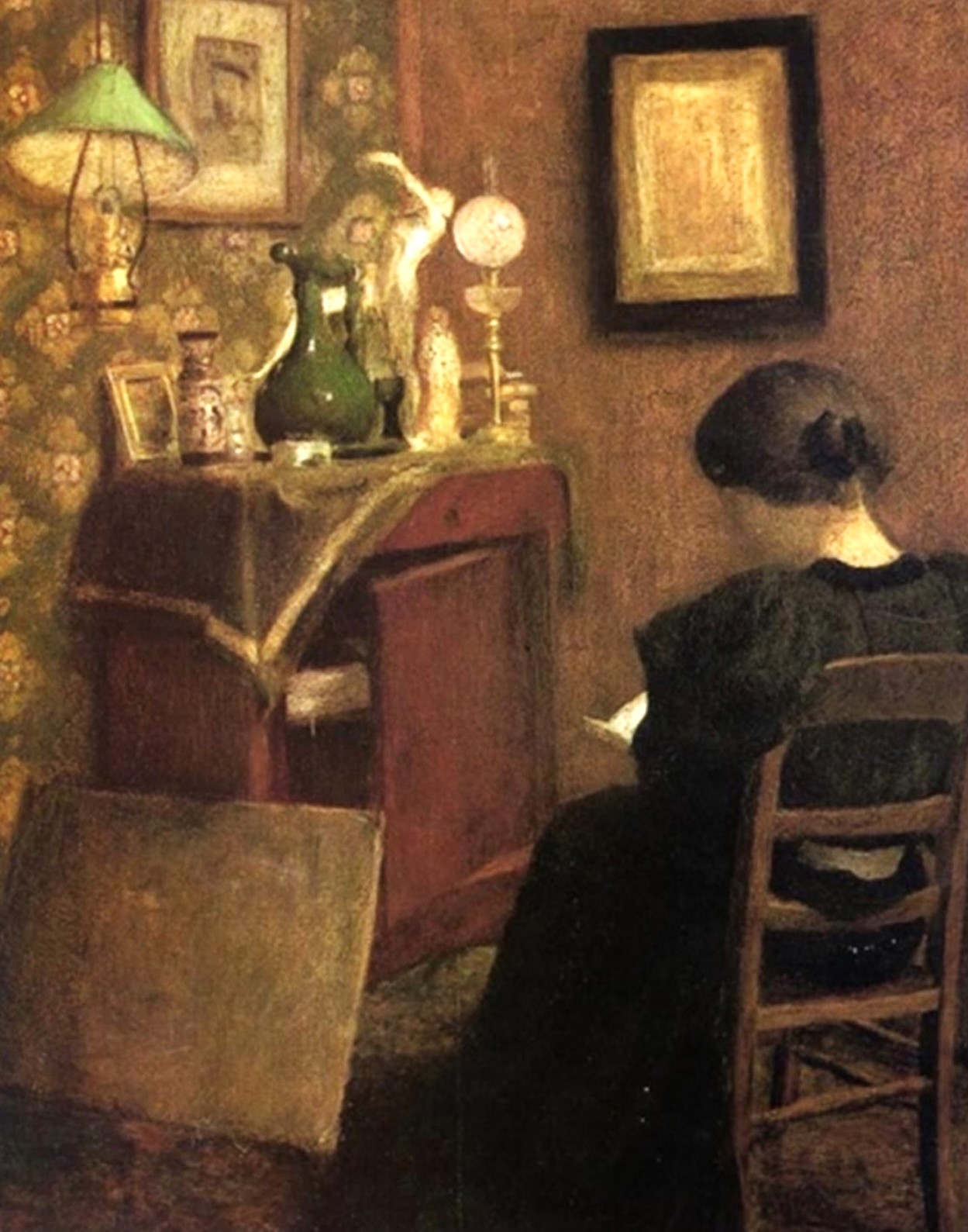
Na ilustração: foto de quadro de Henri Matisse (França, 1869 – 1954)
Eveline
A story from the collection Dubliners by James Joyce (Ireland, 1882 – Zurich, 1941), Eveline evokes not only the author’s personal dilemmas but also broader, universal questions—those that resonate across times and places.
Eveline Hill is a young woman who has endured much loss. Orphaned of her mother, she has also buried one of her brothers; other friends have moved away; her father is incapable of tenderness and as stingy as the gray environment that surrounds her. Burdened with responsibilities and scarce means to fulfill them, she finds little reason to remain where she is—except for a promise made to her dying mother: to “keep the home together.” Her affection for the younger siblings who still depend on her reinforces that vow. Yet she fears living out the same fate as her mother—a life of resignation and silent sorrow. Eveline dreams of escape, of happiness.
Then comes Frank, an Irish sailor who has built a better life in Argentina. Their romance blossoms quickly, and he invites her to accompany him to Buenos Aires, to begin anew together. She longs for this transformation. Her father forbids the relationship, but the couple plan their departure nonetheless. When the moment of departure finally arrives, Eveline falters. Standing on the quay, she cannot move. Something stronger than her will—a force woven of duty, fear, and paralysis—holds her back. She withdraws from the moment, extinguishing her chance for change and yielding to the weight she cannot cast off.
Joyce himself “escaped” Ireland, fleeing much of what it represented for him. He sought a new world, perhaps realized most fully in his art, though his separation from his homeland was never complete. Ireland persisted within him, like a haunting rhythm beneath all his prose. Yet he had freed himself from its full dominion, transforming constraint into creation. In this sense, Joyce may be seen as the Eveline Hill who did board the ship—who carried the burden of departure but transfigured it into literature.
Illustration: photograph of a painting by Henri Matisse (France, 1869 – 1954)
Title of the Work: Eveline
Author: James Joyce
Translator: Caetano W. Galindo
Publisher: Penguin / Companhia das Letras

 Estante do Justo