“As Irmãs” é o conto que abre “Os Dublinenses” de James Joyce (Irlanda, 1882 – Suíça, 1941). Apareceu em 1904 e parece ter sido sua primeira obra ficcional publicada. Apesar do autor ser muito jovem quando escreveu este e os outros contos do livro, já havia sofisticação em sua forma de ser reticente e sugerir ideias ao invés de explicitá-las. Ele apontava para questões pouco palatáveis na sociedade irlandesa e talvez em muitos outros lugares. Via estagnação e aridez causadas por diferentes formas de pobreza. Penúrias que ultrapassavam em muito a escassez material.
O enredo pode ser dividido em duas partes: uma na casa dos tios do protagonista, um menino, talvez adolescente, quando através da visita de um conhecido da família, sr. Cotter, recebem a notícia da morte do padre Flynn e fazem comentários sobre ele. O reverendo teve importantes vínculos com o jovem, enquanto um mestre informal. A segunda cena se dá na residência em que o padre vivera com duas irmãs e onde seu corpo está sendo velado. A tia do menino vai com ele prestar condolências a suas irmãs. Há muitas vacilações nas conversas entre elas. Muito silêncio entre frases aparentemente incompletas. O não dito abre múltiplas possibilidades de interpretação. Entre o que se pode pensar há a precariedade e rigidez intelectual e moral dos personagens adultos na compreensão de fatos que dão estrutura a suas vidas. Fica a sugestão de temores entre os que dialogam para expor abertamente assuntos que provocariam constrangimento e possivelmente condenação social. Ao falarem eles revelam uma espécie de autoria parcial do que contém sua fala, é presumível que repitam o que todos dizem, sem ousar divergir.
Num primeiro momento são mencionados três derrames consecutivos sofridos por Flynn e fica a impressão de terem sido a causa exclusiva de sua morte. Todavia, o leitor pode perceber que talvez houvesse outra doença em curso, embaraçosa. Ele estava afastado de suas funções na igreja por motivos pouco claros. O menino usa a palavra paralisia quando pensa no padre e esta palavra, que lhe parece estranha, também veicula algo de malévolo e pecaminoso, além da sensação de estranheza. Ao mesmo tempo a dita paralisia fascina o garoto. Produz o desejo de “contemplar seus efeitos fatais”.
Uma das irmãs conta aos visitantes algo sobre comportamentos incomuns, aberrantes do padre antes que tivesse os derrames, levando a crer que ele estaria perdendo a sanidade mental. Elas cuidaram do irmão doente, na pobreza e recolhimento. A fala ingênua da mulher contribui bastante para imaginar o que se passara. Por outro lado, o personagem denominado “velho Cotter” e o tio do menino reprovam algo no modo de proceder do falecido sacerdote, pretextam nefasto exemplo e ensinamento para os jovens. Sobrenada a narrativa a ideia de uma sexualidade pecaminosa, imprópria para um homem da igreja (talvez para qualquer outro) e que teria causado a sífilis (também denominada de “paralisia geral progressiva”, levando a um tipo de enlouquecimento a partir de certo estágio da evolução).
Quando pouco se fala pode ser que muito se diga. O que não está formalizado nas palavras do texto admite conjecturas. O “clima” do conto reflete um modo de experimentar a vida, restrições sofridas e misérias insidiosas que penetram pelas frestas humanas. Pesa o sombrio, mas há o brilho indireto do sol que ainda assim incide nas mentes dos que não desviam o olhar do que está próximo. A Igreja Católica exerce o papel de força opressora para um povo já esquálido demais. Não havia soberania nacional na Irlanda do tempo de Joyce, nem havia a liberdade das pessoas viverem de acordo com o que autenticamente sentiam e pensavam. As crenças tornavam-se inflexíveis e paralisavam.
Na concisão do conto, nos protuberantes vazios criados em seu espaço, reside a pluralidade.
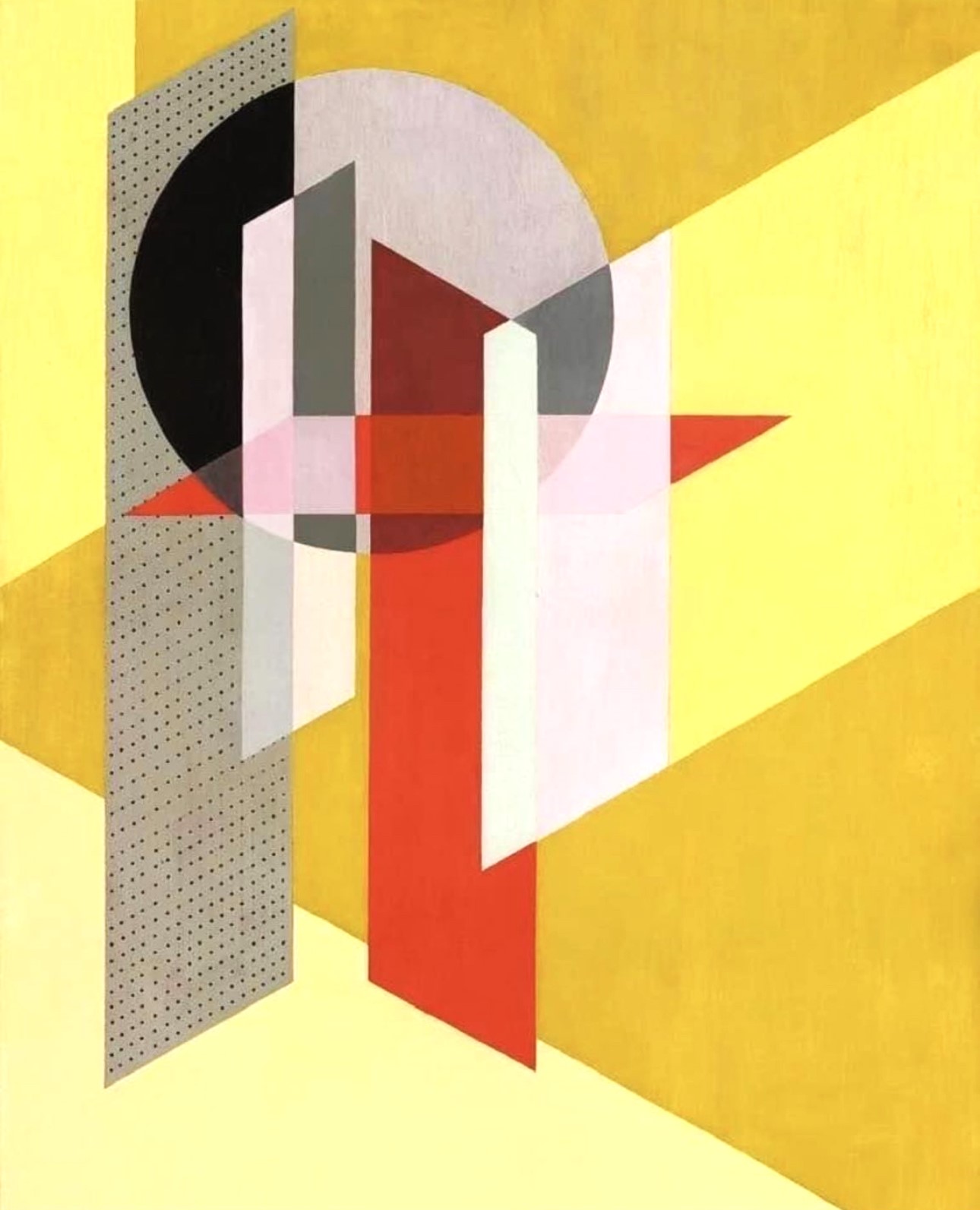
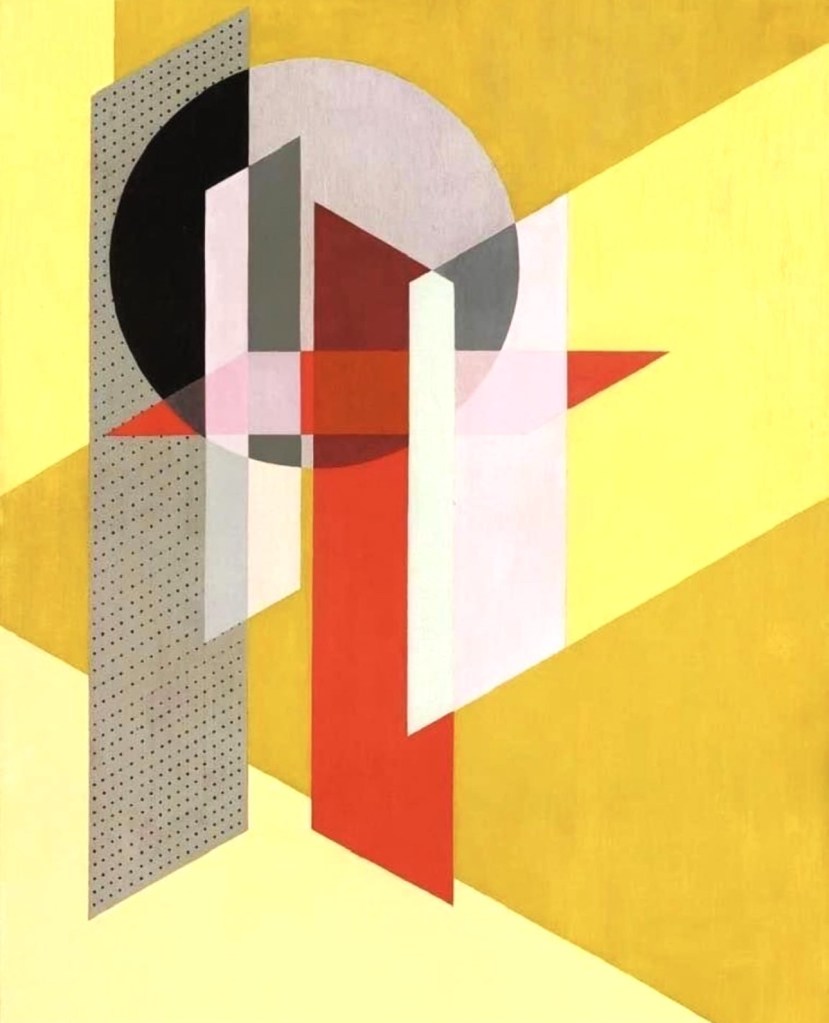
Na ilustração, foto de pintura de László Moholy-Nagy (Hungria, 1895 – EUA, 1946)
Título da Obra: AS IRMÃS (parte de DUBLINENSES)
Autor: JAMES JOYCE
Tradutor: CAETANO W. GALINDO
Editora: PENGUIN/COMPANHIA DAS LETRAS
The Sisters
The Sisters opens Dubliners by James Joyce (Ireland, 1882 – Switzerland, 1941). First published in 1904, it is believed to be Joyce’s earliest work of fiction to appear in print. Though he was still very young when he wrote this and the other stories in the collection, he already demonstrated a striking sophistication—an art of reticence, of suggestion rather than declaration. Through this style, Joyce gestured toward the unpalatable truths of Irish society, and perhaps of many others: stagnation, dryness of spirit, and the many faces of poverty—forms of deprivation extending far beyond the material.
The story unfolds in two movements. In the first, the young narrator—likely a boy on the cusp of adolescence—hears, at his uncle’s house, the news that Father Flynn has died. A family acquaintance, old Mr. Cotter, is the bearer of this information, and his remarks, along with those of the boy’s uncle and aunt, introduce unease into the scene. Father Flynn had been an informal mentor to the boy, a teacher of sorts. The second part of the story takes place in the priest’s modest home, where his body lies in wake. The boy visits, accompanied by his aunt, to offer condolences to Flynn’s two sisters. Their conversation is halting, broken by silences and half-finished phrases. The unsaid speaks louder than the words themselves, opening multiple paths for interpretation.
Through this reticence, Joyce sketches a portrait of intellectual and moral rigidity among the adults—a paralysis of comprehension. They fear the discomfort of confronting what might bring embarrassment or social censure. Their words echo the voice of the community rather than their own; they are transmitters, not authors, of the speech that passes through them.
At first, Father Flynn’s three consecutive strokes are mentioned as the sole cause of death. Yet the reader begins to suspect that something else may have been at work—a different, more shameful illness. The priest had been withdrawn from his clerical duties for reasons left vague. The boy, reflecting on him, uses the word paralysis, which strikes him as strange, charged with both moral corruption and fascination. He feels a morbid pull—“to see its deadly work.”
One of Flynn’s sisters recounts the priest’s peculiar, unsettling behavior prior to his strokes, implying the onset of madness. She and her sister had nursed him through illness and poverty. Her simple speech conveys more than she intends, allowing the reader to infer what is left unsaid. Meanwhile, Mr. Cotter and the boy’s uncle express disapproval of the priest’s influence, hinting at a “bad example” set for impressionable youth. Beneath the surface drifts the shadow of sexual transgression—sinful, unfit for a man of the Church (perhaps for any man)—suggesting that the priest’s affliction may have been syphilis, known at the time as “general paralysis of the insane.”
When little is spoken, much can be revealed. The silences of the story resound with conjecture. Its atmosphere mirrors the constriction of life itself: the weight of moral oppression, the misery that seeps into human cracks and silences. Darkness dominates, yet an oblique light still touches those who dare to look closely. The Catholic Church looms as a repressive force over a people already emaciated by spiritual and social constraint. In Joyce’s Ireland there was no national sovereignty, nor freedom of thought or feeling; belief ossified into paralysis.
In the story’s concision, in its eloquent gaps, resides its vastness.
Illustration: photo of a painting by László Moholy-Nagy (Hungary, 1895 – USA, 1946)
Title of the Work: The Sisters (from Dubliners)
Author: James Joyce
Translator: Caetano W. Galindo
Publisher: Penguin / Companhia das Letras

 Estante do Justo