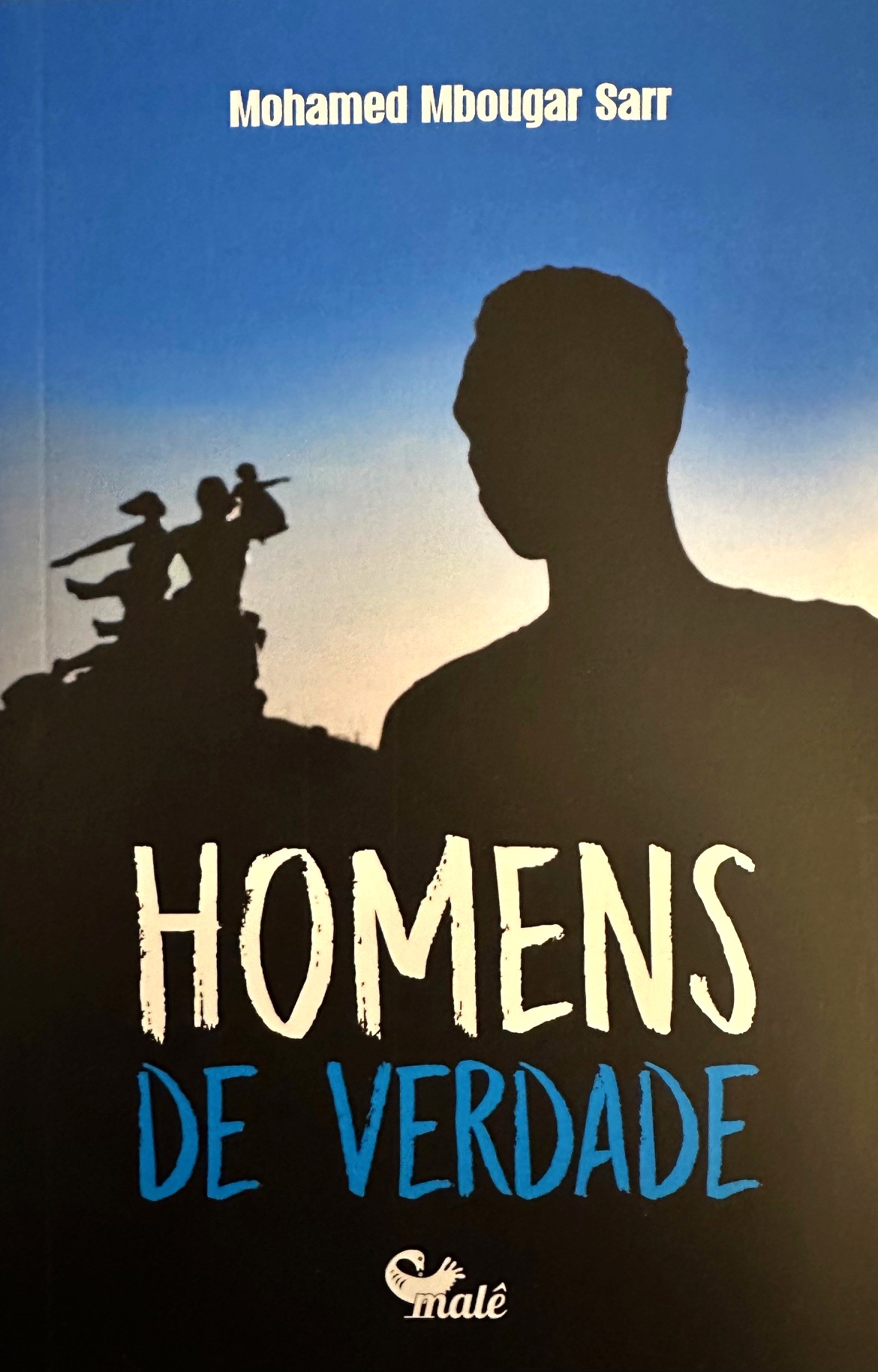
Mohamed Mbougar Sarr (Dacar, Senegal, 1990) vem sendo muito premiado por seus romances. Em 2021 recebeu o Prêmio Goncourt por “A Mais Recôndita Memória dos Homens”. Anteriormente, em 2018, publicou na França “Homens de Verdade”. Neste ele fala de múltiplos temas abrigados em questões relativas à homofobia.
Um jovem professor universitário vê no telefone celular da namorada o vídeo em que uma multidão entra num cemitério e desenterra o cadáver de um homem que morrera recentemente. Bradam xingamentos alegando que o falecido tinha sido homossexual, o que implicaria não poder ter sepultura como outras pessoas, pois a homossexualidade conspurcaria os vivos e os mortos. Num primeiro momento o protagonista quase aprova o que vê, mas o veemente repúdio da namorada desencadeia nele a reflexão e, ao se interrogar sobre a homossexualidade, dramática mudança de atitude, expondo-se às consequências desta transformação.
No Senegal a população é quase totalmente muçulmana. O islamismo, assim como outras religiões, proíbe e condena a homossexualidade. Muitos líderes espirituais muçulmanos, através de interpretações da Xaria ou Sharia, que é um conjunto de normas provindas do Corão, orientam os fiéis a punirem severamente os homossexuais (alguns preconizam que sejam mortos). Além da ojeriza derivada do fundamentalismo religioso, parecem existir outros determinantes aparentemente culturais que também rejeitam ideias de diversidade quanto à orientação sexual. Como em mais locais, uma parte significativa de pessoas toma erroneamente os comportamentos sexuais como sendo determinados pela livre escolha de cada um. Negam também o reconhecimento histórico da existência universal da homossexualidade e bissexualidade em diferentes sociedades humanas.
Sarr põe a nu modos de violência que certamente não são exclusivos dos senegaleses e sim algo inerente aos seres humanos (mais a uns do que a outros), promovendo sofrimento e destruição em diferentes tempos e lugares. Em sua base está a incompreensão do que é ser humano, incluindo a carência de encontrar depositários de um obscuro tipo de ódio que pode vagar em seu interior sem razão específica. Soma-se a necessidade cega de pertencimento a um grupo, com submissão às imposições implicando omissão ou apagamento de qualquer pensamento que divirja do que é legitimado por lideranças e tradições.
Muito interessante a consideração de que a cultura pode carrear elementos que a antecedem, próximos do que é instintivo. O horror ao que é diverso pode ser pensado por esta via, mesmo que ela não seja exclusiva. Também vale notar o que o autor põe em pauta ao mencionar o temor sobre ações afirmativas, através da crítica a elas feita por um dos personagens. Este considera-as prejudiciais à maioria dos homossexuais e aconselha o silêncio e a busca de invisibilidade. Seu destino na trama serve como indicativo da posição de Sarr quanto ao assunto. Entra em jogo o papel da educação para pensar com liberdade em contraposição à doutrinação no manejo das reações brutais ao que se pode denominar diversidade num meio social. Parece contar também o desenvolvimento da inteligência, que exige muito esforço e coragem além do potencial biológico, para que alguém se torne apto a superar os modos primitivos de entender o mundo e agir nele. A robustez do intelecto tende a favorecer a reflexão crítica e o exercício da ética como questionamento permanente da moral. Restringe o poder dos dogmas, criadores de barreiras para o funcionamento ético, inteligente e verdadeiramente civilizado dos indivíduos.
O livro articula aspectos do grande desafio que se apresenta quando se tenta ser melhor ao ser humano. Um belo romance.
Título da Obra: HOMENS DE VERDADE
Autor: MOHAMED MBOUGAR SARR
Tradutor: FERNANDO KLABIN
Editora: MALÊ
Mohamed Mbougar Sarr (Dakar, Senegal, 1990) has been widely acclaimed for his novels, earning numerous literary awards. In 2021, he received the Prix Goncourt for The Most Secret Memory of Men. Earlier, in 2018, he published in France Real Men. In this work, he addresses multiple themes encompassed within questions related to homophobia.
A young university professor sees, on his girlfriend’s cellphone, a video in which a crowd storms a cemetery and exhumes the body of a man who had recently died. They hurl insults, claiming that the deceased had been homosexual, which, in their view, would disqualify him from being buried like other people, since homosexuality would defile both the living and the dead. At first, the protagonist almost approves of what he sees, but his girlfriend’s vehement revulsion forces him into reflection and, as he questions the nature of homosexuality, into a dramatic change of attitude—one that exposes him to the consequences of such a transformation.
In Senegal, the population is almost entirely Muslim. Islam, like other religions, prohibits and condemns homosexuality. Many Muslim spiritual leaders, through interpretations of Sharia—a set of norms derived from the Qur’an—encourage the faithful to punish homosexuals severely (some even advocate that they be killed). Beyond the repulsion born of religious fundamentalism, there seem to be other, apparently cultural, determinants that also reject ideas of sexual-orientation diversity. As in many places, a significant number of people mistakenly view sexual behavior as determined by individual choice. They also deny the historical, universal presence of homosexuality and bisexuality in human societies.
Sarr lays bare modes of violence that are certainly not exclusive to Senegalese society, but rather something inherent to human beings (in some more than in others), giving rise to suffering and destruction across different times and places. At its core lies a profound misunderstanding of what it means to be human, including the need to assign to others the burden of an obscure form of hatred that may wander within an individual without any specific reason. Added to this is the blind desire to belong to a group, with submission to its impositions implying the omission—or erasure—of any thought that diverges from what leaders and traditions deem legitimate.
Particularly interesting is the idea that culture may carry elements that precede it, close to what is instinctual. Horror of what is different may be understood in this way, even if not exclusively so. Also noteworthy is what the author brings to the fore regarding affirmative action, through the criticism voiced by one of the characters. He considers such measures harmful to most homosexuals and advises silence and the pursuit of invisibility. His fate in the narrative serves as an indication of Sarr’s stance on the matter. Here enters the role of education in fostering free thought, in contrast to indoctrination, in the face of brutal reactions to what may be called diversity within a social environment. The development of intelligence also seems to matter—requiring effort and courage beyond biological potential—so that a person may become capable of surpassing primitive ways of understanding and acting upon the world. A robust intellect favors critical reflection and the exercise of ethics as the ongoing questioning of morality. It restricts the power of dogma, which erects barriers against ethical, intelligent, and genuinely civilized functioning.
The novel weaves together aspects of the great challenge inherent in trying to better the human condition. A beautiful work of fiction.
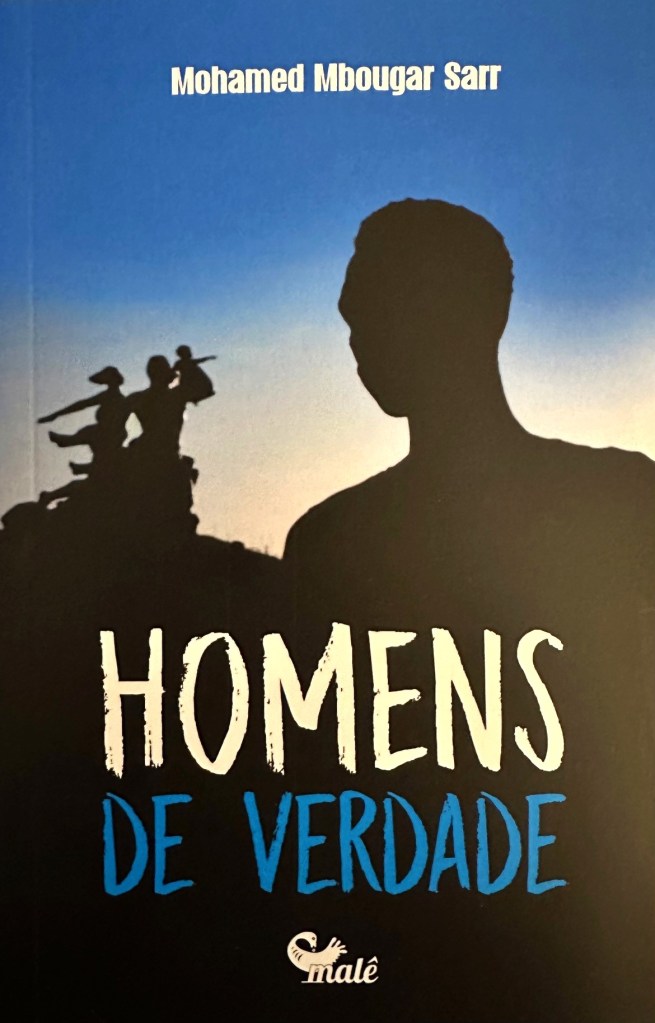
Title of the Work: REAL MEN
Author: MOHAMED MBOUGAR SARR
Translator: FERNANDO KLABIN

 Estante do Justo