Henry James (Nova York 1843 – Londres, 1916) foi um dos mais refinados escritores em língua inglesa. Escreveu principalmente romances, novelas e contos. Um de seus romances mais incensados é “Retrato de Uma Senhora”. Os contos, que geralmente não são muito curtos são profundos como seus trabalhos mais extensos. “Vida de Artista” reúne quatro contos envolvendo pintores. Cada conto merece ser comentado individualmente. “A História de Uma Obra Prima” é um destes contos.
“A História de Uma Obra Prima” trata da descoberta de sutilezas do mundo a partir da observação de uma obra de arte. Um milionário viúvo prestes a se casar com uma bela jovem conhece casualmente um pintor que o impressiona pela riqueza de estilo ao retratar alguém. Encomenda um retrato da noiva. Esta já tinha travado relações com o pintor previamente, sem que noivo soubesse no momento da encomenda. Ele nunca virá a saber com precisão no tempo da narrativa qual a natureza do envolvimento entre retratada e retratador. Ao ver a obra pronta o noivo sente-se perturbado. Reconhece na imagem pintada de sua futura esposa uma característica fundamental de personalidade. Até então não se detivera para observar com acurácia e menos ainda refletir sobre o sentido desse provável modo de ser e sobre o impacto que poderia ter em sua futura vida conjugal.
A interação entre o observador e uma obra pode ser um fenômeno complexo. Por exemplo, uma pintura suscita diferentes impressões, sensações e ideias em cada pessoa que a aprecia com interesse. Além dos aspectos objetivos da imagem construída pelo pintor, frutos de sua sensibilidade, habilidade técnica e intenções, há aquilo que cada contemplador enxerga. Importa muito o que ele descobre enquanto busca uma forma de compreensão do que vê. Ao falar sobre esta interação, tão carregada de subjetividade e possibilidades, toca-se num fenômeno mais abrangente: o modo de um indivíduo entender o mundo que o cerca e interagir com ele. Há uma mescla entre a intenção e o que se dá involuntariamente, entre o conscientemente deliberado e o inconscientemente ativo nos jogos que levam ao que se pensa e sente após a percepção de algo. Os mais diversos estilos de manifestação artística podem veicular informações impactantes para os que os leem, pois isto depende de uma espécie de singularidade de visão ou de perspectiva. Há uma inter-relação entre o que o artista expressou e o que o receptor captou. Ambos criam. Todavia, o autor de uma obra é o principal transmissor de maneiras de olhar para um tema.
Henry James explora com inteligência e elegância questões derivadas das formas de expressão e de interpretação nas comunicações humanas. Talvez também por isto tenha produzido obras que se tornaram clássicas assim que foram publicadas. Nasceram obras-primas.
Título da Obra: HISTÓRIA DE UMA OBRA PRIMA
Autor: HENRY JAMES
Tradutor: CLAUDIO FIGUEIREDO
Editora: JOSÉ OLYMPIO EDITORA
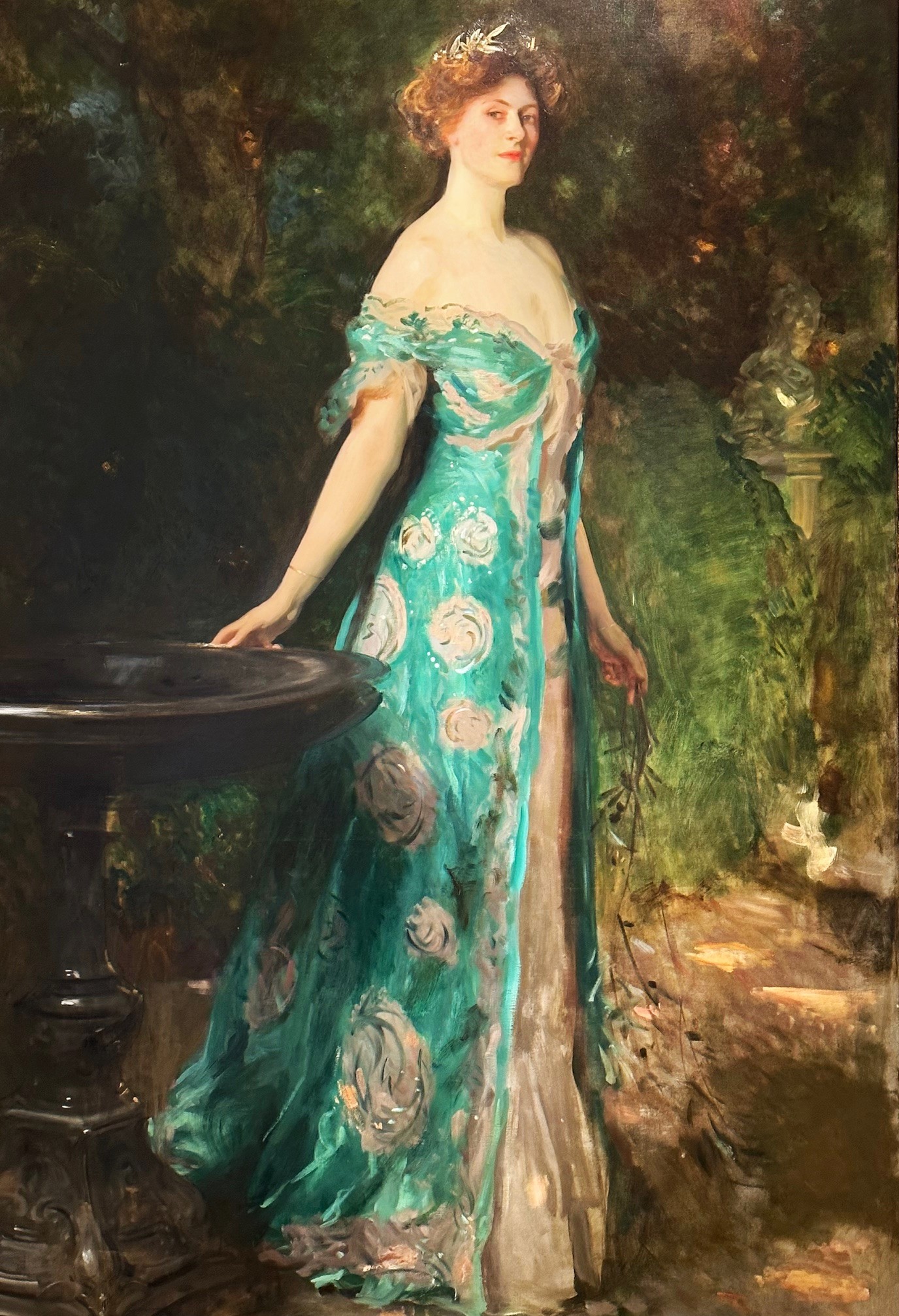
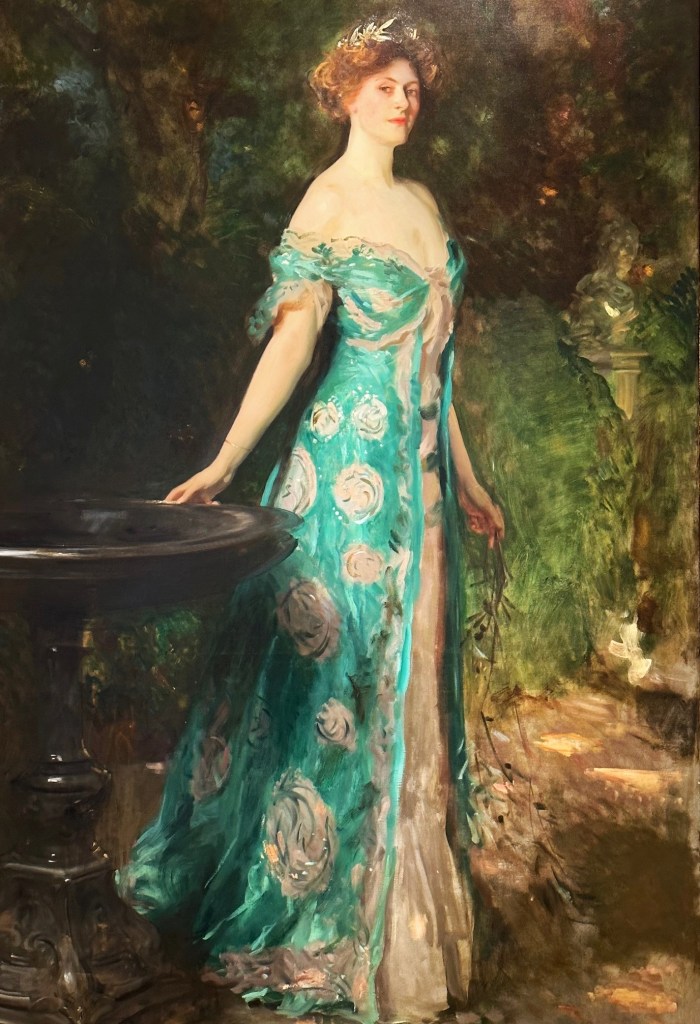
Abaixo foto de obra de John Singer Sargent (Florença, 1856 – Londres, 1925); Retrato de Millicent, duquesa de Sutherland (1904); Museu Thyssen-Bornemisza, Madrid
Henry James (New York, 1843 – London, 1916) was among the most refined writers in the English language. He wrote chiefly novels, novellas, and short stories. One of his most acclaimed novels is The Portrait of a Lady. His shorter fiction, which is seldom brief, is as profound as his longer works. The Life of an Artist brings together four tales involving painters. Each deserves individual commentary. The Story of a Masterpiece is one of these stories.
The Story of a Masterpiece deals with the discovery of the subtleties of the world through the observation of a work of art. A widowed millionaire, about to marry a beautiful young woman, meets by chance a painter whose richness of style in portraying a subject greatly impresses him. He commissions a portrait of his fiancée. Unknown to him, the young woman has previously become acquainted with the painter, though the precise nature of their involvement remains undisclosed within the time of the narrative. Upon seeing the finished portrait, the fiancé feels deeply unsettled. He recognizes, in the painted likeness of his future wife, a fundamental trait of her character—one he had never paused to observe with accuracy, let alone to reflect upon its possible meaning or the impact it might bear on their future married life.
The interaction between an observer and a work of art can be a complex phenomenon. A painting, for instance, evokes different impressions, sensations, and ideas in each person who contemplates it with genuine interest. Beyond the objective elements of the image constructed by the painter—fruits of his sensitivity, technical skill, and intention—there lies what each viewer perceives. What matters most is what the observer discovers while seeking to understand what he sees. To speak of this interaction, so charged with subjectivity and possibility, is to touch upon a broader phenomenon: the way an individual comprehends and engages with the surrounding world. There is always a fusion between intention and what occurs involuntarily, between the consciously deliberate and the unconsciously active, in the subtle play that gives rise to thought and feeling after perception.
The many forms of artistic expression can convey powerful meanings to those who engage with them, for this depends upon a kind of singularity of vision or perspective. There exists an interrelation between what the artist has expressed and what the beholder perceives. Both participate in the act of creation. Yet the author of a work remains the principal transmitter of ways of seeing a theme.
Henry James, with intelligence and elegance, explores questions arising from the forms of expression and interpretation in human communication. Perhaps for this very reason, his works became classics almost as soon as they were published. They were born masterpieces.
Title: The Story of a Masterpiece
Author: Henry James
Translator: Cláudio Figueiredo
Publisher: José Olympio Editora
Below: Portrait of Millicent, Duchess of Sutherland (1904) by John Singer Sargent (Florence, 1856 – London, 1925); Museo Thyssen-Bornemisza, Madrid.

 Estante do Justo