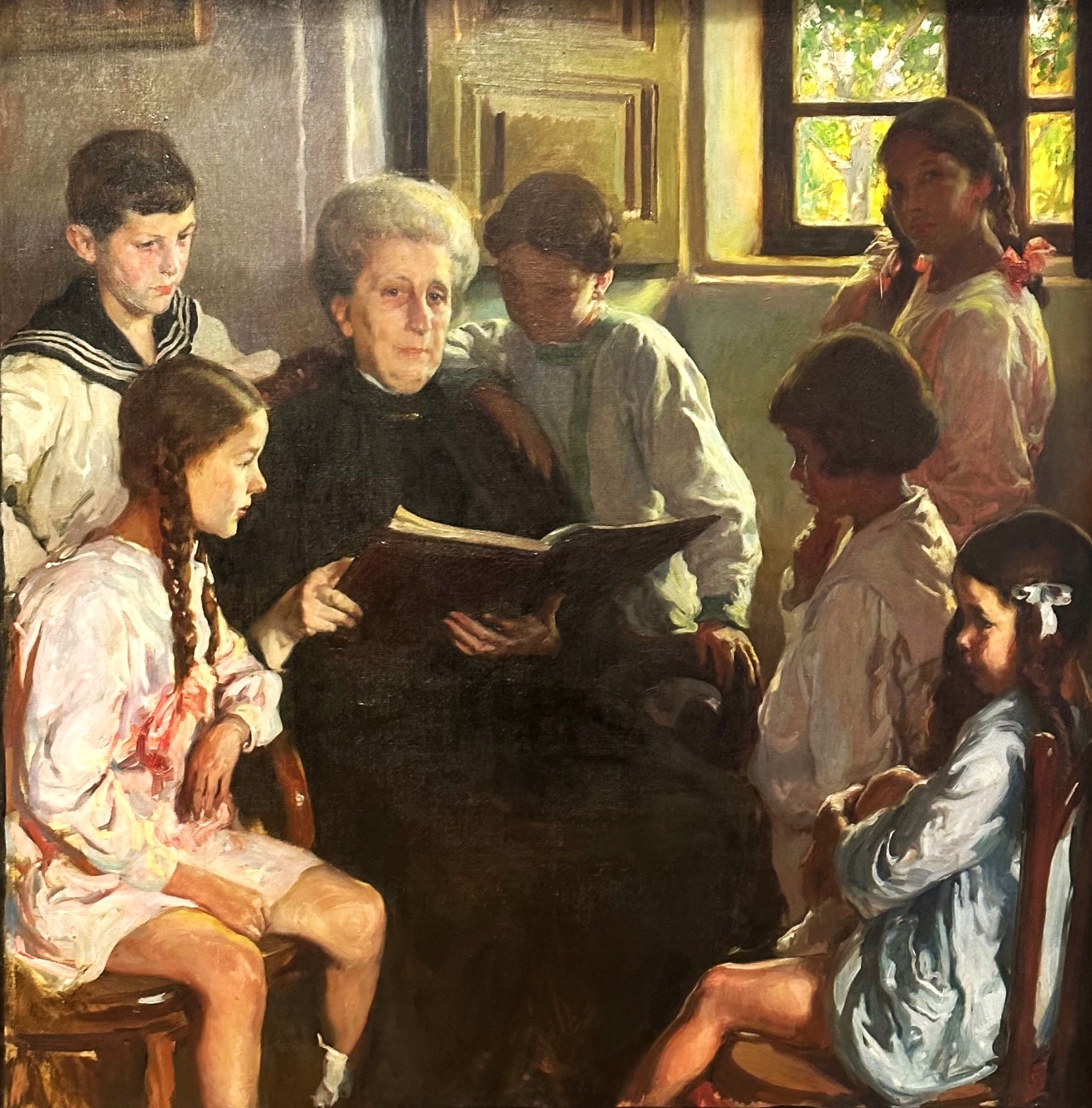
Ler para as crianças costuma ser um ato de amor. Mesmo que elas já sejam alfabetizadas. Se não o forem a atividade pode ser ainda mais importante.
Faz parte da formação das pessoas aprender a ouvir e compreender o que lhes é dito, assim como o desenvolvimento da habilidade de dizer aos outros o que é preciso ou desejado. Isto acontece de muitos modos. Com maiores ou menores habilidades quase todo mundo alcança suficiência nesta área. Todavia, há como sofisticar tais habilidades. A leitura (que mais tarde será feita em silêncio e como atividade solitária) apresentada para as crianças através da dedicação dos adultos é uma preciosa forma de introdução e estímulo. Viabiliza melhorias nem sempre bem aquilatadas e muito significativas para a vida. Amplia-se a capacidade de perceber as variantes de interpretação nos discursos.
Ler para as crianças implica cuidado com entonação, com paradas para comentar o que é lido e para dar ouvidos ao que elas têm a dizer sobre o que ouviram. É um treinamento e uma forma de preparo para a importantíssima função civilizadora da boa comunicação. Além disso, através de estórias que lhes são contadas as pequenas pessoas podem lidar melhor com aspectos intricados de seu mundo interior e da complicada interação com o seu entorno. A verbalização é um processo complexo, não restrito à emissão mecânica de sons. Grande diversidade de mensagens passa por este canal e oferece aos mais novos possibilidades que os enriquecem. Há muita diferença entre o que é contado presencialmente por alguém e o que é veiculado por meios eletrônicos de comunicação, ainda que estes sejam pretensamente interativos.
O que denominamos inteligência humana é um complexo de capacidades que, mesmo dependendo de fatores biológicos geralmente menos manejáveis (ao menos ainda), é passível de ser desenvolvida através de estimulação adequada. A leitura cuidadosa de estórias infantis pode contribuir bastante para isso. Tanto pelo que já foi mencionado acima, como por aspectos mais sutis que têm relação com os processos de significação das palavras em seus contextos.
O colorido afetivo numa leitura para o outro é parte importante do processo. Transmite elementos de interação que transbordam a corporeidade das palavras e textos. Favorece uma espécie de confraternização. O entendimento disto pelos adultos (pais, educadores ou outros que convivam com crianças) é fundamental. Assim como a boa vontade em empreender esforços nesse sentido, pois é preciso que o adulto tenha a generosidade de se doar ao ler e conversar sobre o que lê. Os resultados, com alguma sorte, levam à formação de pessoas mais aptas a transitar pelo mundo e, ainda com mais sorte, a tornarem-se mais talentosas para experimentar certas modalidades de bem-estar.
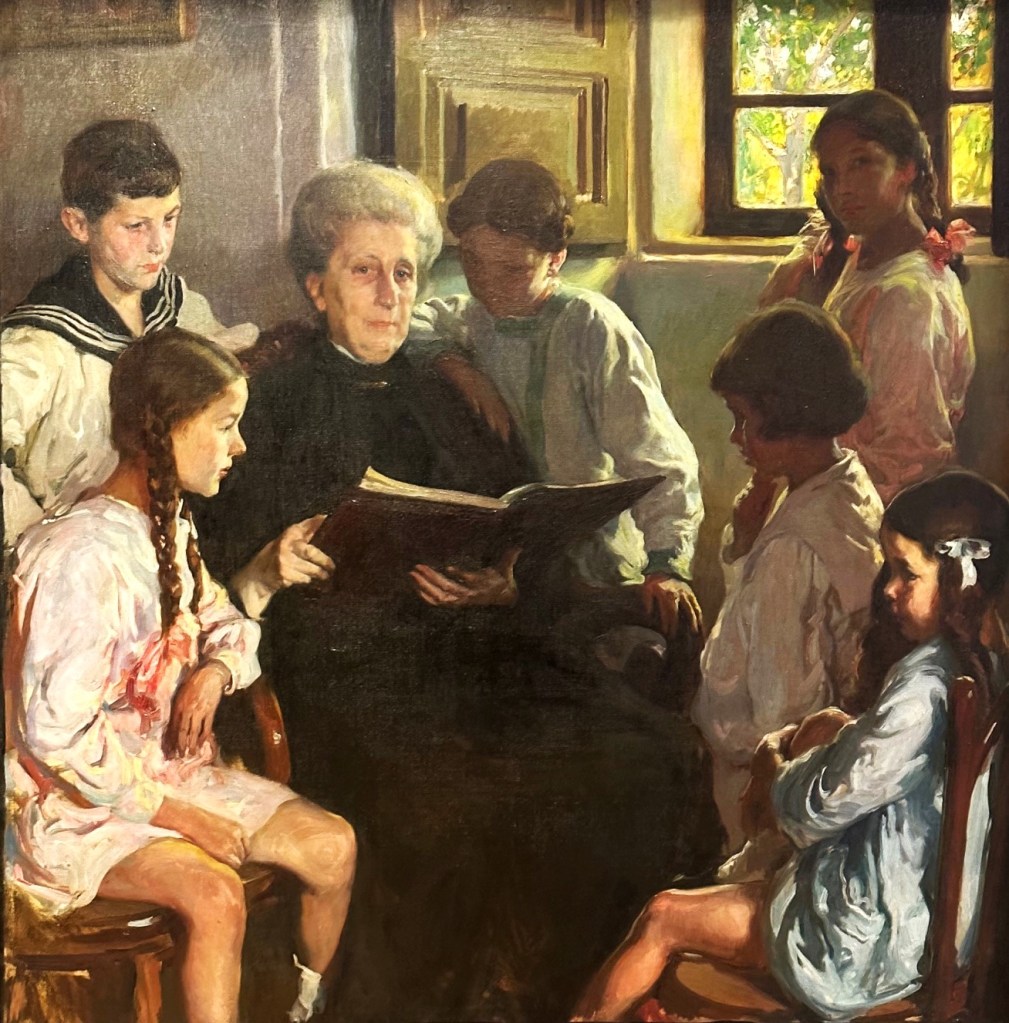
Abaixo foto de um quadro do pintor espanhol Fernando Álvarez de Sotomayor (Ferrol, 1875 – Madrid, 1960)
Reading to children is often an act of love—even when they are already literate. When they are not, the practice may be even more vital.
Part of one’s formation as a person lies in learning to listen and to understand what is said to them, as well as in developing the ability to convey to others what must or wishes to be expressed. This comes about in many ways. With greater or lesser skill, nearly everyone reaches a degree of sufficiency in this realm. Yet these abilities can indeed be refined. Reading—later to be done silently, in solitude—when presented to children through the dedication of adults, becomes a precious form of introduction and encouragement. It enables improvements not always fully appreciated, yet deeply significant for life. It broadens the capacity to perceive the many nuances of interpretation embedded in speech.
Reading to children demands care with intonation, with pauses to comment on what is being read, and with attentive listening to what they themselves have to say about what they heard. It is training—preparation for the vital civilizing function of good communication. Moreover, through the stories that are told to them, little people can navigate more deftly the intricate aspects of their inner world and the complex interactions with their surroundings. Verbalization is a complex process, not restricted to the mere mechanical production of sounds. A great diversity of messages travels through this channel, offering the young possibilities that enrich them. There is a considerable difference between what is recounted in person by someone and what is conveyed through electronic media, even when such media claim to be interactive.
What we call human intelligence is a composite of capacities that, although dependent on biological factors generally less malleable (at least for now), can nevertheless be cultivated through proper stimulation. The attentive reading of children’s stories can contribute greatly to this—not only for the reasons already mentioned, but also through subtler aspects related to the processes by which words acquire meaning within their contexts.
The emotional coloration of reading aloud to another is an essential part of the process. It conveys elements of interaction that overflow the mere corporeality of words and texts, fostering a kind of fellowship. Adults—parents, educators, or anyone living alongside children—must understand this, as well as cultivate the willingness to make the necessary effort, for it requires generosity on the adult’s part to offer themselves through reading and conversation. The results, with some luck, lead to the formation of people more capable of moving through the world and, with even greater luck, more gifted at experiencing certain modes of well-being.
Below: a photograph of a painting by the Spanish artist Fernando Álvarez de Sotomayor (Ferrol, 1875 – Madrid, 1960).

 Estante do Justo
Fiquei emocionada com este texto! Muito obrigada por essa sensibilidade expressa em palavras.
CurtirCurtido por 1 pessoa
Eu é que te agradeço Cristina
CurtirCurtir
Muito bom 🤩
CurtirCurtido por 1 pessoa
Obrigado
CurtirCurtir
Só hoje li esse seu texto, gostei demais, demais. Além de comovente – ou por isso mesmo – me trouxe lembranças muito boas. Obrigada e beijo, querido Luís.
CurtirCurtido por 1 pessoa
Eu é que agradeço por seu comentário querida Anaelena. Um beijo
CurtirCurtir