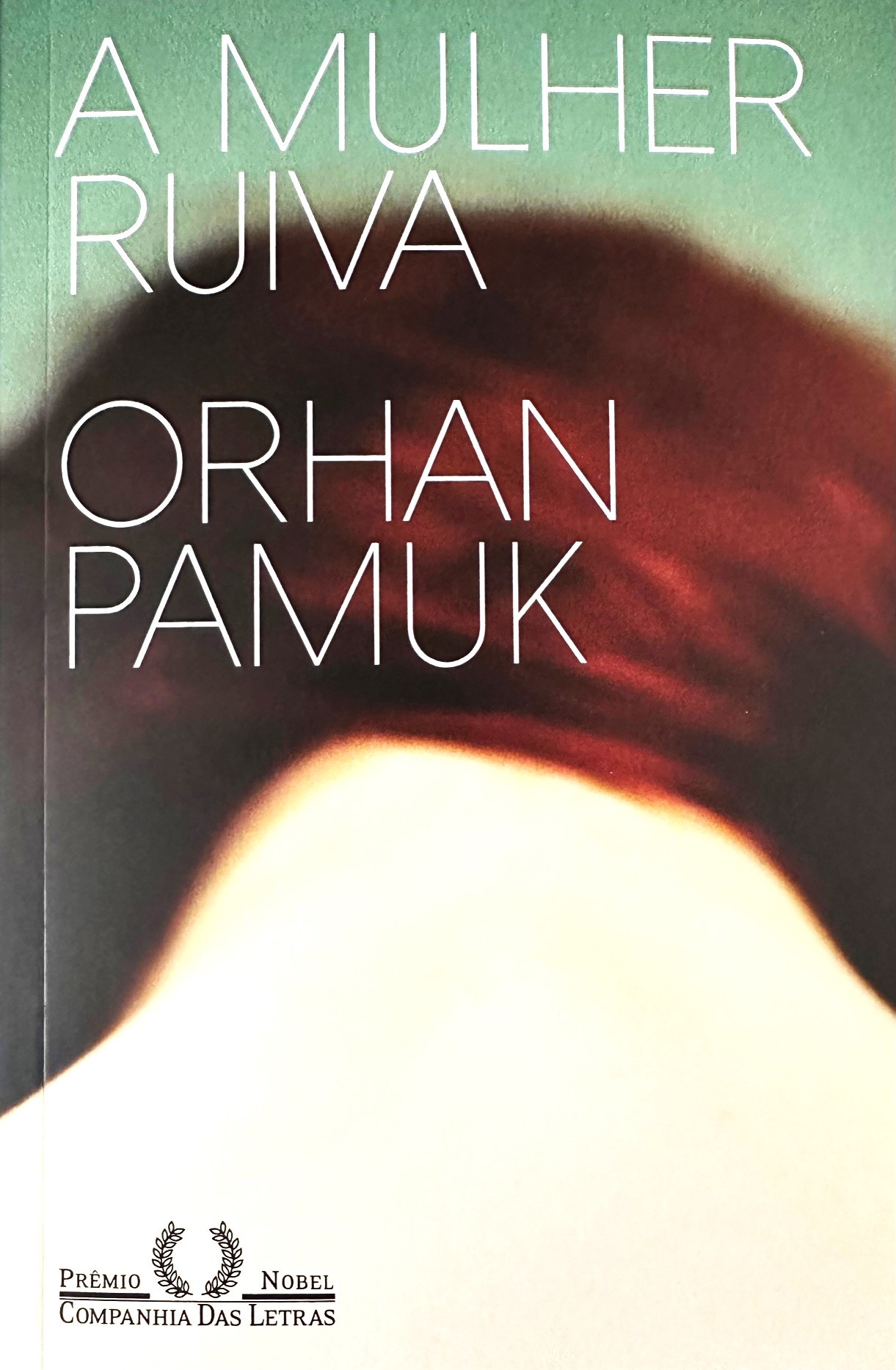
“A Mulher Ruiva” do escritor turco Orhan Pamuk (Istambul, 1952), ganhador do Prêmio Nobel em 2006, é um cativante romance. Conta a estória de um homem chamado Cem, marcado pelas ausências longas do pai, pela frustração de não ter tido um filho no casamento e pelo trágico encontro com aquele que teve sem o saber. O narrador principal é Cem, mas a contribuição da mulher ruiva é muito importante, apesar de breve. Somente no fim da vida o protagonista conheceu seu filho.
Pamuk traça o percurso de alguém que parte da aparente simplicidade com a qual se planeja um destino e ruma para a complexidade do que a vida impõe ao longo do trajeto na intenção de cumpri-lo. Seu foco está nos vínculos familiares, mais especificamente entre pais e filhos, nos quais se espera encontrar mais amor e menos ódio. Ligações em que a hostilidade e violência parecem ser exceções aberrantes. O enredo contorna as afirmações categóricas. É antes um agenciador da incerteza, da dúvida, da fragilidade interpretativa sobre a natureza dos fatos e sua convergência/divergência com os sentimentos, projetos e fantasias. Oscila entre a aceitação do surpreendente acaso e a ideia do determinismo obscuro naquilo que o homem efetivamente realiza. Transita pelo racionalismo realista sem o habitar, assim como mergulha nos mitos e lendas, intrigado por sua relação com a verdade. Aqui parecem estar amalgamados personagem e autor. A ficção acaba por refletir a áspera natureza do conhecimento que se pode alcançar sob a ótica dos descrentes que não deixam de mirar a crença e dela se servem para estimar o que não se pode traduzir em exatidões. É um modo de sondar as profundezas do inatingível. Importam as suposições, a reflexão crítica e a criação literária e artística, iluminadoras no esforço de dar sentido às vivências comuns. Dispensando a perfeição de contornos, o autor alude à presença do real, imperativo e intangível, na compreensão que o indivíduo pode ter sobre si mesmo e sobre o mundo. Algo que dirigirá o ato superpondo-se às intenções conscientes que o antecedem. O que confundirá as interpretações dos acontecimentos concretos. Paira sobre o que caracteristicamente faz parte do funcionamento humano e está sempre acima ou abaixo dos poderes de deliberação. O maior mote das narrativas em torno do trágico.
Cem e sua esposa percorrem bibliotecas e museus em busca das versões de dois mitos que falam de parricídio e filicídio. Isto é feito enquanto também consultam especialistas na tentativa de superar a dificuldade para gerarem um filho. Suas motivações e comportamentos levam o leitor a se perguntar sobre o que os move mais profundamente em sua curiosidade. E, talvez como eles, sem percepção clara disto, passem a procurar a junção entre mito e realidade.
Por que certos mitos e lendas atravessam os séculos, sendo recontados de diversas formas e mantendo a força de impactar emocionalmente? No cerne deste romance estão as estórias de Édipo, seja na peça de Sófocles, Édipo Rei, ou contada por outros meios, e a de Sohrab e Rostam do Shahnameh (livro poético/épico de autoria do persa Ferdusi, escrito no século X). Há muito o que se pensar com estas duas estórias. Em Édipo ocorrem parricídio e incesto, ignorados pelos que os praticam quando eles efetivamente acontecem e só descobertos, inesperadamente, devido à necessidade peremptória de descobrir algo que parecia não ter relação direta com eles. No caso de Sohrab, ele é assassinado por seu pai sem que eles se conhecessem. Nas duas lendas, através do parricídio e do filicídio, a culpa é apresentada como componente crucial, mas está imbricada em muitos outros aspectos, incluindo os riscos inerentes ao desejo de saber, como o da descoberta daquilo que não se é capaz de suportar. Nos dois casos articulação entre as respostas obtidas e as perguntas formuladas é enviesada. Busca-se uma coisa e encontra-se outra. São lembrados o imprevisível e o inevitável. Nas duas situações os personagens destroem seus mais próximos familiares sem saberem quem eram suas vítimas. A violência contra o próximo mais próximo é uma das contundências destes e de outros mitos. Numa o incesto é um dos ingredientes de horror, na outra não, mas em ambas a questão da identidade que não se desvela a tempo de evitar o desastre é parte central da característica trágica da ficção. Quem sou? Quem é este? Quem são os outros? O que promove o ato violento entre os humanos? Na violência e destrutividade qual é o peso de uma motivação alegada, qualquer que seja, e, por outro lado, quanto isto é expressão de forças mais primitivas, vazias de razão e inextinguíveis? São interrogações que, para os que podem arcar com o ônus que implicam, não se dissolvem em respostas possíveis, sejam elas quais forem.
Muito já se especulou e teorizou a respeito dos atos violentos e destrutivos. Vale lembrar a ideia de pulsão de morte em Sigmund Freud. As noções sobre o que os indivíduos e sociedades têm feito ao longo da História, com competitividades brutais, conflitos e guerras indicam a relevância da ideia, que pode ser tratada mais livremente na ficção. Episódios de grandes mortandades, notícias de atos horripilantes praticados em espaços íntimos parecem ser também produtos dessa possível compulsão para o comportamento competitivo, dominador e violento dos humanos, em qualquer tempo e em diferentes contextos. A adesão fanática a crenças também pode fazer as vezes de fundamentação ou pretexto. Todavia, com tudo o que já se tentou explicitar a respeito disto, em especial as reais e nem sempre visíveis causas e as consequências imponderáveis da interação violenta e destrutiva entre os que são próximos (e de certo modo todos os seres humanos o são) continuam a perturbar o homem.
Mesmo falando de tema tão inquietante, o livro usa de sutil delicadeza para pôr em cena o que pretende seu autor. Seduz e é agradável de ler.
Título da Obra: A MULHER RUIVA
Autor: ORHAN PAMUK
Tradutor: LUCIANO VIEIRA MACHADO
Editora: COMPANHIA DAS LETRAS
“The Red-Haired Woman,” by the Turkish novelist Orhan Pamuk (Istanbul, 1952), winner of the 2006 Nobel Prize in Literature, is a captivating novel. It tells the story of a man named Cem, marked by the long absences of his father, by the frustration of having had no children within his marriage, and by the tragic encounter with the son he unknowingly fathered. The principal narrator is Cem, yet the contribution of the red-haired woman remains deeply significant, brief though it is. Only at the end of his life does the protagonist finally meet his son.
Pamuk traces the journey of someone who begins with the apparent simplicity with which one imagines a destiny, only to find himself led into the complexity that life imposes along the way as one attempts to fulfill it. His attention falls on family ties, more specifically the bonds between parents and children, within which one hopes to find more love and less hatred—connections in which hostility and violence appear as aberrant exceptions. The plot sidesteps categorical affirmations. It is instead an agent of uncertainty, doubt, and interpretive fragility regarding the nature of facts and their convergence—or divergence—from one’s feelings, projects, and fantasies. It oscillates between an acceptance of surprising chance and an intimation of obscure determinism in what humans actually carry out. It moves through rationalist realism without inhabiting it, just as it plunges into myths and legends, intrigued by their relation to truth. Here, character and author seem intertwined. Fiction comes to reflect the harsh nature of the knowledge one may attain from the vantage point of the unbeliever who nonetheless continues to gaze at belief, relying on it to estimate what cannot be rendered into exactitude. It is a way of probing the depths of the unattainable.
What matters are suppositions, critical reflection, and artistic and literary creation—illuminating efforts to make sense of ordinary experience. Dispensing with precise contours, the author alludes to the presence of the real—imperative and intangible—in the understanding one may form of oneself and of the world. Something that governs action, overshadowing the conscious intentions that precede it. Something that confounds interpretations of concrete events. It hovers over that which characteristically belongs to human functioning and remains perpetually above or beneath the powers of deliberation—the principal engine of narratives that revolve around the tragic.
Cem and his wife visit libraries and museums in search of the many variations of two myths concerning parricide and filicide. They undertake this exploration while also consulting specialists in an attempt to overcome their difficulty conceiving a child. Their motivations and behaviors lead the reader to wonder what it is that drives them at a deeper level in their curiosity. And perhaps, like them, without fully realizing it, the reader begins to seek the point where myth and reality converge.
Why do certain myths and legends endure across centuries, retold in countless forms while retaining their emotional force? At the heart of this novel lie the stories of Oedipus—whether in Sophocles’ Oedipus Rex or in other versions—and of Sohrab and Rostam from the Shahnameh (the epic poetic work by the Persian Ferdowsi, written in the 10th century). There is much to ponder in these two narratives. In Oedipus, parricide and incest occur unknowingly, discovered only by the unyielding necessity of uncovering something that initially seems unrelated to them. In the case of Sohrab, he is slain by his father before either knows the other’s identity. In both legends, through parricide and filicide, guilt emerges as a crucial component, yet it is entangled with numerous other dimensions, including the inherent risks of the desire to know—such as the discovery of what one cannot bear. In both stories, the relationship between the answers obtained and the questions posed is skewed. One seeks one thing and finds another. The unpredictable and the inevitable are brought to mind. In both cases, the characters destroy their closest kin without knowing who their victims truly are. Violence against the nearest of neighbors is one of the striking features of these and other myths. In one, incest compounds the horror; in the other, it does not. But in both, the question of identity—undisclosed until too late to avert catastrophe—is central to the tragic nature of the fiction.
Who am I? Who is this? Who are the others? What incites violent acts among human beings? In violence and destructiveness, what is the weight of an alleged motive, whatever it may be—and to what extent do such acts express more primitive forces, devoid of reason and inextinguishable? Such questions— for those capable of bearing their weight—do not dissolve into any possible answers, whatever they may be.
Much has been theorized regarding violent and destructive acts. One recalls, for instance, Sigmund Freud’s notion of the death drive. Observations concerning what individuals and societies have done throughout history—marked by brutal competitiveness, conflict, and war—underscore the notion’s relevance, a relevance that fiction may explore with even greater freedom. Episodes of large-scale slaughter and reports of horrific acts committed within intimate spaces seem likewise to stem from this possible compulsion toward competitive, domineering, and violent behavior in human beings, at all times and in all contexts. Fanatical adherence to beliefs may also serve as foundation or pretext. Yet despite all that has been articulated in attempts to clarify these matters—especially the real, not always visible causes and the incalculable consequences of violent and destructive interaction among those closest to us (and, in a sense, all human beings are close)—such issues continue to disturb humankind.
Even while addressing such an unsettling theme, the book employs subtle delicacy in staging what its author intends. It captivates, and it is a pleasure to read.
Title of the Work: The Red-Haired Woman
Author: Orhan Pamuk
Translator: Luciano Vieira Machado
Publisher: Companhia das Letras

 Estante do Justo